Need a word or phrase translated?

私も世の中に、理解し難い女の人は少なからずいますけど is giving me a bit of trouble. I'm not exactly sure what is going on with the からず

からず modifies 少ない, reversing it's meaning.

Originally, it means "a little, few" but when you add the modifier, it turns into "not a little, considerably" (少なからず).
 
私も世の中に、理解し難い女の人は少なからずいますけど is giving me a bit of trouble. I'm not exactly sure what is going on with the からず
ず is a (classical) negative auxiliary verb, and 少なから is a conjugation of a classical adjective 少なし. You can think 少なからず is equivalent to 少なくなく in modern Japanese, as Brunom1-san translated it as "not a little".

~からず is preferred for some nagative advebial phrases than ~くなく (probably due to collocation).
e.g.
少なからずいる。(≒ 多くいる。)
遠からず犯人は捕まるだろう。(≒ 近く犯人は捕まるだろう。)
 
Ah, I was looking at it as sukoshi instead sukanai. Now it makes sense. Thanks.

Now, I'm having a bit trouble with:

理解や共感をもとに人物像を作るのは、女性ならではのことかもしれないですよね。 たとえば、インタビュアーである私は、話を聞く相手の中にある良いものも悪いものも、自分のものとして理解・共感できると、深まるし、成り立つんです。 でも、それは男性には少ない特性のような気がします。

The grammar and vocab isn't really giving me much trouble but I'm not sure how to really write the 2nd sentence into English in a way that sounds natural. I will say that インタビュアーである私 is new to me as I'm not used to seeing である connecting two nouns.
 
As a grammatical structure, it's an ordinary attributive clause. Semantically, インタビュアー is in apposition to 私, similar to の.
e.g.
私はインタビュアーである。 --> インタビュアーである私は、 (I, an interviewer,)
ペンギンは鳥類である。 --> 鳥類であるペンギンは卵を産む。


自分のものとして理解・共感できると、理解や共感も深まるし、成り立つんです makes more sense?
 
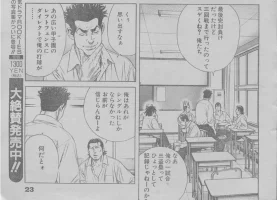
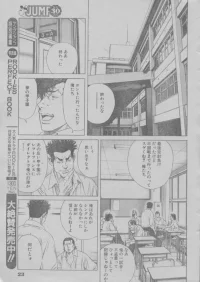
Hello there, this is a page from the manga rookies, which is about baseball. They're talking about their last game:
俺はあれがシングルにしかならなかった
お前が信じらんねーよ
A single is a regular hit by the batter with which he was able to run to first base. Aside from that, I have no idea what this sentence means. Maybe 「あれがシングルにしかならなかった」 modifies お前? Picture below for more context. It's the first bubble of the last panel.
rookies-23.webp
 

Attachments

  • rookies-23.webp
    rookies-23.webp
    54.5 KB · Views: 160
あれ refers to the previous speakers talk about his batting. So he says something about how good that one hit was, and his friend's response is "the thing I can't believe is how you didn't make more than a single off it"
 
Here's my first question in this thread: What are the differences/distinctions between 窶ーヒ慊静オ and ナ津カナ?Q ?

On asking around, I've had people suggest that it's (1) how specific the source is--whether it's generalized air/noise pollution, vs. "that company is leaking dangerous chemicals into the river"; (2) how specifically dangerous the pollution is; (3) how commonly accepted it is vs. something new & uniquely identifiable--again, we live with and generally accept the present air quality or level of noise, vs. a new, more specific danger.

In trying to figure this out, I've browsed those terms in dictionaries for their compounds, but am unable to come to an understanding so that I could use them naturally.

Ideas?
 
汚染 refers to "pollution" as a general term. If man-made pollution causes damage to people in general or public environment, it's called 公害. For instance, when a small amount of liquid waste flows out from a factory, pollutes a small area of the ground in the factory, and causes no damage to people, it's 土壌汚染. Whereas if liquid waste flows out to a river, it's 公害.
汚染 is also used as the stem of a -suru verb, so you can say 公害で汚染された川.

汚染(おせん)の意味 - goo国語辞書
公害(こうがい)の意味 - goo国語辞書
 
hello there,
what does this phrase exactly means?
ごめん, でも本当にそうなんだもの

Is it this: sorry, but that's really is the thing???

what's the meaning of そうなんだもの here?
 
そう / な(the attributive form of the copula だ) / ん(the explanatory の/ん) / だ(copula) / もの(a sentence final particle)

Japanese is a context-driven language. Your translation can be correct, but there might exist something more appropriate.
 
そう / な(the attributive form of the copula だ) / ん(the explanatory の/ん) / だ(copula) / もの(a sentence final particle)

Japanese is a context-driven language. Your translation can be correct, but there might exist something more appropriate.

Ok.
here's the context:
A-酷い, それはないんじゃないの
B-泣かないでよ
A-女の子臭いだなんてよくも平気で言えるわね
B-ごめん, でも本当にそうなんだもの

now can it mean any other thing.
 
あれ refers to the previous speakers talk about his batting. So he says something about how good that one hit was, and his friend's response is "the thing I can't believe is how you didn't make more than a single off it"

It makes perfect sense now, thank you, nekojita!
 
Ok.
here's the context:
A-酷い, それはないんじゃないの
B-泣かないでよ
A-女の子臭いだなんてよくも平気で言えるわね
B-ごめん, でも本当にそうなんだもの

now can it mean any other thing.
Sorry, but that's really so (= you're really 女の子臭い).
 
Hello how do I say "speaking in Japanese is interesting" and talk in Japanese is interesting? Thought that is something like nihongo de omoshiroi hanasu or nihongo wa omoshiroi de hanasu
 
The order of the words is wrong.

Nihongo de hanasu koto/no wa omoshiroi.

Note that the expression varies depending on the relation between the speaker/writer and the addressee/reader.
 
Last edited:
How do i say im waiting for him to arrive, i get really confused when i need to ceate a sentences with multiple verbs, i just cant get how this works and what does this sentence mean and if it is correct watashi wa kare ga ie o matte imasu Ni tsukimasu
 
Last edited:
何を夢みたいな事言ってるの!?

The context is pretty typical: the main character has dropped his recommendation in order to chase his dream, and his mother is scolding him for it. I understand the meaning of this sentence, but I'm just stuck trying to find a proper translation. I'm thinking of "What are you dreaming about", or something like that, but I'd like to find something closer to the original meaning.
 
からず modifies 少ない, reversing it's meaning.
Originally, it means "a little, few" but when you add the modifier, it turns into "not a little, considerably" (少なからず).
The meaning is basically the same as large but, as you imply, I think 少なからずcan also take on the added nuance of "larger than expected"/perhaps not huge but certainly not insignificant/considerable or in no small measure (少なくはない) etc
 
Last edited:
How do i say im waiting for him to arrive, i get really confused when i need to ceate a sentences with multiple verbs, i just cant get how this works and what does this sentence mean and if it is correct watashi wa kare ga ie o matte imasu Ni tsukimasu
What are the translations of "I'm waiting for him" and "he will arrive"?


何を夢みたいな事言ってるの!?

The context is pretty typical: the main character has dropped his recommendation in order to chase his dream, and his mother is scolding him for it. I understand the meaning of this sentence, but I'm just stuck trying to find a proper translation. I'm thinking of "What are you dreaming about", or something like that, but I'd like to find something closer to the original meaning.
夢みたいな事 means something like "what can't happen", thus, it roughly says "You're saying what can't happen. / Don't say what can't happen."
 
何を夢みたいな事言ってるの!?

The context is pretty typical: the main character has dropped his recommendation in order to chase his dream, and his mother is scolding him for it. I understand the meaning of this sentence, but I'm just stuck trying to find a proper translation. I'm thinking of "What are you dreaming about", or something like that, but I'd like to find something closer to the original meaning.
What is the speaker's response ? This の I believe would be with a falling tone to denote a strong assertion, similar to English a rising tone is used to indicate a question.
 
It doens't matter whether it's a falling or rising intonation. The sentence means "Don't say such a thing!" with scolding tone anyway. The rising intonation also connotes "being amazed", though.
 
What is the speaker's response ? This の I believe would be with a falling tone to denote a strong assertion, similar to English a rising tone is used to indicate a question.

There's no response, the kid just runs off after this.


It doens't matter whether it's a falling or rising intonation. The sentence means "Don't say such a thing!" with scolding tone anyway. The rising intonation also connotes "being amazed", though.

Ok, thanks Toritoribe!
 
後の事はくれぐれも頼んだぞ。
later-thing-asked??
its something the king say just before going to a battle field. what's it?
 
Back
Top Bottom