Need a word or phrase translated?

Hey thanks for the fast response! And I used an OCR web service to extract that text but got really scrambled so meaning was strange.
So thanks for your help in translation this.
That's awesome.
Thank you very much again!
 
Thinking of choosing a japanese tattoo for my next...tattoo.

Im thinking of the sign for dreams.

夢 yume means a dream, but i want the sign for having dreams, something i wanna achieve not the one when i sleep. Is it the same?

Thanks!
 
Last edited by a moderator:
I need help with the following sentence:

ちょっと事情があっての
今は直接会いたくないんだ

I'm kind of confused by the 'chotto' at the beginning given the words used. I know it can mean 'a little' or 'a bit,' but I'm pretty sure that's not what it means here. Also, does 'ima wa chokusetsu' (now + directly) mean 'right away'? Anyway, my translation is:

"Due to the circumstances, I won't meet with him right away."

Any help is appreciated. Thanks!
 
ちょっと(した)事情
trival circumstances

直接会う
to meet someone face-to-face
 
ちょっと is just being humble or making one's own troubles seem light. 'Due to some circumstances (of my own, that aren't that important)'.
The second half is fine to think of it that way, though of course it literally says 'I don't want to meet in person right now', but "won't meet" or "can't meet" are likely acceptable translations depending on the context.
 
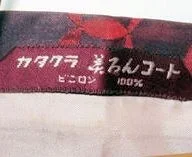
A lovely michiyuki coat was donated to a charity for which I volunteer. Can anyone translate the label? Michiyuki label.webp
 
what is the meaning of "王国の先陣を切るとわかってのやリ口でしょう"?
is it とわかって or と わかって ?and what is のやリ口 ?
 
@leekeekanoo
カタクラ 美ろんコート (katakura biron coat).
ビニロン

ビニロン = vinylon. "美ろん" appears to be the name of a type of thread made from vinylon. I'm guessing "Katakura" is the maker (it could be a company name taken from a surname).

@Alelil
わかって from わかる
and やり口 is one word (遣り口)
 
what does らしい mean? when located between 2 same word

I found an example on the net
~と話らしい話をする
have a real conversation with

does it mean real / serious?
i can't think of it's connection.i only know it means seeming/appearing
"conversation seems like conversation = real conversation" is nonsense for me

so what does it mean 協定らしい協定 ?
"a real agreement" ?
----------------------------------------------------------------------------------
逃げも隠れもせん
逃げも隠れもしない
are these two senteces has same meaning?

if 逃げも隠れもせん isn't same with 逃げも隠れもしない, then what does 逃げも隠れもしせん mean?

when i looked for example on the net, i found 2 translation of 逃げも隠れもしない
1) here i am ;2) not run and hide
these 2 senteces are very different i think, so which one is correct?
-------------------------------------------------
what does 俺がその街に先乗りをしょう mean?
is "I will conquer that city" plausible?
 
Last edited:
what does らしい mean? when located between 2 same word

I found an example on the net
~と話らしい話をする
have a real conversation with

does it mean real / serious?
i can't think of it's connection.i only know it means seeming/appearing
"conversation seems like conversation = real conversation" is nonsense for me

so what does it mean 協定らしい協定 ?
"a real agreement" ?
−らしい
3 〔…にふさわしい〕becoming ((to)); worthy ((of))
この町には劇場らしい劇場はない
There is no theater 「worthy of the name [to speak of/worth mentioning] in this town.
先生らしくない先生だ
He isn't a typical teacher./He's not like a teacher at all.

らしいの英語・英訳 - goo辞書 英和和英

逃げも隠れもせん
逃げも隠れもしない
are these two senteces has same meaning?

if 逃げも隠れもせん isn't same with 逃げも隠れもしない, then what does 逃げも隠れもしせん mean?

When I looked for example on the net, i found 2 translation of 逃げも隠れもしない
1) here i am ; 2) not run and hide
these 2 senteces are very different i think, so which one is correct?
Those are the same in meaning.
As for the translation, it depends on the context. Japanese is a context-driven language. Both can be correct.

what does 俺がその街に先乗りをしょう mean?
is "I will conquer that city" plausible?
う, not しょう

I'll go to the city in advance.
 
Hello!
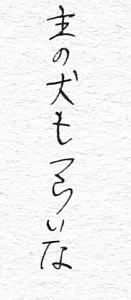
I'm having a problem with a piece of text in hand writing:
Monochrome_024.webp

I'm able to read most of the text (at least I think so):
主の犬も...らいな

But I have a problem with the fifth sign (and maybe sixth). It looks to me a bit like つ but I'm not sure if the sentence would have much sense then...
Any help?
 
I'm not sure if I've translated the following sentence correctly.

別に
いいんだよね
悪いことする
わけじゃないし

I come up with this: "It's not like it's a bad thing to do and it's good to be different, right?"

Is this correct?
 
I'm not sure if I've translated the following sentence correctly.

別に
いいんだよね
悪いことする
わけじゃないし

I come up with this: "It's not like it's a bad thing to do and it's good to be different, right?"

Is this correct?

I think you're pretty close. I would probably translate it as,

"(That's) OK, right? I mean, it's not like (I'm) going to doing anything bad."

Hope it helps.
 
別にいいんだよね
別にいい doesn't have anything to do with 'being different', it's a set phrase (usually attached to an explanatory の and some form of the copula), that just means 'it's fine' or 'there's nothing wrong with it'. It's usually used in the face of doubt (self-doubt or other's doubt, either way) about whether a course of action should be taken.
 
別にいい doesn't have anything to do with 'being different', it's a set phrase (usually attached to an explanatory の and some form of the copula), that just means 'it's fine' or 'there's nothing wrong with it'. It's usually used in the face of doubt (self-doubt or other's doubt, either way) about whether a course of action should be taken.

Ah, I see.

Since I've been teaching myself, I didn't know you could combine words from different lines. What I mean is that I thought 別に was a word and いい was another word. I figured that since they were on separate lines, they were separate words. Hmm... I guess I learned something new. :)
 
I figured that since they were on separate lines, they were separate words.
They are in this case separate -words-, although it does happen that words get split on line breaks in a lot of publications. However, Japanese is full of set expressions where the meaning comes from a set of words being used together in a fixed way, and these are hard to understand from the words alone.
(別にいい isn't so difficult as some, the meaning of the phrase is one that might be guessed from the words that make it.)
 
Hi, I want to translate into Japanese " The good, the bad and the tough" ( like Clint Eastwood movie " The Good, the bad and the ugly" but without "the Ugly" and in separate sentences). Can you help me with kanji characters? I tried with this : 良いやつ、悪いやつ , but it's too much for me. Thanks so much

Exactly:

"The Good"

"The Bad"

"And the tough "

PD: it refers to three men

"The Bad"

"And the tough "

PD: it refers to three men
 
I would say いいやつ、悪いやつ、それとタフなやつ.
 
What is the meaning of "王国の先陣を切るとわかってのやリ口でしょう"?
is it とわかって or と わかって ?and what is のやリ口 ?
王国の先陣 is a bit unclear without context but I would guess just by sightreading the entire phrase means to take the initiative or spearhead a cause, perhaps metaphorically, by being among the vanguard or the first to venture towards some place and arrive at a certain goal point.
最初に王国の先陣に切り込むとわかってのやリ口でしょうか ??
率先してある物事を行うこと。:cool:
 
Back
Top Bottom