Need a word or phrase translated?

It's 本当だねぇ "Yeah, exactly/that's right", but it also can mean 本当だろうな "Really?/Are you sure?" depending on the context/intonation/accent.

BTW, you just thank people only IN ADVANCE also in this case, AS USUAL? :emoji_wink:
 
I have a question. I was watching an animation movie and a character said: "軽のです" instead of "軽いです". Can someone explain me the difference?
 
軽のです doesn't make sense. It would be just a typo, unless 軽 is the name of a location/person or something.
 
軽のです doesn't make sense. It would be just a typo, unless 軽 is the name of a location/person or something.

It wasn't a typo because he said it orally. Mmmm I guess I misheard something but I cant figure out what. thanks anyway! I know there was a の and then a です in there somewhere
 
It wasn't a typo because he said it orally. Mmmm I guess I misheard something but I cant figure out what. thanks anyway! I know there was a の and then a です in there somewhere
Then, that's 軽のです, maybe?

So the correct orientation is this?
The first picture is a quotation from a poem "Tabibito kaerazu" Traveler never returned composed by Nishiwaki Junzaburō. It's too long and poetry is difficult to translate. The second and last one are written in kanbun, i.e. (Classical) Chinese. It's also difficult.
 
Maybe he dropped the い because he spoke fast or with some kind of accent
What would the connotation be if it was 軽いのです?
I thought の was a rude final particle so 1) why would it be before theです 2) why use proper-form です in the first place ?
 
I have a question. I was watching an animation movie and a character said: "軽のです" instead of "軽いです". Can someone explain me the difference?

That would be possible if he was using 軽 as an abbreviation of 軽自動車. What is the context?
 
I am certain it is 軽. The character is explaining he jumps high in the air because his body is light. So 軽 is not what I misheard.
The "explanatry の" - that I had never heard about - sounds EXACTLY like the right explanation and the answer I was looking for. Thanks so much for pointing me in the right diretion, toritobe!
And don't worry about the missing い. I am not sweating it. Might just be who didn't hear it or the way the guy pronounced it :)
I very much appreciate everyone pitching in to help. So glad I found this forum. Definitely going on my bookmarks :)
 
質問があります

"誰が相手だろうが、仲間に仇なす奴は容赦しねェ!"

1. How is the first part used? Is it something about not caring who they will end up fighting/facing? Is だろうが some set thing or what?

2. What is 仇なす it doesn't seem to be in the dictionary, so maybe what is なす?

If I understand these things I think I'll understand the whole.

よろしくお願いします(This isn't really "need a word or a phrase translated" is it lol. Sorry).
 
OK I am lost now. Did I retranscribe it with the wrong kanji? he did say かるのです。
軽 is correct. Mike-san pointed out the possibility that 軽 might be けい if it's on the subtitle.


質問があります

"誰が相手だろうが、仲間に仇なす奴は容赦しねェ!"

1. How is the first part used? Is it something about not caring who they will end up fighting/facing? Is だろうが some set thing or what?

2. What is 仇なす it doesn't seem to be in the dictionary, so maybe what is なす?

If I understand these things I think I'll understand the whole.

よろしくお願いします(This isn't really "need a word or a phrase translated" is it lol. Sorry).
1)
Yes for the meaning.
The first clause is conditional. ~であろうが/~であろうとも makes sense?

2)
仇[あだ]なす: to give someone harm

This is a bit classical expression.
 
Okay, thanks, I guess that's why it wasn't in the dictionary. Two more things. (sorry my questions sounded rather abrupt).

Edit: I didn't see the part you changed. Sorry, I have not exactly seen ~であろうが/~であろうとも before. What makes that conditional? How would that even translate conditionally? Hmm... As long as I have the meaning correct though...

1.誰が相手だ = Who is my opponent
誰が相手だろうが = I don't care who my opponent is (だろうが here has a meaning of not caring, or in general, dissmissing questions as unimportant. Always?)

So it's like "I don't care who, those who harm my friends will recieve no mercy from me" (translation does not account for slang)

2.What thoretically would go in between は and 容赦?俺が maybe? (When people put は and then a verb... I sometimes don't fully know what would go in between should something even have to be there).
 
Yeah, I edited my post after seeing you did the same thing.:) My previous answer "yes" is for "conjunction が" in your pre-edited post.


だろう is "presumptive" who my opponent will be here, and "presumptive + が" gives a nuance of "even if".

は is for topicalization. In this case, the object/target 奴 is topicalized.
 
Yeah, I edited my post after seeing you did the same thing.:) My previous answer "yes" is for "conjunction が" in your pre-edited post.

I see, lol. How confusing. I'll get my post right the first time next time xD Well I failed that.

だろう is "presumptive" who my opponent will be here, and "presumptive + が" gives a nuance of "even if".

Whoa...I see. Wow. Those words gave me a lot of deep insight actually, concerning "presumptive" and "will." Not just for Japanese, but for English as well. Reading and understanding this just gave me one of those clicking moments where you suddenly realize something. I feel I understand だろう a lot more now. Thank you for that.

は is for topicalization. In this case, the object/target 奴 is topicalized.

Okay, so I reasearched "topicalization" and see it is to do with the order in which things are said. I never knew it had a name. Interesting.

I have observed this in Japanese and became rather aware of it. I thought that it made sense. Sometimes subjectは is said first, sometimes it is after the sentence is "finished". It's like, order doesn't matter as long as you say everything and the correct particles are used. Generally it's SOV but with topicalization well, you know.

1. Does topicalization work like this:
知らない、私は or something which is then 私は知らない, but is the full thing not 私はそれを知らない or something. I recall something about using just は for emphasis with verbs, though.

2.Why does "奴は容赦しねェ!" mean "I won't give mercy to......"? There isn't an omitted form of 私 anywhere?

I feel I am missing something important or thinking about something incorrectly.

If I had known my question would branch out to something like this I would have made a seperate thread, again sorry.
 
Last edited:
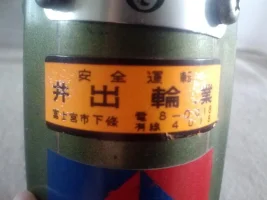
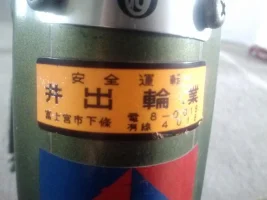
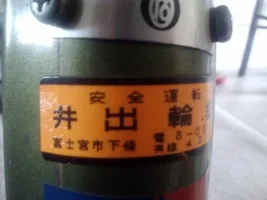
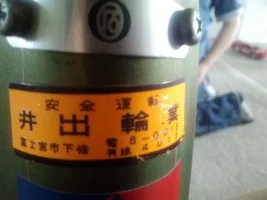
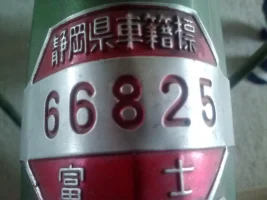
Can someone tell me what this says? It's on a MARUISHI "Atlas" bicycle
0323131558.webp
0323131557.webp
0323131556.webp
0323131559.webp
0323131559a.webp
 
Can someone tell me what this says? It's on a MARUISHI "Atlas" bicycle
View attachment 12269
View attachment 12268

The yellow sticker is from the bicycle shop "Ide Ringyou" in Fujimiya City and includes the address, phone number, and "yuusen" number. Nobody has used a "yuusen" number for years and years now, and phone numbers have long since stopped being given as the last few digits like that, so this is at least a few decades old, I would guess.

The last is a registration plate for Shizuoka Prefecture. I've never seen anything like it before, but that doesn't mean much. There's lots of stuff I've never seen before.

EDIT:

They are still in business and still have the same phone number
 
Last edited:
1. Does topicalization work like this:
知らない、私は or something which is then 私は知らない, but is the full thing not 私はそれを知らない or something. I recall something about using just は for emphasis with verbs, though.
The topicalization has nothing to do with the order of words, as you understand correctly "order doesn't matter as long as you say everything and the correct particles are used". For isnatnce, 知らない、それは or それは知らない、私は are also acceptable.(Where the focus is on is different.)

2.Why does "奴は容赦しねェ!" mean "I won't give mercy to......"? There isn't an omitted form of 私 anywhere?
Indeed the subject "I" is omitted since it's obvious from the context.

If I had known my question would branch out to something like this I would have made a separate thread, again sorry.
Haha, no problem(at least for me).:)
 
For isnatnce, 知らない、それは or それは知らない、私は are also acceptable.(Where the focus is on is different.)

I see, with that, I think I am getting closer... Two はs in one sentence...
Is it that this kind of は is specifically used for topicalization? As in, the object/target that was left out gets "topicalized" and the は is used in place of を or に to denote this? I believe that is what you meant by
In this case, the object/target 奴 is topicalized.

I thought that this は was saying that 奴 won't give mercy to something so then I thought there must be some 私 somewhere. If this は is a different "kind" of は for usage (but obviously the same) then maybe I understand.

Therefore, if I am thinking correctly, is the sentence without any omissions or topicalizations this:

私は、誰が相手だろうが、仲間に仇なす奴を容赦しねェ!"
or
私は、誰が相手だろうが、仲間に仇なす奴に容赦をしねェ! (because I don't know if it's 容赦する or 容赦をする).

If I am not thinking correctly, what have I done this time lol :D
 
Yeah, those sentences are both correct.
は is also called "contrastive marker". In the example sentence, 仲間に仇なす奴は can have a nuance of "especially those who harm my friends, not other people".
 
Yes, I finally see now. When は was used like that before I assumed other things. But now I get it. As usual, thanks a million, Toritoribe, that was extremely helpful :)
 
Back
Top Bottom