Need a word or phrase translated?

It can be correct. I don't know the context exactly, but there might be a reason why 寝られるなら is used instead of 寝られたらいい(のに)な or 寝られたらなあ.

Let's say you're sleepy and you said this to yourself "it'd be good if I can sleep now..."

Why is のに added there?

2
 
Last edited by a moderator:
Does that mean you compose the sentence? Then the conditinal なら is not appropriate here. I would say 今寝られたらいいだろうなあ instead.

のに is for "if I were able to sleep", i.e., it implies "it's impossibe to sleep now." 寝られたらなあ has the same nuance.
 
Does that mean you compose the sentence? Then the conditinal なら is not appropriate here. I would say 今寝られたらいいだろうなあ instead.

のに is for "if I were able to sleep", i.e., it implies "it's impossibe to sleep now." 寝られたらなあ has the same nuance.

分かった。ありがとうございます!

One small question:
Does it make any difference saying ありがとうございます or ありがとうございました ? Because in shops the shopkeepers always say it in past tense.

Xawn @ Mobile
[Sent from my Samsung Galaxy S2 with Tapatalk]
 
Some say the past tense is just plain wrong, but it is commonly used.

More important, it doesn't sound good to say わかった in that situation; use わかりました instead.
 
と + も(too/also)

What part of the sentence can't you understand?
Ahh, I couldn't figure out if とも was 共 (Both reasons or both something)

Thank you. I was confused with the usage of でもない。
How is that being used in this sentence? I have trouble with the double negatives.

""俺がここに来た理由とも 被らないでもないから"

If it was omitted in this sentence (俺がここに来た理由とも 被らないでから"), would the meaning be the same?

Thank you for you help!
 
No. The meaning is opposite. 被らないでもない means 被る.
 
Some say the past tense is just plain wrong, but it is commonly used.

More important, it doesn't sound good to say わかった in that situation; use わかりました instead.

Oops. 分かりました ありがとうございます!
 
従兄妹

I need help with the meaning of this word.
I was watching an anime and it's pronounced いとこ, which I know is cousin. But my dictionary doesn't have this word, and the word いとこ、are the following 従兄弟・従兄

I'm assuming the above word means younger cousin sister?
I picked that up from the context of the anime, but I wanted to make sure.

Thanks guys.
 
従兄弟 : cousin (male)
従兄妹 : cousin (female)
Both are pronounced いとこ.
I think this word is more often written in hiragana.
 
従兄妹

I need help with the meaning of this word.
I was watching an anime and it's pronounced いとこ, which I know is cousin. But my dictionary doesn't have this word, and the word いとこ、are the following 従兄弟・従兄

I'm assuming the above word means younger cousin sister?
I picked that up from the context of the anime, but I wanted to make sure.

Thanks guys.
The followings are all いとこ "cousin(s)".

従兄: elder male
従姉: elder female
従弟: younger male
従妹: younger female
従兄弟: elder male and younger male
従姉妹: elder female and younger female
従姉弟: elder female and younger male
従兄妹: elder male and younger female
従兄弟姉妹: elder male and younger male and elder female and younger female, cousins

いとこ - Wikipedia
(all in Japanese)
 
Hi, people
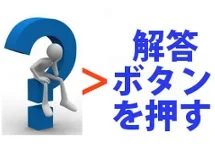
I would really appreciate if somebody would spare here a minute and help me to E-J translate the following sentence: PLEASE RECALL THE TONGUE POSITION AND CHECK YOURSELF BY CLICKING THE ANSWER BUTTON BELOW. BTW how about this image? Is it ok in terms of Japanese language? どうもありがとうございました
question.webp
 
Last edited:
To benzaiten :
I am sorry, but I can't figure out what you mean by "recalling the tongue position and checking oneself". Could elaborate on the context of your sentence ?

Anyway, I have a question. See the following dialogue :
店員:では、修理ができましたら、お知らせ致します。
客:じゃ。よろしくお願いします。
I think the first sentence should be : では、修理ができたら、お知らせ致します。
I thought there could be only one ます-stem in a sentence. (I found this sentence in a grammar book : どんな時どう使う日本語表現文型辞典).
Thank you !
 
店員:では、修理ができましたら、お知らせ致します。
客:じゃ。よろしくお願いします。
I think the first sentence should be : では、修理ができたら、お知らせ致します。
I thought there could be only one ます-stem in a sentence. (I found this sentence in a grammar book : どんな時どう使う日本語表現文型辞典).
Thank you !

Basically the polite form (です、ます) is to be used at the end of the sentence, however, in reality people tend to use it in the middle of a sentence as well to make it sound much politer - especially in speech. So it is quite common.
 
Shiriu,
Thank you for your time.
I have been working on my site for Japanese ESL students.
On the QUESTION side of Anki I need to make the students try to recall the position of the tongue for the particular English sound shown by the character (say, it would be English sound / e /—one out of those 44-some (plus RP and US adds). Then the ANSWER side of Anki would offer the detailed picture of the particular English sound—the tongue position that is required for pronouncing the particular English sound (the phoneme). So the students would study English sounds this way: recall the tongue position – push the ANSWER button and check yourself; again recall the position of the next sound – push the ANSWER button and check yourself… And so on.

I cannot trust robots and their translations, so I made a picture that I believe could help the Japanese speaking student to better understand the point. The image I had put in my OP–original poster.

Anyway, thank you very much
 
Thank you undrentide.


benzaiten :
Unfortunately, I am not a native Japanese speaker, so the translation I will write can be awkward. I hope some one will be able to correct what I say :
口の運動を覚えてから、チェックなので、ボタンをクリックして下さい。
I think that roughly works.
(I'm speaking about mouth mouvement rather than tongue position.)
 
Hi, people
I would really appreciate if somebody would spare here a minute and help me to E-J translate the following sentence: PLEASE RECALL THE TONGUE POSITION AND CHECK YOURSELF BY CLICKING THE ANSWER BUTTON BELOW.
my attempt
最初に舌の位置を思い出し、次に正解ボタンをクリックしてそれが正しいかどうか自分で確認してみてください。

BTW how about this image? Is it ok in terms of Japanese language?
I would use 正解 "correct answer" instead of 解答. 解答 basically means "answering a question", i.e., it's used for, for instance, a student's answer to a question. Thus, it doesn't always imply it's correct.
 
I would use 正解 "correct answer" instead of 解答. 解答 basically means "answering a question", i.e., it's used for, for instance, a student's answer to a question. Thus, it doesn't always imply it's correct.
Toritoribe: ありがとう
 
I'm trying to translate an anime episode title from Chinese to Japanese.

波濤洶湧的時代 > bō tāo xiōng yǒng de shidai

I looked up "波濤洶湧" and tried to find a translation for that in Japanese. bō tāo xiōng yǒng means waves surging forth / roaring sea.

Shidai means new era.

I came up with this, but not sure if it's correct or not:

狂瀾の時代
 
I'm trying to translate an anime episode title from Chinese to Japanese.

波濤洶湧的時代 > bō tāo xiōng yǒng de shidai

I looked up "波濤洶湧" and tried to find a translation for that in Japanese. bō tāo xiōng yǒng means waves surging forth / roaring sea.

Shidai means new era.

I came up with this, but not sure if it's correct or not:

狂瀾の時代

Maybe 狂瀾怒涛(きょうらんどとう) is the closest?
 
Back
Top Bottom