

Navigation
Install the app
How to install the app on iOS
Follow along with the video below to see how to install our site as a web app on your home screen.
Note: This feature may not be available in some browsers.
More options
Style variation
System
Light
Dark

You are using an out of date browser. It may not display this or other websites correctly.
You should upgrade or use an alternative browser.
You should upgrade or use an alternative browser.
Need a word or phrase translated?
- Thread starter Buntaro
- Start date


- 22 Feb 2008
- 18,266
- 4,926
歳 means "age" in this case. いい歳/年(を)して is a set phrase, meaning "behaving childish considering one's age".Thank you!
So, would this be like wishing someone a "Merry Christmas and a happy New Year" then?
I've never seen 歳 used in this sort of context before.
いい歳してクリスマスに浮かれて・・・
getting carried away with Christmas in spite of your/his/her/my age...
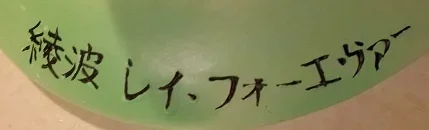
綾波レイ・フォーエヴァーThetered;694743 said:Can anyone help me decipher the following?
Ayanami Rei fooevaa
Ayanami Rei Forever
キミに逢えて良かった!
Kimi ni aete yokatta!
I'm glad to meet you!
The creator seems like a fan of Neon Genesis Evangelion.

- 22 Feb 2008
- 18,266
- 4,926


Rei Yahya
ぺらぺらになりたい生徒
- 17 Sep 2011
- 217
- 0
Thank you for your help in making things sound more natural, I'll take note of it all, it will help me to not sound like a textbook. I just have one question, what purpose is 'nan' serving in the sentence "kurisumasu purezento o tomodachi ni okuru tsumori nan desu ga,"? Is it making the sentence softer? Yoroshiku!
- 22 Feb 2008
- 18,266
- 4,926
Giving an explanatory tone; "the reason I ask for help is...".
Rei Yahya
ぺらぺらになりたい生徒
- 17 Sep 2011
- 217
- 0
Giving an explanatory tone; "the reason I ask for help is...".
Ahh, what would be the difference between this and the explanatory no?
- 22 Feb 2008
- 18,266
- 4,926
Rei Yahya
ぺらぺらになりたい生徒
- 17 Sep 2011
- 217
- 0
:emoji_blush: I guess I'm just wondering, where's is 'nan' necessary as opposed to no, or are they entirely interchangeable? I think 'nan' is 'na no', and I have yet to find the explanation for 'na no' on Tae Kim's grammar guide, I'm probably not looking at the right place!
- 22 Feb 2008
- 18,266
- 4,926
Yeah, due to mojibake. I've just revised the link.
As I wrote in the linked page in the thread, な is from the copula だ/です.
noun/na-adjective
送るつもりだ --> 送るつもりなんです
静かだ --> 静かなんです
verb/i-adjective
送る --> 送るんです
高い --> 高いんです
As I wrote in the linked page in the thread, な is from the copula だ/です.
noun/na-adjective
送るつもりだ --> 送るつもりなんです
静かだ --> 静かなんです
verb/i-adjective
送る --> 送るんです
高い --> 高いんです

- 15 Mar 2002
- 16,758
- 2,298
Ahh, what would be the difference between this and the explanatory no?
Same thing, it's just that the "desu" may get left off when using "na no", while it is not left off while using "nan".
Rei Yahya
ぺらぺらになりたい生徒
- 17 Sep 2011
- 217
- 0
Ahh, it's finally coming to light! So use of the explanatory no depends on what type of word is preceding it?
Noun
BAD: 箸のだ。
GOOD: 箸なんです。 (箸なんだ。)(箸なの。)
Verb
BAD: 心配するなんです。
GOOD: 心配するのです。 (心配するんだ/です。)(心配するの。)
~Na Adjective
BAD: 新鮮のです。
GOOD: 新鮮なんです。 (新鮮なんだ。)(新鮮なの。)
~I Adjective
BAD: 安いなんです。
GOOD: 安いのです。 (安いんだ/です。)(安いの。)
Noun
BAD: 箸のだ。
GOOD: 箸なんです。 (箸なんだ。)(箸なの。)
Verb
BAD: 心配するなんです。
GOOD: 心配するのです。 (心配するんだ/です。)(心配するの。)
~Na Adjective
BAD: 新鮮のです。
GOOD: 新鮮なんです。 (新鮮なんだ。)(新鮮なの。)
~I Adjective
BAD: 安いなんです。
GOOD: 安いのです。 (安いんだ/です。)(安いの。)
- 6 May 2009
- 67
- 1
need help translating this
今日は私の大事な友だちのお誕生日。遠くにいるから直接お祝いはできないので、手紙とささやかなものだけど贈りました。すごく親しい子は偶然皆12月生まれの奇跡
I managed to understand this much:
"Today is the birthday of my precious friend. Congratulations from far away........something about December......."
今日は私の大事な友だちのお誕生日。遠くにいるから直接お祝いはできないので、手紙とささやかなものだけど贈りました。すごく親しい子は偶然皆12月生まれの奇跡
I managed to understand this much:
"Today is the birthday of my precious friend. Congratulations from far away........something about December......."

Half-n-Half
先輩
- 17 Jul 2007
- 920
- 70
すごく親しい子は偶然皆12月生まれの奇跡
It's miraculous that such close friends happened to both be born in December.
It's miraculous that such close friends happened to both be born in December.
- 6 May 2009
- 67
- 1
Sorry to ask for more, but could you translate the sentence in whole?
My understanding of it is rather fractured and incomplete.
Particularly this part: 遠くにいるから直接お祝いはできないので、手紙とささやかなものだけど 贈りました
My understanding of it is rather fractured and incomplete.
Particularly this part: 遠くにいるから直接お祝いはできないので、手紙とささやかなものだけど 贈りました
Half-n-Half
先輩
- 17 Jul 2007
- 920
- 70
"Since we live far apart we can't celebrate together, but I sent you a letter and a small/modest gift."
もの is literally "thing" but in this case it's probably safe to translate it as gift, since "small thing" sounds kinda awkward in English.
もの is literally "thing" but in this case it's probably safe to translate it as gift, since "small thing" sounds kinda awkward in English.
- 15 Mar 2002
- 16,758
- 2,298
Ahh, it's finally coming to light! So use of the explanatory no depends on what type of word is preceding it?
Something like that. Remember that the な part of なの should be thought of as だ (with a different pronunciation) and it should be more clear.
Expanding on my earlier comment about "same thing", it may help to illustrate the idea by considering something like "it is not" in English. We can contract it to "it's not" or "it isn't"....but never to "it'sn't".


- 22 Feb 2008
- 18,266
- 4,926
こんにちは、シロナガスクジラです。私の友達の鳥さんに会いたいですか?I would like to know if someone could help me with this translation:
"Hello, I am the blue whale. Do you want to meet my friend bird?
こんにちは、わたしはあおいクジラ。あなたはわたしのともだちのとりをみたすようにしますか?"
Is this correct?
Thank you
I don't know why the machine translator interpreted "want to meet" as みたす...
トラヘ ウル モノHello,
is someone capable of reading and translating what is written on the letter, on the left?
捕蝗 〻〻 者
蝗(いなご)を捕(とら)え蝗を捕うる者
the one who catches locusts
Seems like a verse of Bai Juyi's poem.
Rei Yahya
ぺらぺらになりたい生徒
- 17 Sep 2011
- 217
- 0
Something like that. Remember that the な part of なの should be thought of as だ (with a different pronunciation) and it should be more clear.
Expanding on my earlier comment about "same thing", it may help to illustrate the idea by considering something like "it is not" in English. We can contract it to "it's not" or "it isn't"....but never to "it'sn't".
Thank you, I'll try to keep that in mind. It's a little tricky, because then saying 'nanda' is like saying 'da no da'. Seems a little odd at first. I'll think of it as da instead of another explanatory no though. All my examples were accurate, I hope!

Similar threads


- Replies
- 11
- Views
- 115K