Elizabeth
先輩
- 22 Apr 2003
- 9,839
- 135
Hello ! Do you like Japanese food ?Can someone help me translate this phrase?
こんにちは!日本料理は好きですか?
Thank you in advance.
Follow along with the video below to see how to install our site as a web app on your home screen.
Note: This feature may not be available in some browsers.

Hello ! Do you like Japanese food ?Can someone help me translate this phrase?
こんにちは!日本料理は好きですか?
Thank you in advance.

Most of them are just numbers, plus some kanji 玉(tama = ball), 中(naka = middle/inside), and 番(ban = number). (Tama might be the name of the dog.)Is anybody able to translate this? They're Japanese dog tags, I think. I'm curious as to what they say. It's a bit too large to post plainly.

(Tama might be the name of the dog.)
Oh, sorry for my misunderstanding.Well I didn't mean dog tag literally they were worn by Japanese WWII soldiers as far as I could find out during research.
Apparently it's supposed to specify name, rank, job ( like engineer, or something ), etc. I guess I was hoping I'd find out what kind of soldier wore it.
Thanks for some of the translation

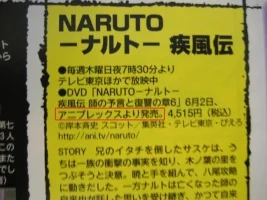
All are right. The last three are ri, hatsu, and bai, the last two being kanji. It should be noted that the tsu in there is the small one that represents a geminate, so the spelling should be anipurekkusu. All together it's Anipurekkusu yori hatsubai. Anipurekkusu is in katakana, yori in hiragana, and as I said above hatsubai in kanji.

I went to Australia in high school. Therefore I am back in Tokyo now. Are there a lot of Americans that study Japanese in college ??Hey everyone, back again for help. Communicating with a pen pal this time, but this is kinda difficult for me to figure out. I get the gist of it but a few things I don't understand, can someone translate for me please?
オーストラリアは、高校の時に行ってたんだ。だから、今はもう東京に戻ってきてるよ☆アメリカの大学で、日本語勉強する人は多いの???
Your life would be completely unmanageable !Thanks Elizabeth, what would I do without this site and the people on it: .
もの would be more common for the case, since の can be interpreted as a nominalizer, that is, "the action that I read every day" or like that.Thank you Glenn and Elizabeth!
So for a sentence with that structure containing a verb (such as 'The one I read every day'), would it be 毎日読むの?
もの would be more common for the case, since の can be interpreted as a nominalizer, that is, "the action that I read every day" or like that.
No, it depends on the context, where the pronoun is used.Thanks!
So もの is more common for verbs and の for adjectives?