

Navigation
Install the app
How to install the app on iOS
Follow along with the video below to see how to install our site as a web app on your home screen.
Note: This feature may not be available in some browsers.
More options
Style variation
System
Light
Dark

You are using an out of date browser. It may not display this or other websites correctly.
You should upgrade or use an alternative browser.
You should upgrade or use an alternative browser.
Need a word or phrase translated?
- Thread starter Buntaro
- Start date

Tomii515
やった~!
- 16 Feb 2006
- 1,206
- 21
I have two questions:
(1) how would i say "There was Steve the fish." or "There was a fish named Steve." . I'm mostly focuses on the steve & fish part.
I thought it might be something like 魚のスティーブ, but I really wasn't sure...
(2) And how would you say "Steve forgot that he needed water to breathe."
I know it's something like スティーブさんは水が要る(要った?)と忘れました。
I know that "to breathe" (息をする) has to fit in there somewhere.... I just don't know where, or how to put it in.
How would you do this type of clause in japanese? if you can give another example similar to this, it'd be much appriciated!
よろしくお願いします!
(1) how would i say "There was Steve the fish." or "There was a fish named Steve." . I'm mostly focuses on the steve & fish part.
I thought it might be something like 魚のスティーブ, but I really wasn't sure...
(2) And how would you say "Steve forgot that he needed water to breathe."
I know it's something like スティーブさんは水が要る(要った?)と忘れました。
I know that "to breathe" (息をする) has to fit in there somewhere.... I just don't know where, or how to put it in.
How would you do this type of clause in japanese? if you can give another example similar to this, it'd be much appriciated!
よろしくお願いします!

Elizabeth
先輩
- 22 Apr 2003
- 9,839
- 135
1. 魚のスティーブがいました。(でした)I have two questions:
(1) how would I say "There was Steve the fish." or "There was a fish named Steve." . I'm mostly focuses on the Steve & fish part.
I thought it might be something like 魚のスティーブ, but I really wasn't sure...
2. スティーブという魚だ。
スティーブさんは、呼吸するために(するには) 水が必要であることを忘れてしまいました。(2) And how would you say "Steve forgot that he needed water to breathe."
I know it's something like スティーブさんは水が要る(要った?)と忘れました。
I know that "to breathe" (息をする) has to fit in there somewhere.... I just don't know where, or how to put it in.
How would you do this type of clause in japanese? if you can give another example similar to this, it'd be much appriciated!
よろしくお願いします!
*easiest construction* Steve has forgotten water is necessary to breathe.
つまり、彼は、水の外にいる魚のようなものだね。
:emoji_blush:
Tomii515
やった~!
- 16 Feb 2006
- 1,206
- 21
1. 魚のスティーブがいました。(でした)
2. スティーブという魚だ。
スティーブさんは、呼吸するために(するには) 水が必要であることを忘れてしまいました。
*easiest construction* Steve has forgotten water is necessary to breathe.
つまり、彼は、水の外にいる魚のようなものだね。

どうもありがとうございます!

実は、うどんの中にいる魚ですよ。ww
僕は学校で退屈なので、スティーブさんという魚についてストーリーを書こうと思いました。
ストーリーには、スティーブさんがうどんの中に泳いでみましたが、呼吸するために水が必要であることを忘れてしまったので、死にました。


- 22 Feb 2008
- 18,266
- 4,926
You can also use "the nominalizer の + a particle" structure.How would you do this type of clause in Japanese? if you can give another example similar to this, it'd be much appreciated!
よろしくお願いします!
息をするのに水が要る
テニスをするのが大好き
love to play tennis
彼が来るのを待つ
wait for him to come
Elizabeth
先輩
- 22 Apr 2003
- 9,839
- 135
You can also use "the nominalizer の + a particle" structure.
息をするのに水が要る
Ahhhhhh, yes のに! Probably I really am too scared of what someone fussing over little grammar things will say if that one isn't used preeecisely.
ために ー in order to
のに ー for, to (Focus is on the instrumental, process of survival through breathing, rather than staying alive as an end result OR refers to the necessity of breath for sustaining life)
には ー Forget about here...

Last edited:
- 22 Feb 2008
- 18,266
- 4,926
This には is considered the omitted version of のには, a topicalized adverbial clause.には ー Forget about here...
呼吸をするには水が必要だ
息をするには水が要る
には can't be used with a negative form.
○生きるには水が要る
○生きるためには水が要る
×死なないには水が要る
○死なないためには水が要る
Also, it's often used as a criterion of evaluation.
泳ぐにはちょっと寒い
a bit cold to swim
初心者が理解するには難しすぎる
too difficult for beginners to understand
Elizabeth
先輩
- 22 Apr 2003
- 9,839
- 135
As far as with set phrases like にもかかわらず and にちがいない, without losing their nuance, verbs are also sometimes able to act as self-nominalizers. That much at least I understand. The top two here, though, are not exactly interchangeable, apparently, between (の)に(は). I'm still confused...This には is considered the omitted version of のには, a topicalized adverbial clause.
呼吸をするには水が必要だ
息をするには水が要る
には can't be used with a negative form.
○生きるには水が要る
○生きるためには水が要る
×死なないには水が要る
○死なないためには水が要る
Also, it's often used as a criterion of evaluation.
泳ぐにはちょっと寒い
a bit cold to swim
初心者が理解するには難しすぎる
too difficult for beginners to understand
自分で、一日見物する(の)には、どんな仕方がいちばんいいですか?
→「の」はないほうが、なめらかな感じがします。
結婚する(の)に当たり。。。
→「の」はないほうが、なめらかな感じがします。
体に障害がある(の)にもかかわらず。。。
→どちらも同じニュアンス
なんか悪いことをしている(の)に違いない
→どちらも同じニュアンス
- 22 Feb 2008
- 18,266
- 4,926
例文の中では一番最初だけが「連用節の主題化」です。修飾先の用言が形容詞(この例文だと「いい」)の場合に多いですが、「評価の基準」の「に」ですね。As far as with set phrases like にもかかわらず and にちがいない, without losing their nuance, verbs are also sometimes able to act as self-nominalizers. That much at least I understand. The top two here, though, are not exactly interchangeable, apparently, between (の)に(は). I'm still confused...
自分で、一日見物する(の)には、どんな仕方がいちばんいいですか?
→「の」はないほうが、なめらかな感じがします。
結婚する(の)に当たり。。。
→「の」はないほうが、なめらかな感じがします。
体に障害がある(の)にもかかわらず。。。
→どちらも同じニュアンス
なんか悪いことをしている(の)に違いない
→どちらも同じニュアンス
見物するのに一番いいやり方です → 見物するにはどれが一番いいやり方ですか?
連用節の「に」や逆接の接続詞を同時に例出する前に、そもそも格助詞「に」が名詞節ではなく動詞の連体形 (現代文法では終止形と同じ)を直接受けられる用法がある、ということを確認したほうがいいと思いますが。
Elizabeth
先輩
- 22 Apr 2003
- 9,839
- 135
分かりました。詳しく説明してくれてありがとうございます。例文の中では一番最初だけが「連用節の主題化」です。修飾先の用言が形容詞(この例文だと「いい」)の場合に多いですが、「評価の基準」の「に」ですね。
見物するのに一番いいやり方です → 見物するにはどれが一番いいやり方ですか?
連用節の「に」や逆接の接続詞を同時に例出する前に、そもそも格助詞「に」が名詞節ではなく動詞の連体形 (現代文法では終止形と同じ)を直接受けられる用法がある、ということを確認したほうがいいと思いますが。

その規則性を理解するのに形式文法をよく習う必要があると思うね。。
それでも、以下のような文章も「少し評価」だから、ややこしくなってしまったよねえ。
コンビニは、いるいろなことをするのに、非常に便利な場所になった。
↑省略できません
電子メールは、遠くにいる友達に連絡する(の)には、便利です。
↑省略可能
livethedrum
後輩
- 19 Mar 2009
- 4
- 0
Ok guys,
I have kind of a strange request...
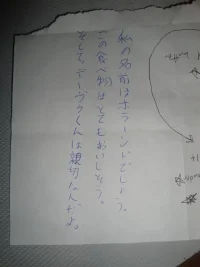
a note was left at my house that was written in kanji, and I have absolutely no skills in reading or speaking Japanese! If I could send you a good picture of the note, could one of you translate it for me? This note may or may not be important, but it is the last communication I have from a dear friend of mine.
Any help would be awesome!
I have kind of a strange request...
a note was left at my house that was written in kanji, and I have absolutely no skills in reading or speaking Japanese! If I could send you a good picture of the note, could one of you translate it for me? This note may or may not be important, but it is the last communication I have from a dear friend of mine.
Any help would be awesome!

Ashikaga
もちもちした食感
- 19 Feb 2008
- 2,220
- 84
Ok guys,
I have kind of a strange request...
a note was left at my house that was written in kanji, and I have absolutely no skills in reading or speaking Japanese! If I could send you a good picture of the note, could one of you translate it for me? This note may or may not be important, but it is the last communication I have from a dear friend of mine.
Any help would be awesome!
Why would a dear friend of yours leave a note for you that they know you wouldn't be able to read? Sounds odd. :emoji_fearful:
livethedrum
後輩
- 19 Mar 2009
- 4
- 0
She passed away...
she left the note at my house the day before she died.
i probably should have mentioned that, but i didn't think anyone would ask.
she left the note at my house the day before she died.
i probably should have mentioned that, but i didn't think anyone would ask.
Ashikaga
もちもちした食感
- 19 Feb 2008
- 2,220
- 84
She passed away...
she left the note at my house the day before she died.
i probably should have mentioned that, but i didn't think anyone would ask.
Hmm... that still doesn't answer my question.
Why don't you just post the picture and see?
livethedrum
後輩
- 19 Mar 2009
- 4
- 0
she always joked and told me she would teach me Japanese, she would frequently leave me notes and then translate them later. but she obviously she's not here to translate this one. Like I said earlier, it may or may not be anything substantial, but I would still like to know.
Attachments
livethedrum
後輩
- 19 Mar 2009
- 4
- 0
Yes, her name was Holland,
Thanks for translating that, I appreciate it!
Thanks for translating that, I appreciate it!
- 22 Feb 2008
- 18,266
- 4,926
「には」は主題化された連用節「のには」の「の」が省略されたものと考えられるということであって、「評価の基準:のに」の「の」が省略できるということではありません。連用節「のに」中のnominalizer「の」は 、少なくとも現代文では基本的に省略不能です。分かりました。詳しく説明してくれてありがとうございます。
その規則性を理解するのに形式文法をよく習う必要があると思うね。。
それでも、以下のような文章も「少し評価」だから、ややこしくなってしまったよねえ。
コンビニは、いるいろなことをするのに、非常に便利な場所になった。
↑省略できません
電子メールは、遠くにいる友達に連絡する(の)には、便利です。
↑省略可能
コンビニは、いろいろなことをするには非常に便利な場所になった。(主題化されると「の」 が出てこない)
電子メールは、遠くにいる友達に連絡するのに便利です。(連用節内のnominalizer「の」は省略不能)
Hi, I tried to translate this sentence from english to japanese:
To see her again perhaps with some wrinkle barely visible.
かろうじて見える若干のしわでおそらく又彼女を見ること。
Does it seem correct? Or did I make any mistake? I mean... probably japanese people wouldn't talk this way in real life. Do you have any suggestion to make it seem more natural. Thanks to anyone who might help.
Barbara
To see her again perhaps with some wrinkle barely visible.
かろうじて見える若干のしわでおそらく又彼女を見ること。
Does it seem correct? Or did I make any mistake? I mean... probably japanese people wouldn't talk this way in real life. Do you have any suggestion to make it seem more natural. Thanks to anyone who might help.
Barbara
Elizabeth
先輩
- 22 Apr 2003
- 9,839
- 135
また、おそらくかろうじて見えるしわが有る彼女に会うでしょうHi, I tried to translate this sentence from english to japanese:
To see her again perhaps with some wrinkle barely visible.
かろうじて見える若干のしわでおそらく又彼女を見ること。
Does it seem correct? Or did I make any mistake? I mean... probably Japanese people wouldn't talk this way in real life. Do you have any suggestion to make it seem more natural. Thanks to anyone who might help.
Barbara
Maybe something like this....just guessing here...
- 22 Feb 2008
- 18,266
- 4,926
Here's my attempt.Hi, I tried to translate this sentence from English to Japanese:
To see her again perhaps with some wrinkle barely visible.
かろうじて見える若干のしわでおそらく又彼女を見ること。
Does it seem correct? Or did I make any mistake? I mean... probably Japanese people wouldn't talk this way in real life. Do you have any suggestion to make it seem more natural. Thanks to anyone who might help.
Barbara
見えるかどうかくらいのしわがあるだろう彼女に、また会う(こと)。

Tokyo girl <3
Miyavi lover ^^
- 29 Oct 2008
- 655
- 0
Hello. ^^ Could you please translate this sentence for me on Japanese:"Miyavi is an adorable creature". It may be a little bit stupid but I need it. Oh, and the pronounciation, pls. 

undrentide
Japa'n vagyok
- 18 Jan 2006
- 3,652
- 310
For parts of a store:
"Dressing room" and "display case." Thanks in advance!
Dressing room : if it is a room to try clothes on, it's usually called 試着室(しちゃくしつ) shichakushitsu.
Display case: I cannot think of good one - ディスプレイ disupurei (which came from "display" in English) or ショーケース shookeesu (also from show case)?
I hope other members come up with better translation for this.
Ashikaga
もちもちした食感
- 19 Feb 2008
- 2,220
- 84
Dressing room : if it is a room to try clothes on, it's usually called 試着室(しちゃくしつ) shichakushitsu.
Display case: I cannot think of good one - ディスプレイ disupurei (which came from "display" in English) or ショーケース shookeesu (also from show case)?
I hope other members come up with better translation for this.
試着室 & ディスプレイ・ケース sound good to me, too.
Similar threads


- Replies
- 11
- Views
- 115K