

Navigation
Install the app
How to install the app on iOS
Follow along with the video below to see how to install our site as a web app on your home screen.
Note: This feature may not be available in some browsers.
More options
Style variation
System
Light
Dark

You are using an out of date browser. It may not display this or other websites correctly.
You should upgrade or use an alternative browser.
You should upgrade or use an alternative browser.
Need a word or phrase translated?
- Thread starter Buntaro
- Start date

undrentide
Japa'n vagyok
- 18 Jan 2006
- 3,652
- 310
1. It should be ほざく (not ぼざく), which means "to say". But it's an extremely derogatory expression.
2. Just as Glenn san explained.
2. Just as Glenn san explained.

Fuumei
眼鏡が要る
- 18 Sep 2005
- 242
- 1
This is the last sentence of my chapter, and I have a couple of questions - if someone wouldn't mind taking time to help.
携帯電話はいつもだれかと繋がっていたいという、若い人たちの気持ちにぴったりなのだろう。
I see this as "The mobile phone (is said) to want to be connected to someone all the time, (AND) it fits the feelings of young people perfectly."
This makes no sense to me, especially the first half (ending in "to iu").
Also, the "に" in "にぴったり", is it a common particle with "ぴったり" meaning "to fit (this)"?
Many thanks in advance, this is really a headache.
携帯電話はいつもだれかと繋がっていたいという、若い人たちの気持ちにぴったりなのだろう。
I see this as "The mobile phone (is said) to want to be connected to someone all the time, (AND) it fits the feelings of young people perfectly."
This makes no sense to me, especially the first half (ending in "to iu").
Also, the "に" in "にぴったり", is it a common particle with "ぴったり" meaning "to fit (this)"?
Many thanks in advance, this is really a headache.

undrentide
Japa'n vagyok
- 18 Jan 2006
- 3,652
- 310
Maybe it is easier for you to understand it if you break into the sentence like this.
携帯電話は
as for the mobile phone
いつもだれかと繋がっていたいという、若い人たちの気持ちに
the feeling of the youth (which is) to want be connected with someone all the time
「いつも・・・という」 explains (若い人たちの)気持ち.
ぴったりなのだろう。
it (= the mobile phone) fits well, it seems/I suppose, etc.

携帯電話は
as for the mobile phone
いつもだれかと繋がっていたいという、若い人たちの気持ちに
the feeling of the youth (which is) to want be connected with someone all the time
「いつも・・・という」 explains (若い人たちの)気持ち.
ぴったりなのだろう。
it (= the mobile phone) fits well, it seems/I suppose, etc.
Yes, it is.Also, the "に" in "にぴったり", is it a common particle with "ぴったり" meaning "to fit (this)"?
D
dark_secrester
Guest
I need the word 'guru' translating to it's nearest counterpart in Japanese.
Guru as in somebody who knows a lot about a certain topic.
I think a new thread is needed. You could lose yourself reading all these looking for your post!
じゃまた!!!
ジョー
Guru as in somebody who knows a lot about a certain topic.
I think a new thread is needed. You could lose yourself reading all these looking for your post!
じゃまた!!!
ジョー
Hello,
It would be great if someone can help me about this problem...
Alright.. I found something interesting in Yahoo auctions,
but I can't really understand japanese .. >_>
So I wondered if someone can tell me if this person is selling the books in -good condition (no damages)- ...
Here's the link to the auction :
page7.auctions.yahoo.co.jp/jp/auction/g50126530
Thank you so much if you can help me!
It would be great if someone can help me about this problem...
Alright.. I found something interesting in Yahoo auctions,
but I can't really understand japanese .. >_>
So I wondered if someone can tell me if this person is selling the books in -good condition (no damages)- ...
Here's the link to the auction :
page7.auctions.yahoo.co.jp/jp/auction/g50126530
Thank you so much if you can help me!
undrentide
Japa'n vagyok
- 18 Jan 2006
- 3,652
- 310
It says that "please don't bid if you want this item in the perfect condition without even the slightest damage". Also it says in both Japanese and English:Hello,
It would be great if someone can help me about this problem...
Alright.. I found something interesting in Yahoo auctions,
but I can't really understand Japanese .. >_>
So I wondered if someone can tell me if this person is selling the books in -good condition (no damages)- ...
Here's the link to the auction :
page7.auctions.yahoo.co.jp/jp/auction/g50126530
Thank you so much if you can help me!
・海外発送はしません。(Seller will not ship internationally.)


undrentide
Japa'n vagyok
- 18 Jan 2006
- 3,652
- 310
I'm Very Suck At Kanji.
Can Someone Wrote It In Romanji
Help Me Please
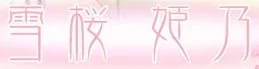
木漏れ日の並木道
komorebi no nanimikimichi
雪桜姫乃
Yukizakura Himeno
The second pronunciation is only my guess - it looks like a girl's name.
(Yukizakura should be the family name, Himeno the given name.)
It is romaji (roomaji), not romanji, by the way.
undrentide
Japa'n vagyok
- 18 Jan 2006
- 3,652
- 310
I'm having trouble with this sentence:
そこはいかにカルチャーにサヴィーかどうかですな。
"That's whether or not how much culture savvy he has." ??? I just can't make sense of it.
Ah! I do hate this type of Japanese! The person who wrote this sentence obviously try to appear "trendy".

(...Sorry if it is someone you know.)
I guess it meant to be
そこはいかに文化に精通しているかどうかですな。
- It depends on whether he understood the culture well or not.
- The question is whether he knows a lot about the culture or not.
is my attempt.
Meaning of 文化 varies depending on the context.
oh, this is really bugging me!
Please, I would be really grateful to anyone who could shed some light on what it means if you (in any part) are "ハリがある" (hari ga aru).
Any help welcome! Thanks!
I guess ハリ here means 張り(はり).
Often it is used to describe about your skin, and in that case 張り means firmness, vitality, etc.
Last edited:

Glenn
一切皆苦
- 8 Jan 2004
- 7,842
- 200
Ah! I do hate this type of Japanese! The person who wrote this sentence obviously try to appear "trendy".
(...Sorry if it is someone you know.)
I'm not worried about it in the least.
undrentide;447924 said:I guess it meant to be
そこはいかに文化に精通しているかどうかですな。
- It depends on whether he understood the culture well or not.
- The question is whether he knows a lot about the culture or not.
is my attempt.
Meaning of 文化 varies depending on the context.
I believe the "the question is..." version is the more applicable one in this case. I guess it was that いかに in there that was throwing me off. It still seems like a strange way to phrase it.
I guess ハリ here means 張り(はり).
Often it is used to describe about your skin, and in that case 張り means firmness, vitality, etc.
I was thinking 針 too.

yoocher
後輩
- 2 Feb 2007
- 9
- 0
I posted this in the music section but I've gotten no response:
The SADISTIC MIKA BAND | Japan Forum
Is there anyone who has an English translation to this song?
thank you in advance!
The SADISTIC MIKA BAND | Japan Forum
Is there anyone who has an English translation to this song?
thank you in advance!
Tokyofan25
先輩
- 19 Mar 2007
- 24
- 0
I think this is where I ask my question:
there's a Japanese restaurant near where I live and its called Daikoku
I like to know if the word means anything in Japanese.
there's a Japanese restaurant near where I live and its called Daikoku
I like to know if the word means anything in Japanese.
undrentide
Japa'n vagyok
- 18 Jan 2006
- 3,652
- 310
大黒 Daikoku refers 大黒天 Daikokuten, one of the 七福神 Shichi-fuku-jin/Seven Lucky Gods.I think this is where I ask my question:
there's a Japanese restaurant near where I live and its called Daikoku
I like to know if the word means anything in Japanese.
Seven Lucky Gods - Wikipedia
It's a symbol for good fortune and believed to bring you wealth.
Daikokuten - Wikipedia
Similar threads


- Replies
- 11
- Views
- 115K