Politics Japan's controversial and unpopular Imperial House Law revision

thomas

Unswerving cyclist
Admin
Joined
14 Mar 2002
Messages
21,048
Reaction score
18,898
Last week, Mainichi published an interview with Japanese historian Nitō Atsushi, professor emeritus at the National Museum of Japanese History, who argues that the historical evidence supporting claims of an uninterrupted male-line imperial succession has been oversimplified for modern political purposes.

The timing is significant. The leaders and deputy leaders of both houses of the Diet are currently trying to build cross-party consensus on legislation intended to address the Imperial Family's shrinking size while preserving the existing male-line succession system.

Conservatives in the LDP insist that the throne should continue to pass only through the male line, as stipulated by the current Imperial House Law. Rather than permitting female-line succession, they favour restoring male descendants of the former collateral imperial branches (kyū-miyake) that lost their imperial status under the Allied Occupation in 1947. This step would preserve the traditional male-line succession. Critics, however, question both the historical basis of the "unbroken" male line and the practicality of bringing back families that have lived as ordinary citizens for nearly 80 years.

In the Mainichi interview, Nitō argues that the widely repeated claim of an unbroken male-line imperial succession is presented with greater historical certainty than the available evidence supports. He points to uncertainties surrounding the genealogy of some early emperors, particularly Emperor Keitai. He suggests that the modern emphasis on an uninterrupted paternal line owes much to the nation-building ideology of the Meiji period rather than to an unquestioned historical consensus.

Nitō is not disputing the legitimacy of the current Imperial Family but argues that policymakers should distinguish between history and political tradition. If male-line succession is to be preserved, the case should be based on today's constitutional or cultural values, not on historical claims that historians still debate.

And:

If the aim is to secure stable Imperial succession in realistic terms, the minimum first step should be to allow women in the male line to become emperor.

Read the interview here:

 
How the conservative factions of the LDP think about female succession to the throne became evident last week, when LDP lawmaker Nakasone Hirofumi, the son of former PM Nakasone Yasuhiro, stated that it would be "impossible" for Princess Aiko ever to become emperor and that no one would want to marry her if she did, as there would be tremendous pressure on her to give birth to a boy.

Opposition parties quickly criticized the remarks. One member of the Centrist Reform Alliance said, "They were statements not even worthy of commentary. Aren't they remarks that should be withdrawn immediately?" A Democratic Party for the People lawmaker said, "Given that the subject concerns the Imperial Household and Princess Aiko, he cannot escape criticism for being reckless." If opposition parties harden their stance further, it could disrupt the Diet's stated goal of holding discussions in a "calm and quiet environment." Fumitake Fujita, co-leader of Nippon Ishin (the Japan Innovation Party), told a press conference, "He stated the current understanding. But the parts where he added unnecessary comments were extremely inappropriate."

Nakasone later apologised for his remarks. A senior official at the PM's office criticised his co-partisan's remarks, calling them disrespectful and saying he wanted the lawmaker to keep quiet.


Haven't there been Empresses in past Japanese history (Empress Nukatabe Suiko). I'm sure the ashes of one were scattered in an area to the front of a temple I stayed in on Koyasan.

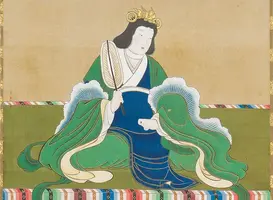
Josei tennō: Japan's empresses regnant

History  Josei tennō: Japan's empresses regnant

Eight women have ascended the Chrysanthemum Throne throughout Japanese imperial history across ten distinct reigns. These reigning empresses, referred to as josei tennō (女性天皇, "female emperor"), inherited the kōi (皇位, "imperial position") during exceptional periods—typically when no suitable...
 
Polls consistently show that around 70% of Japanese support the idea of a female emperor. PM Takaichi, however, is pursuing legal changes that would allow male descendants of the former collateral imperial branches to return to the Imperial Family through adoption. So where does the Emperor stand on the issue?


Many former royals reject the proposed changes to imperial succession:


The government's proposed revision of the Imperial House Law is drawing criticism not only from opposition parties but also from legal experts and activists outside the Diet. The aim is to address the Imperial Family's shrinking size while keeping the current system of male-line succession.

Female members of the Imperial Family would be allowed to remain part of the family after marriage, but their husbands and children would stay commoners. Critics say this creates an odd inconsistency. Imperial women do not have surnames, but their husbands and children would, meaning members of the same family would legally have different names. They also argue that this clashes with conservatives' long-standing opposition to separate surnames for married couples, a stance often justified in the name of "family unity."


And while ordinary Japanese couples cannot use dual surnames, the royals can (or rather have to).

A woman in her 70s living in Hiroshima Prefecture has long advocated legal reform to allow married couples to choose separate surnames, and has joined litigation as a plaintiff seeking such a change. "Members of the conservative wing of the Liberal Democratic Party who have insisted that a shared surname is the very bond that holds a family together—won't family bonds disappear in the families of female imperial family members?" she posted on X in early June after following media reports on the Imperial House Law debate, noting the irony. Through her years of advocacy activities, the woman has frequently encountered arguments against separate surnames, including the assertion that allowing them would inevitably lead to parents and children having different surnames. Watching the current Diet debate, she wonders, "What would those who angrily argued that family unity would be lost if parents and children had different surnames say now?"


Concerns have also been raised from an academic standpoint.

On 8 July, experts specialising in Japanese women's history and gender history submitted a petition to opposition lawmakers at the Diet. Signed by 16 people, the petition notes that eight women reigned as emperors over 10 generations in Japanese history. It also criticises the notion of "male-line males" as a "new tradition" created during the Meiji Era (1868-1912). It calls for a more careful deliberation.

Mitsunari Miho, a professor of gender law at Otemon Gakuin University, argues that the government's proposed revision of the Imperial House Law places a unique burden on female members of the Imperial Family to preserve male-line succession. She says the proposal creates an imbalance between male and female members by applying different rules to women than to men.

She criticises the government for emphasising family unity among ordinary citizens while treating the imperial family as an exception solely to maintain the male line, saying that such selective application is "difficult to understand and lacks persuasive power." Mitsunari further warns that "The symbolic emperor system can function only if it is operated in a way that the public understands and supports. If public sympathy diminishes, it could create a critical situation for the imperial institution itself."

 
The government's proposed revision of the Imperial House Law is drawing criticism not only from opposition parties but also from legal experts and activists outside the Diet. The aim is to address the Imperial Family's shrinking size while keeping the current system of male-line succession.
Can't they get some Zoo experts in and initiate an Imperial Family Breeding Program? It worked for the pandas🐼
Female members of the Imperial Family would be allowed to remain part of the family after marriage, but their husbands and children would stay commoners. Critics say this creates an odd inconsistency. Imperial women do not have surnames, but their husbands and children would, meaning members of the same family would legally have different names. They also argue that this clashes with conservatives' long-standing opposition to separate surnames for married couples, a stance often justified in the name of "family unity."
Families in Burma don't have a family name. My partner's family all have different surnames and there's no lack of unity amongst them.
And while ordinary Japanese couples cannot use dual surnames, the royals can (or rather have to).
Sounds like Japan needs its own version of Magna Carta; Royalty and commoners must be treated the same…like Andrew Mountbatten-Windsor (the Royal formerly Known as Prince)🙄
Mitsunari Miho, a professor of gender law at Otemon Gakuin University, argues that the government's proposed revision of the Imperial House Law places a unique burden on female members of the Imperial Family to preserve male-line succession. She says the proposal creates an imbalance between male and female members by applying different rules to women than to men.
Women being treated under different rules to men? Who'd've thought such a thing might happen? The professor's job appears to be 'money for old rope'!🙄
 
Can't they get some Zoo experts in and initiate an Imperial Family Breeding Program? It worked for the pandas🐼

That's what they are basically trying to do by re-integrating the old imperial families into the gene pool.


Sounds like Japan needs its own version of Magna Carta; Royalty and commoners must be treated the same…like Andrew Mountbatten-Windsor (the Royal formerly Known as Prince)🙄

The British royals never claimed to descend from a kami, did they?

Women being treated under different rules to men? Who'd've thought such a thing might happen? The professor's job appears to be 'money for old rope'!

Bringing the Imperial Family into the realm of gender equality would be revolutionary. At least by Japanese standards.
 
That's what they are basically trying to do by re-integrating the old imperial families into the gene pool.
I'm suggesting that 'Imperial breeding couples' are locked in a 'romantic cell' (with a one way mirror for scientific observation), the mail has all his Gameboys surgically removed from their hands, during lulls in the conversation chat up lines could be suggested via little slips of paper to get things going ('Your hair is very black and straight', 'Although you have very little musculature, you are clearly a male representative of our species' and 'nice weather. Would you like to get it on?' In dire circumstances, a turkey baster could be brandished.
The British royals never claimed to descend from a kami, did they?
Well, Edward the Confessor is a saint but British modesty would preclude them making such claims.
Bringing the Imperial Family into the realm of gender equality would be revolutionary. At least by Japanese standards.
Just wave a turkey baster at them when they start listening to Idols bands, watching anime/reading manga when they should be breeding!
 
LDP politician Murakami Seiichiro, a former member of Shigeru Ishiba's Cabinet, has strongly criticised the Takaichi administration's plan to amend the Imperial House Law by allowing distant male relatives to be adopted into the Imperial Family, thereby preserving male-only succession. He said it was outrageous to deny Princess Aiko any possibility of succeeding to the throne and criticised the proposed revision of the Imperial House Law as lacking respect for the Imperial Family.


Today, Japan's parliament enacted a landmark revision to the 19th-century Imperial House Law, reaffirming that only men in the paternal imperial line can succeed to the throne. The move immediately raised concerns that it could further threaten the future of an imperial family whose numbers continue to shrink. The changes allow the adoption of distant male-line relatives to help secure future heirs. They also allow princesses to retain their imperial status after marrying commoners, a departure from the current rule, under which female members of the Imperial Family leave the Imperial Family upon marriage.

Friday's proposal has led to protests from Japanese who see the government efforts as meant to eliminate Aiko from ruling and to justify discrimination against women and a patriarchal system. "It's very ironic that the first female prime minister herself is the leading proponent of the obsession with male-succession," Chizuko Ueno, a prominent feminist scholar, wrote recently referring to Takaichi. Ueno said the new measures "treat male royals as stallions and put female royals under pressure as 'childbearing machines' to produce male offspring."


Four-fifths of the Japanese population supports a female emperor:

 
The law will change to allow for female emperors some day--when there is no conceivable alternative. In the meantime, I, too, 100% support Aiko-sama becoming emperor in the future.
 
The law will change to allow for female emperors some day--when there is no conceivable alternative. In the meantime, I, too, 100% support Aiko-sama becoming emperor in the future.
Or do away with the imperial family altogether. But I agree they'd probably allow females before they'd do that.
 
Japan is a heavily right-leaning society so the prospect of modern, progressive thinking and a change in legislation is an anathema to its government. Look at the self-induced turmoil around the Meiji restoration ! Luckily, the existence of the Imperial family is of no real consequence politically, it's just a tradition so we shouldn't worry about it.
 
I love Jake's columns! Please read if you're interested in the topic.

Not doing their country any favours: the puppeteer and its puppet.

Not doing their country any favours: the puppeteer and its puppet.


Japan's first female Prime Minister, Sanae Takaichi, who is basically Donald Trump in a blue-dress, has successfully cock-blocked her from becoming the next Empress by shoving new legislation down the throats of Japan. The people are not happy. Takaichi can be cute but Aiko is actually cute and her smile is real. It's a shame. Japan finally got its first female prime minister, Sanae Takaichi, and she used the historic occasion to hold the elevator door closed on the next woman. It is the sort of achievement that belongs in a museum display titled WOMEN IN LEADERSHIP– if the display is in the basement and the elevator is broken. Takaichi's government pushed through revisions to the Imperial House Law allowing female members of the Imperial Family to retain royal status after marrying commoners and permitting the adoption of male descendants from former imperial branches. What the law does not do is allow Princess Aiko—or any woman—to inherit the throne. The male-line, male-only rule remains exactly where conservative politicians like it: sealed in amber and guarded by elderly men. Takaichi's puppet master, the senile and very old ex-Prime Minister, Aso Taro, was very happy with the new law. The rest of the country? Not so much.

 
Back
Top Bottom