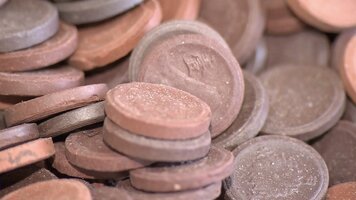
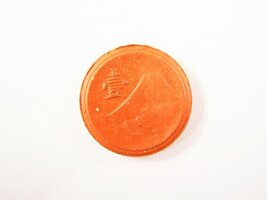
A significant discovery of nearly 500,000 ceramic coins, produced during World War II to address metal shortages, has been made at a former factory in Higashiyama Ward. These 1-sen coins, featuring Mount Fuji and a cherry blossom on each side, were never officially issued due to the war's end.
Japanese ceramic coins issued in WWII
The Japan Mint, which produced 15 million ceramic coins of various denominations during the war, considers this find historically significant. Despite their low monetary value, these artefacts provide valuable insights into the challenges faced during wartime. The discovery of such a large quantity of ceramic coins is considered rare, as most were disposed of after the war. The Japan Mint plans to exhibit these artefacts at the Mint Museum in Osaka and other locations.
About 500,000 ceramic coins produced because of metal shortages during World War Two but never circulated have been discovered in Kyoto City, western Japan.
Archaeologists have discovered the remnants of toilets dating back to the Kamakura period (1185-1333) and the Muromachi period (1336-1573) at the Suwanomae ruins in Akune, Kagoshima Prefecture. Analysis of the earthen pits revealed the presence of vegetable matter and parasitic eggs, offering valuable insights into people's daily lives during those times. This discovery marks the first instance in the southern Kyushu region (comprising Kagoshima, Miyazaki, and Kumamoto prefectures), where scientific analysis has identified ancient toilet remains.
Photo credit: Cultural Promotion Foundation of Kagoshima Prefecture
Kagoshima Prefecture's cultural promotion foundation conducted an excavation survey at the 6,646-square-meter ruins, located on a pyroclastic plateau at an altitude of 34 meters, in fiscal 2023 in conjunction with the construction of the Minami-Kyushu Expressway, and found six circular earthen pits, approximately 1.5 to 1.6 meters in diameter and roughly 1.3 meters deep each, with plant seeds inside. When the soil from four of the six pits was examined, two of them were found to contain eggs of roundworms and whipworms, pollen of cruciferous vegetables such as daikon radish and the genus Fagopyrum, which includes buckwheat, as well as rice, sesame, red bayberry seeds and seashells. The roundworms and whipworms are believed to have infected people who ate raw vegetables with the parasites' eggs attached. Since the eggs and pollen from edible plants were detected in high concentrations, researchers determined that the pits were the remains of toilets where faecal matter was deposited. The size of the holes, each roughly 1.5 metres in diameter, suggests that people used the toilets while straddling boards over them at the time.
The Nara National Museum is set to host a groundbreaking exhibition showcasing Japan's most exquisite Buddhist art treasures. This monumental event, "Oh! Kokuho: Resplendent Treasures of Devotion and Heritage," will commemorate the museum's 130th anniversary. The exhibition will feature approximately 140 art pieces, including 110 national treasures and 20 important cultural properties. These masterpieces will be categorized into seven thematic sections, providing a comprehensive overview of Japan's rich Buddhist art heritage. Yoichi Inoue, the museum's executive director, emphasized the unique nature of this exhibition, stating that it is an exhibition dedicated to Buddhist and Shinto art that only the Nara National Museum can offer.
Notable exhibits at the exhibition in Nara will include
Early Period:
Kudara Kannon: This iconic statue represents the early influence of Chinese Buddhist art on Japanese sculpture.
Dragon-headed Ewer: This artefact demonstrates the sophisticated metalworking techniques of the seventh century and the strong cultural exchange between Japan and China during that period.
Seated Statue of Buddha Dainichi Nyorai: Attributed to the renowned sculptor Unkei, this statue showcases the realistic and expressive style of the Kamakura period .
Kinji Raden Kenukigata Tachi longsword: With its intricate decoration, this sword exemplifies the high level of craftsmanship during the Kamakura period.
Muromachi Period:
Seated Statue of Priest Chogen: This statue represents the spiritual and artistic ideals of the Muromachi period.
Kinji Raden Kenukigata Tachi longsword with a tweezer-shaped opening from the Heian Period (794-1185) is designated a national treasure.
The exhibition will run from April 19 to June 15, 2025, with some exhibits subject to replacement. It will be held at the same time as "Japan, An Artistic Melting Pot," a special exhibition at the Kyoto National Museum.[/box]
The city of Kitakyushu will partially preserve 133-year-old railway remnants that it had planned to demolish to construct a new public facility:
Photo credit: City of Kitakyushu
The city plans to preserve sections of the historic Moji Station complex, dating back to the Meiji Era , by relocating some parts and burying others onsite. While most of the old station will be demolished to make way for a new multi-purpose facility, key elements like the foundation of the locomotive shed, which blends European and Japanese architectural styles, will be conserved. Other sections, built on the boundary of reclaimed and original land, will be extracted and displayed underground for public viewing. The city aims to educate future generations about the cultural significance of these remains through exhibitions, digital presentations, and collaborations with local schools. Construction of the new facility is scheduled to begin in April 2025, with completion expected by March 2028.
With the old facilities in question ranging from 40 to over 90 years old, some of them lack adequate earthquake-proofing and accessibility features. The remains of the first Moji Station complex, which first opened in 1891, were discovered during a trial trenching that began in March 2023 as part of preparations for the city's ¥12.2 billion ($79 million) new facility. Since the discovery, the city has clashed with academics and community organizations over the preservation of the remains. The city assembly had previously blocked a budget for the partial relocation of the remains, saying the city's decision-making process was problematic. The city then moved to demolish the remains in their entirety to allow the planned construction to proceed.
Archaeologists working at the site of an ancient samurai stronghold in Ōita have unearthed a Christian relic dating back to medieval times. The relic, a Veronica medal, is a small disc made of tin and lead, measuring 2.5 centimetres in diameter. One side depicts the face of Jesus, while the other shows Mary holding the infant Jesus.
This is the second Veronica medal ever discovered in Japan. It was found during the 50th excavation at the site of the Ōtomo clan (大友氏), a powerful family that ruled the region for centuries. The medal was discovered near a settlement that traded with Chinese, Portuguese, and other foreign merchants.
The Veronica medal found during the excavation of the former Otomo clan residence in Oita features images of
Jesus and Mary with the baby Jesus on its two sides (provided by the Oita city board of education).
The Otomo clan ruled what is now Oita and nearby prefectures in Kyushu, Japan's southern main island, for 400 years until the late 16th century. The family's heyday came when Otomo Sorin (1530-1587) took control of the region. Sorin was famous for converting to Catholicism and allowing Portuguese priests to do missionary work in areas under his rule. He also promoted trade with Korea, China and Portugal by establishing a trade centre in Oita. Archaeologists believe the medal was made when Sorin was in power. The first Veronica medal was uncovered 23 years ago near the site. According to legend, Saint Veronica was the woman who presented a piece of cloth to Jesus to wipe sweat and blood from his face on his way to Golgotha for his crucifixion. When Jesus handed the cloth back to her, it was said to have been imprinted with the image of his face.
The relic was discovered in the castle's former moat, which was filled in during restoration efforts after the castle was destroyed by the Shimazu clan in 1586. The Shimazu clan ruled over the region that is now Kagoshima Prefecture.
For the first time, a room within the World Heritage site of Nijō Castle in Kyōto City will be open to the public early next month. The "Ōhiroma-chō-dai no ma" (大広間帳台の間), situated in the Ninomaru-goten Palace, is usually off-limits to visitors. However, it was unveiled to the media on Tuesday in anticipation of its public opening. It is believed that Tokugawa shoguns traversed this room to reach the adjacent "Ohiroma Ichi-no-ma," the castle's most esteemed chamber, where they would meet with court nobles and feudal lords.
Ōhiroma-chō-dai no ma" (大広間帳台の間)
Starting next month, the room's sliding doors will be opened, allowing visitors to view it from the corridor. Furthermore, selected original paintings adorning the room's sliding doors and walls, featuring scenes like people enjoying autumn leaves, will be exhibited at the castle grounds' gallery.
In addition, some of the original paintings on the room's sliding doors and walls, depicting scenes such as people enjoying autumn leaves, will be displayed at the gallery on the castle grounds. Curator Nakano Shiho says the staff prepared lighting and other details for the occasion, and that they hope visitors can imagine how the shogun spent his time here. The "Ohiroma Chodai-no-ma" will be open to visitors starting 4 January, and the paintings will be on display from 23 December.
Archaeologists in Anan City, Tokushima Prefecture, have made a groundbreaking discovery at the Wakasugiyama cinnabar (辰砂 shinsha) mine, a nationally recognized historic site. They've unearthed evidence of cinnabar mining dating back to the late Yayoi period (1000 BC—250 AD), suggesting that advanced mining techniques, previously thought to have originated in ancient Rome and China's Han Dynasty, may have been employed in Japan much earlier.
Photo credit: AieTomoya via Asahi
The discovery of a unique mining technique, known as the "fire-placement method," has stunned experts. This method involves heating the surface of hard rock by burning wood to make it easier to extract the cinnabar, a valuable mineral used to create the pigment vermillion. This technique during the Yayoi period pushes back the timeline of advanced mining technology in Japan by over 1,400 years.
The oldest known example of this method in Japan is believed to have been used at the Nobesawa silver mine site in Yamagata Prefecture in the early Edo Period (1603-1867). According to the city government's cultural promotion division, during excavations in fiscal 2023, a pit approximately 40 centimetres wide and 50 cm deep was discovered in the sedimentary rock's bedrock. Since it was artificially dug along the vein and black soot remained on the wall, it was determined that there was a high probability that it was the remnants of mining using the fire-placement method. According to Tetsuya Okubo, a professor of archaeology at Tokushima Bunri University, some documents indicate that ancient Rome used similar techniques for mining gold, and the Han Dynasty used similar methods for mining cinnabar. "It is important to note that world-class mining technology was brought to Japan during the Yayoi Period," Okubo said. "It is possible that the latest technology from China was introduced to Shikoku via Kyushu and the Seto Inland Sea."
Vermilion, a vibrant red pigment made from cinnabar, held significant symbolic importance in ancient cultures. It was often used to adorn the deceased, appearing on their faces and coffins and even decorating the walls of their burial chambers. This practice likely reflected beliefs about the afterlife or the power associated with red.
Historical records, such as the third-century Chinese text Gishi Wajinden (魏志倭人伝), provide evidence of Japan's early involvement in cinnabar production. The text mentions that cinnabar was mined in Japan's mountains and that Queen Himiko, a powerful ruler of the ancient Japanese state of Yamatai, presented cinnabar as a tribute to the Chinese dynasty. This suggests that cinnabar mining and trade played a significant role in ancient Japanese society and its interactions with other East Asian civilizations.
Hundreds of artefacts used by "hidden" Christians in Nagasaki Prefecture during a period of severe religious persecution have been proposed for recognition as Important Tangible Folk Cultural Properties.
These 2,218 artefacts, from the mid-16th century, when Christian missionaries first arrived in Japan, to the mid-20th century, provide a remarkable testament to the extraordinary secrecy with which Japanese Christians practised their faith to evade brutal persecution. In the early 17th century, the Edo Shogunate outlawed Christianity and implemented harsh punishments for those who refused to renounce their beliefs. To survive, these "hidden" Christians ingeniously adapted their religious practices, incorporating elements of Shinto and Buddhism.
Photo credit: Hirado city government in Nagasaki Prefecture
For example, they venerated images of the Virgin Mary in traditional Japanese kimonos. Among the submitted items are prayer books, known as "orasho" (derived from the Latin "oratio" meaning "prayer"), which were discreetly used in their clandestine worship. These artefacts, owned by six organizations, including the Hirado city government, offer a glimpse into the resilience and ingenuity of a community forced to practice their faith in the shadows.
Before the Hidden Christian Sites in the Nagasaki Region were included in the UNESCO World Heritage list in 2018, officials with the International Council on Monuments and Sites (ICOMOS), an advisory body to UNESCO's World Heritage Committee, suggested a search be made of items used to practice religion. That led the Nagasaki prefectural government to undertake a five-year study into Christian relics in its jurisdiction. In addition, four traditional festivals, including those that use huge dolls in a ceremonial parade, were recommended for designation as Important Intangible Folk Cultural Properties.
The upcoming exhibition of the famous Yamanbagiri Kunihiro (山姥切国広) sword at the Ashikaga Museum of Art has proven popular even before opening its gates, with online reservations exceeding expectations. Despite receiving 90,000 applications for only 45,000 available slots, the museum has accommodated some additional visitors through a lottery system. The exhibition, celebrating this iconic sword associated with the city, will run from 8th February to 23rd March.
The Yamanbagiri Kunihiro (photo credit: Ashikaga City)
The Honsaku Nagayoshi (本作長義, photo credit: Tokugawa Art Museum)
The Honsaku Nagayoshi, another famous sword that the Yamanbagiri Kunihiro is believed to have been modelled on, will also be displayed. According to officials, this will be the first time in 435 years that the two swords, both designated as important cultural properties by the central government, will be brought together in Ashikaga. To ease congestion, the museum will allow up to 140 spectators per hour into the venue, or about 44,000 visitors during the exhibition's 39-day run, excluding closed days. Most reservations so far have been made for weekends and weekday mornings. "The Yamanbagiri Kunihiro has always been a popular sword, and it has attracted more attention than usual because it will be simultaneously displayed (alongside the Honsaku Nagayoshi)," said Ashikaga Mayor Naohide Hayakawa. "We received more reservations than we expected."
Swords have gained attention largely thanks to Touken Ranbu Online, an internet-based video game particularly popular among women. The game features swordsmen inspired by famous blades, including the Yamanbagiri Kunihiro. The museum previously featured the Yamanbagiri Kunihiro for special exhibitions held in 2017 and again in 2022. During the 2017 event, 95 per cent of the visitors were women.
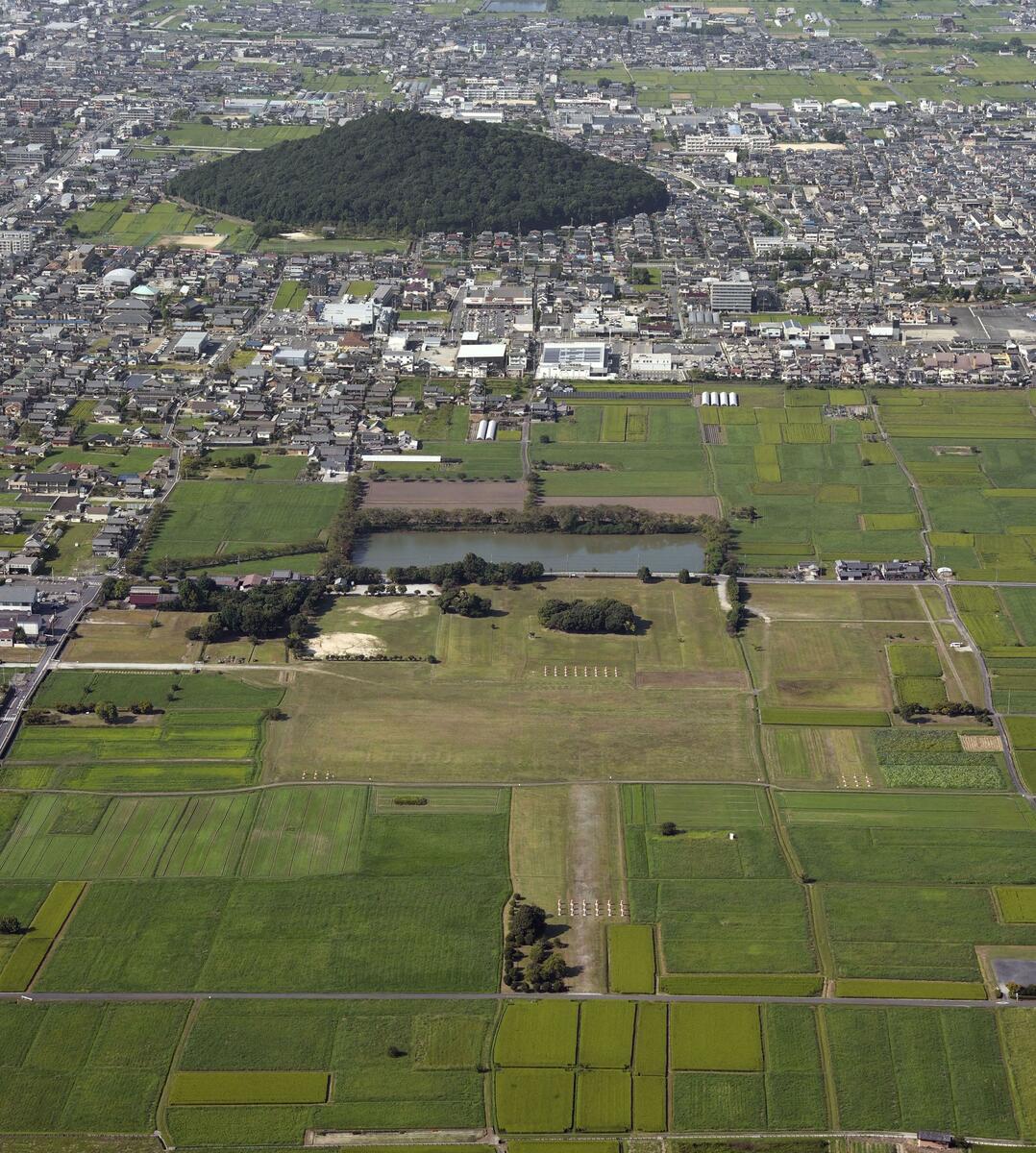
Japan has nominated 19 historical sites in Nara Prefecture, dating from the late 6th to early 8th centuries, for UNESCO World Heritage status. These sites, including the remains of imperial palaces and burial mounds, are being considered for inscription on the list in 2026.
The archaeological site of the Fujiwara Palace in Kashihara, Nara Prefecture
Fujiwara Palace in Kashihara, Nara Prefecture
The "Ancient Capitals of Asuka and Fujiwara" site is a testament to "how the centralized administrative framework was formed during East Asia's ancient state establishment period," Deputy Chief Cabinet Secretary Keiichiro Tachibana said in a press conference Tuesday. A U.N. Educational, Scientific and Cultural Organization advisory panel is expected to conduct an on-site survey around this fall, and a session of the World Heritage Committee, to be convened in the summer of 2026, will discuss whether to approve the listing.
The Japanese government recommended on Tuesday ancient capitals located in current-day Nara Prefecture, western Japan, as candidates for UNESCO's World Heritage list to be inscribed in 2026.
A hospital room in Tokyo, severely charred by U.S. firebombing during World War II, has remained largely untouched for nearly 80 years. Once part of San-Ikukai Hospital's central ward in Sumida-ku, the room bears the scars of the 10 March 1945 air raid that killed an estimated 100,000 people in a single night.
The Room of Forgotten Air Raid Soot San-Ikukai Hospital (photo credit: Kyodo)
As the ageing hospital building is being demolished, sections of the soot-covered room have been carefully removed for preservation and display at the Center of the Tokyo Raids and War Damage in Koto Ward. The exhibit aims to educate visitors about the devastation caused by the bombings, which reduced much of Tokyo to ashes. The preserved room, previously known to hospital staff as "the room of forgotten air raid soot," was likely a machine room above the elevator. Curators at the centre confirmed that the firebombing caused the damage.
During the attack, Tokyo's wooden houses and strong winds fueled an inferno that destroyed approximately 270,000 homes. Survivors, like 83-year-old Yoshida Yumiko, recall the unbearable heat and tragic loss of loved ones. Yoshida, who lost her parents and younger sister in the chaos, expressed gratitude for the preservation effort, believing it would help future generations understand the horrors of war. To mark the 80th anniversary of the air raid, the centre is hosting a special exhibit from 5 February to 4 April featuring the room's charred walls, burnt wood, and other artefacts.
Rare cultural treasures from Shōkokuji (相国寺) and its sub-temple Kogen-in, located in Kyōto's Kamigyō Ward, will be open to the public from 2-9 March. This special viewing, held for the first time in March, is part of a seasonal exhibition organized by the Kyoto Heritage Preservation Association and other institutions, with The Asahi Shimbun as a special sponsor. Shōkokuji is the headquarters of the Rinzai sect's Shokokuji school, established by Ashikaga Yoshimitsu (1358–1408), the third shogun of the Muromachi Shogunate.
Banryuzu is a painting of a dragon on the ceiling of the Hatto Hall of Shokokuji (photo credit: Kyoto Heritage Preservation Association)
Visitors will have the rare chance to see the Hatto Hall, a state-designated important cultural property built in 1605 by a prominent warlord. The hall is famous for Banryuzu, a striking dragon painting on its ceiling. The temple's bathing quarters and the Hojo priest's quarters will also be accessible to the public.
Kogen-in is the family temple of Ashikaga Yoshiteru (1536-1565), the 13th shogun of the Muromachi Shogunate. "Fusuma-e" sliding door paintings of the 12 Chinese zodiac animals in the main hall and other properties will be shown to the public. Admission is 1,000 yen ($6.60) for adults and 500 yen for junior and senior high school students. Revenue from the exhibition will be used to preserve and repair cultural properties.
In Asuka Village, Nara Prefecture, a high-performance IR camera captured new details of the "Azure Dragon" (青龍 Seiryū) mural, one of the National Treasure wall paintings in the Kitora Tomb (キトラ古墳 Kitora kofun). Previously obscured by mud, the camera revealed parts of the dragon's body and the scales along its back, which had remained hidden until now.
The Agency for Cultural Affairs in Kyoto announced this discovery last Thursday. The "Azure Dragon," depicted on the east wall of the tomb's stone chamber as the guardian deity of the east, had been mostly covered in mud, with only its head and part of its front legs faintly visible. After photographing the mural with advanced infrared technology and processing the images, researchers could see the dragon's elongated body and the intricate details of its scales, in addition to more precise views of the head and front legs. Although some areas, such as the tip of the long tail and the hind legs, remain indistinct, the Agency for Cultural Affairs stated that they had successfully captured the full figure of the Azure Dragon.
Professor Wada Seigo of Ritsumeikan University, who chaired the panel, noted that advanced technology had made it possible to capture a complete view of the Azure Dragon. He emphasized that this was a significant achievement for restoring the mural's original appearance and allowing more people to appreciate it. The agency plans to explore alternative imaging methods to uncover additional hidden sections. When the original mural is eventually displayed to the public, they intend to exhibit photographs highlighting the newly revealed details to share and preserve the discovery.
Here's what the dragon mural might have looked like initially:
The Kitora Tomb (キトラ古墳 Kitora Kofun) is an ancient tumulus (kofun in Japanese) located in the village of Asuka, Nara Prefecture, Japan. The tomb is believed to have been constructed between the 7th and early 8th centuries but was only discovered in 1983. A small stone chamber, the Kitora Tomb is a little over 1 metre in height and width and about 2.4 metres long, just large enough to bury a single person. The four walls are aligned with the compass's cardinal points and feature the Black Divine Tortoise of the North, the Azure Dragon of the East, the Red Phoenix of the South, and the White Tiger of the West. There is also an astronomical chart on the chamber's ceiling that has been the focus of much research and debate by scholars in archaeoastronomy. In addition, the 12 zodiac animals-headed figures with human bodies are painted on the wall, which may be one of East Asia's oldest remaining zodiac murals.
We have already mentioned the imposing keyhole-shaped imperial burial mound of Daisen "kofun " in Sakai, Osaka Prefecture, in this thread.
The Imperial Household Agency, which had previously imposed strict limitations on access, oversees the Daisen kofun burial mound, formally recognized as the Emperor Nintoku Mausoleum. This ancient, forested mound is the largest of 49 sites inscribed on UNESCO's World Heritage list in 2019. The burial sites date back to the late fourth to late fifth centuries, often regarded as the "golden age" of burial mounds.
The Daisen "kofun" burial mound in Sakai (photo credit: Ito Shinnosuke)
On 7 March, agency officials accompanied representatives from 17 historical and archaeological academic organizations to the site, marking the first time in the postwar period that scholars were permitted entry. Since the mound spans 486 metres and is encircled by a moat, the group had to travel to the structure by boat. Once there, they spent roughly two hours exploring the first-level terrace.
"We found areas where the mound had fallen in and layered stones that had been redone," said Shin Hidaka, a professor of archaeology at Tokyo Gakugei University who represented the Japanese Archaeological Association. "Because there were areas unknown from survey maps or from observations outside the mound, we want to find a way to share the knowledge with the public." All of the burial mounds included in the World Heritage list are located in bustling residential areas of the cities of Sakai, Habikino and Fujiidera, all in Osaka Prefecture. But because the mounds held the remains of emperors and other members of the imperial family, the Imperial Household Agency had banned entry. It was only in 2008 that scholars were allowed limited access.
Scholars had long been eager to study the Nintoku tomb. Still, the Imperial Household Agency had only granted access to 17 other sites before this. The academic group expressed their intention to continue urging the agency to increase the frequency and scope of observation visits and eventually open the site to the public.
Although the agency designates the Daisen burial mound as Emperor Nintoku's mausoleum, no definitive evidence has confirmed the identity of the individual buried there. The mound dates back to the fifth century. While local authorities examined its front section in 1872, access was subsequently restricted.
Joint excavations by the Imperial Household Agency and the Sakai municipal government in 2018 and 2021 revealed cylindrical haniwa — terracotta figures and funerary objects — along with stone decorations on the embankments. However, the burial chamber itself remained untouched.
I asked ChatGPT why the Imperial Household Agency is so restrictive in granting access to those kofun:
The debate around Japan's kofun tombs is fascinating and controversial. Scholars have long pushed for more access to these ancient burial mounds, arguing that archaeological research could uncover invaluable insights into Japan's early history, the origins of the imperial family, and the country's connections to the Asian continent. However, the Imperial Household Agency (IHA) remains deeply cautious, caught between tradition, historical narratives, and concerns over disturbing sacred spaces.
One central point of contention is the identity of those buried in the tombs. The Daisen kofun, for example, is said to house Emperor Nintoku, but there's no solid archaeological evidence to confirm this. If investigations were to reveal that the tomb's occupant wasn't an emperor, it could challenge the official narrative of Japan's imperial lineage — something the IHA seems keen to avoid. The imperial family's legitimacy is historically tied to claims of an unbroken bloodline stretching back to the sun goddess Amaterasu, so any discovery that undermines this could be politically sensitive.
There's also a fear of international scrutiny. If full-scale excavations revealed evidence of outside influence — say, from Korea or China — it might complicate nationalistic narratives of Japan's purely indigenous development. Some historians believe kofun culture was influenced by migration and cultural exchange with the Korean peninsula, but without access to burial chambers, it isn't easy to confirm.
Another factor is the spiritual and cultural significance of these sites. In Shinto beliefs, ancestors and nature are deeply intertwined, and disturbing the final resting place of an emperor could be seen as disrupting the connection between the imperial family and the divine. The IHA treats the kofun not just as historical monuments but as living sacred spaces, which adds another layer of complexity to the access debate.
In recent years, small concessions have been made. Limited scholarly visits and joint excavations of non-burial areas have taken place, and the kofun sites were added to the UNESCO World Heritage list in 2019. However, full access to burial chambers remains off-limits, and the IHA shows no sign of changing its stance completely.
The face of a Japanese woman who lived approximately 1,800 years ago has been recreated in a striking reconstruction that researchers described as unexpectedly resembling modern features. Unveiled on 20 March at the Aoya Kamijichi Historical Park, the bust was meticulously crafted using DNA analysis of her skull. According to experts, the reconstruction depicted her with light skin, straight hair, double eyelids, dark irises, thick eyebrows, and no moles.
Researchers also reported that the DNA analysis had revealed other genetic traits, including dry earwax and a high tolerance for alcohol. Tottori Governor Shinji Hirai, who attended the unveiling, was said to have been astonished by the bust's lifelike quality. He reportedly remarked that it was so realistic that it almost convinced him this was exactly how their ancestors had looked.
Photo credit: Takayuki Seino via Asahi
The woman's skull, which dates to the late stages of the Yayoi Pottery Culture Period (1000 B.C.-A.D. 250), was unearthed at the Aoya Kamijichi archaeological site in 2000. Tottori Prefecture conducted the facial reconstruction project with the cooperation of the National Museum of Nature and Science in Tokyo. "She was cool," said Hinato Yamamoto, 6, who visited the facility to see the reconstruction. "I was amazed that people like this lived here. I'm glad I got to see it," said Nana, his 28-year-old mother. This is the third bust reconstructed from skulls recovered at the archaeological site. The first reconstruction was of a man dubbed "Kamijiro Aoya" and the second was of a boy dubbed "Raito Aoya."
<p>TOTTORI — The Tottori prefectural government has created a bust of a boy from the Yayoi period (300 B.C.- 300 A.D.) with a face reconstructed using bones found at the Aoya Kamijichi ruins and DNA analysis.</p>
The Aoya Kamijichi Historical Park (鳥取県立 青谷かみじち史跡公園), with its ruins discovered in Aoya Town, Tottori, was once a thriving harbour settlement during the Yayoi period. It served as a key hub for trade and interaction among people travelling across the Sea of Japan. Artifacts from the site include...
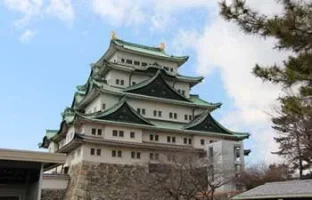
The main hall of Enryakuji Temple, a national treasure on Mount Hieizan, will be restored to its original Edo Period (1603-1867) appearance based on discoveries made during ongoing repair work. Officials from the Shiga prefectural government announced on 1 April that renovations on the Konpon-Chudo main hall will be extended by approximately three years, pushing completion to September 2030, to incorporate these findings. Traces of paint found when the Edo Period copper plates were removed for restoration revealed that the hall's copper-plated roof, now green due to oxidation, was originally painted black. The black coating was applied for durability, a technique also observed in structures such as the Nagoya Castle keep.
Photo credit: Asahi Shimbun and Shiga Prefecture
Workers also found traces of the colour and gold plating used centuries ago on the outer wall and under the eaves. From this, experts pieced together that the decorative objects of the eaves had been orange, while a deeper red was used farther down from the eaves. The hall was razed in 1571 by the warlord Oda Nobunaga (1534-1582) but rebuilt in 1642 by Tokugawa Iemitsu, the third shogun of the Tokugawa lineage. Although the roof had been made of wood, in 1798, it was replaced with copper plates. An official in charge of the current repairs said efforts would be made to re-create what the structure looked like when it was rebuilt by closely following the evidence to repaint the eaves and restore the roof to its original black.
Himeji Castle has launched its special spring opening, allowing visitors to access areas usually closed to the public. This limited-time event includes entry to three smaller keeps adjacent to the central tower and the corridors that connect them. These structures are designated national treasures and rarely open for viewing. The opening coincides with the lead-up to Expo 2025.
One highlight is the five-story Inui Kotenshu, Northwest Keep, whose top floor lacks window lattices. This offers an impressive, unobstructed view of the central tower.
Himeji Castle, a UNESCO World Heritage site in Hyogo Prefecture, has begun its special spring opening, offering visitors the rare chance to explore parts of the castle that are usually off-limits to the public.
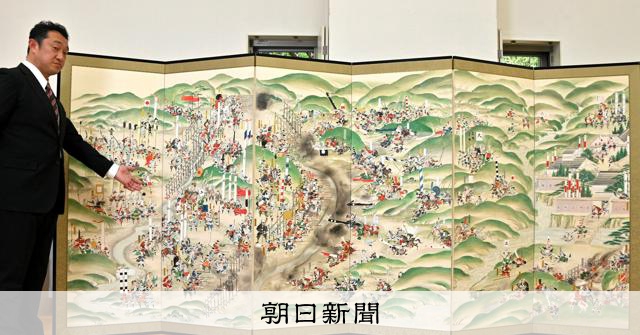
Two replica folding screens depicting the Battles of Nagashino and Shitaragahara (1575) and the Battle of Komaki and Nagakute (1584) were completed by graduates of Aichi University of the Arts using the same materials and techniques as the originals, which date from the 18th to 19th century.
In the reproductions, platinum replaced silver for the commanders' name tags to prevent degradation. The Nagakute screen will be permanently exhibited at a new memorial museum in 2026, while the Nagashino screen remains with the university. This project is the 17th reproduction of a classical work by the university since 1974 and the first in five years.
The exhibition will be held from 29 April to 11 May, from 10:00 to 16:00, in the replica production room of the Horyuji Kondo Wall Painting Replica Gallery. Additionally, from now until 18 May, the replica wall paintings of Horyuji's Kondo are being shown in the permanent exhibition room for the first time in two years. Admission is free.
The two folding screens were passed down through the Owari Tokugawa family. One screen depicts the Battle of Nagashino and Shitaragahara (長篠・設楽原の戦い) in 1575, where the allied forces of Oda Nobunaga and Tokugawa Ieyasu used arquebusiers against the cavalry of Takeda Katsuyori (武田勝頼, 1546–1582). The other shows the Battle of Komaki and Nagakute (小牧長久手の戦い) in 1584, in which Tokugawa Ieyasu's forces defeated the allied troops of Mori and Ikeda, fighting under Hashiba Hideyoshi.
The replica of the Nagakute Battle Folding Screen was commissioned by the university from Nagakute and the prefectural public university corporation under a research agreement signed in 2021. The project cost was approximately 20 million yen. The replica will become a permanent exhibit at the planned Nagakute Battlefield Memorial Museum (tentative name), scheduled to open in spring 2026. This year also marks the 450th anniversary of the Battle of Nagashino and Shitaragahara. The Nagashino Battle Folding Screen replica will remain in the university's possession, and its display methods are currently being considered.
Last month, traces of a small medieval mountain castle were discovered in the hills of Tatsuno, Hyōgo Prefecture, thanks to the use of cutting-edge AI-powered surveying technology. This breakthrough raises the question whether such innovative methods may usher in a new era of archaeological discoveries.
Remnants of a mountain castle discovered in Tatsuno, Hyōgo: the raised area on the far right could be an earthwork,
while the dented area on the left is the remains of a moat (photo credit: Takata Yuichi).
The key to this finding was the highly detailed three-dimensional map data released by Hyōgo Prefecture. Researchers from the Nara National Research Institute for Cultural Properties (Nabunken) confirmed the castle site after identifying distinct landforms during fieldwork, features initially spotted through AI-assisted map analysis conducted during unrelated research.
The remains lie close to a mountain peak, about an hour's walk from the nearest road. One side of the slope shows a level surface, and various topographical features—including what appear to be traces of a moat and a bridge—are visible. The vertical distance from the base of the moat to the flattened area is estimated to be around five metres.
The ruins were found near a peak about an hour's walk from a road. One of its slopes is flattened, and landform features such as traces of a moat and a bridge were seen there. The height from the bottom of the moat to the flattened area is estimated to have reached 5 meters. Since remnants of roads were also found nearby, it was concluded that it was highly probable that the castle was a lookout. Since it is not built robustly enough as a base for battle, as those in the Sengoku (Warring States) period (1467-1615), the site is thought to date back to the 14th century Nanbokucho period (1336-1392) when mountain fortresses were still developing. Four kilometres northeast, the Kinoyama Castle Ruins sit where the Akamatsu clan, a powerful family in Harima Province at the time, had their base of operations.
The Board of Education of Yonezawa City in Yamagata Prefecture has designated a piece of horse tack once used by the Sengoku-period warlord Uesugi Kenshin (上杉謙信, 1530–1578) as a Tangible Cultural Property of the city. The item, known as the mōsen kurabuse (毛氈鞍覆, felt saddle cover), is housed at Uesugi Shrine.
According to the National Treasure "Documents of the Uesugi Family " (上杉家文書 Uesugi-ke Monjo), the saddle cover was authorised for use by Uesugi Kenshin in the year 1550 by the 13th shōgun of the Muromachi shogunate, Ashikaga Yoshiteru (足利義輝, 1536–1565). Furthermore, the National Treasure "Uesugi Version of the Rakuchū Rakugai Folding Screens" (上杉本 洛中洛外図屏風 Uesugi-bon Rakuchū Rakugai-zu Byōbu) features six horses adorned with similar felt saddle covers, and the newly designated item is the only surviving example of its kind, a fact that contributed significantly to its recognition.
From diaries passed down through the Uesugi family, it has also been confirmed that the designated piece was re-dyed in Kyōto during the final years of the Edo period . Kadoya Yumiko, director of the Keishōden (稽照殿), the treasure hall of Uesugi Shrine, remarked that "its value surpasses mere municipal designation, and I hope many people will come to see it."
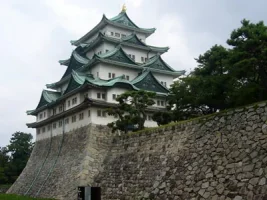
A recent discovery by Misako Asahi, a curator at the Nagoya Castle Research Centre, challenges the long-held belief that the golden shachihoko (金鯱)—mythical tiger-fish ornaments adorning Nagoya Castle—were restored using the original gold after World War II.
The gold "shachihoko" on the donjon of Nagoya Castle (photo credit: Asahi)
The original shachihoko, installed in 1612 to signify the Tokugawa family's authority, was destroyed during a U.S. air raid on 14 May 1945. Post-war narratives claimed that gold fragments collected and returned by U.S. occupation forces were used to recreate the ornaments. However, Asahi unearthed a 1966 document from the Finance Ministry indicating that the returned gold was not from the original shachihoko but was of equivalent value. It is suggested that the current ornaments atop Nagoya Castle are not made from the original gold, and the fate of the authentic material remains unknown.
Despite this, Asahi and her colleagues emphasise the importance of the existing golden tea kettle and flag crown, crafted from the returned gold, as symbols of the postwar era. They advocate for clear explanations in exhibitions to prevent misunderstandings about their origins.
Nagoya Castle (名古屋城 Nagoya-jō) ranked among the three greatest Japanese castles and was built after the Battle of Sekigahara (1600) by Tokugawa Ieyasu as a defence against the Toyotomi who still had held significant power. Ieyasu appointed his son Yoshinao (徳川義直, 1601-1650), the founder of the...
Tokugawa Ieyasu built Nagoya Castle (名古屋城 Nagoya-jō) in 1609-14 on the site of a smaller castle taken over and renamed by Oda Nobunaga’s father, Oda Nobuhide (織田信秀, 1510-1551). The castle was abandoned by the Oda clan in 1582 and reconstructed by the victorious Ieyasu to ensure the security of...
For the first time, the Seven-Pronged Sword, a rare artefact from the fourth century, has been scientifically analysed through X-ray CT scanning. This produces significantly clearer visuals of the sword's gold inlay inscriptions, allowing new academic insight into early Japanese history. Known as the Shichishitō (七支刀), the sword is recognised as a national treasure and preserved at the Isonokami Jinja (石上神宮) in Nara Prefecture. It is notable for its distinctive design, featuring three branch-like protrusions on either side of its central blade.
The Shichishitō (七支刀), a national treasure, is displayed at the Nara National Museum.
The sword, which is named Shichishito, is a designated national treasure housed at Isonokamijinja shrine in Nara Prefecture. It features an unusual structure with three branch-like blades on each side. It bears a 62-character inscription, describing its creation as a diplomatic gift from the royal court of Baekje, a kingdom on the Korean Peninsula, to a Japanese ruler. The Nara National Museum conducted the scan to assess the sword's condition after more than 1,600 years, described by curators as a "health checkup." The imaging revealed a clearer rendering of the character for "je" in "Baekje," which had previously been obscured by corrosion and debated among researchers. Another significant finding involves the inscription referencing the sword's creation year. While most scholars have interpreted it as the fourth year of the Chinese era "Taihe" (369 CE), some have proposed an alternative reading as "Taishi" (468 CE) due to the last character in the word being obscured. The new CT imagery revealed a clearer character shape, strengthening the case for the "Taihe" (369 CE) interpretation.
The Seven-Pronged Sword is jointly featured in the special exhibition "Oh! KOKUHO: Resplendent Treasures of Devotion and Heritage," by Asahi Shimbun and additional collaborators. The exhibition will remain open to the public until 15 June.
A sacred tree, believed to be 850 years old and associated with Sakamoto Ryoma, has collapsed at Takenobu Inari Shrine.
An 850-year-old sacred hackberry tree, reportedly connected to Ryoma Sakamoto , has collapsed at Takenobu Inari Shrine in Kyoto's Nakagyo Ward, damaging parts of the primary and auxiliary shrine buildings. Fortunately, no one was injured. Standing about 23 metres tall, the tree had long been revered as a symbol of the shrine. According to legend, Sakamoto carved a message into the trunk during the late Edo period to reassure his wife, Oryo, that he was safe.
Chief priest Nakao Sotai recalled that the tree fell around 11:30 a.m. three days ago with a crash so loud and powerful that it felt like an earthquake. "The ground shook, and everything trembled," he said. "When I rushed outside, I saw the entire area blanketed in fallen branches. It felt like a dream." The collapse is believed to have been caused by internal decay, and the shrine is now exploring ways to preserve what remains of the historic tree.
Researchers have discovered elaborate decorative patterns on an iron spear tip dating from the late sixth to early seventh century, highlighting the ritual significance of Okinoshima—an island sacred to the Yamato Dynasty.
Photo credit: Preservation and Utilisation Council of "Sacred Island of Okinoshima and Associated Sites in the Munakata Region"
The intricate designs, previously hidden beneath rust, were revealed through an X-ray examination of the spear, which is recognised as a national treasure. Munakata Taisha shrine officials confirmed the findings on 10 June. The approximately 30-centimetre-long spear tip was unearthed on Okinoshima, a World Heritage site in Munakata, Fukuoka Prefecture, alongside numerous other artefacts believed to be from the late Kofun period (third to seventh centuries).
While the spear is thought to have been produced in Japan, its design likely has roots in the Korean Peninsula. Researchers believe it was crafted using the kinzōgan (金象嵌) technique, in which metal is inlaid into incised lines—though the exact metal used remains uncertain, with gold being a strong possibility. Due to the extensive decorative work covering its entire surface, the spear is believed to have been a ritual offering rather than a functional weapon.
Okinoshima, located in the Genkai Sea, is traditionally regarded as the dwelling place of the deity Munakata. For approximately 500 years, the island served as a significant site for marine safety rituals conducted by the Yamato court .
The researchers used a CT scan to create a three-dimensional perspective projection of the blade, allowing them to see inside the sheath and beneath the rust. The cross-section of the spear is triangular. Some researchers believe the pattern is a Japanese arabesque design featuring a combination of hexagonal patterns surrounding a phoenix. Others say the design consists of floral or feather patterns. Toshinori Mizuno, chief of the material section at the Archaeological Institute of Kashihara, Nara Prefecture, stated that the spear is "unique and of excellent quality among items in the Yamato Dynasty. " It was created by the Yamato Dynasty for a ritual ceremony at Okinoshima island, he said. Approximately 80,000 items were discovered on Okinoshima Island after World War II, and all of them have been designated as national treasures. The Cultural Affairs Agency provided a subsidy to the Preservation and Utilisation Council of "Sacred Island of Okinoshima and Associated Sites in the Munakata Region" to conduct X-ray examinations on about 4,200 metal objects, including the spear, from the island.
This site uses cookies to help personalise content, tailor your experience and to keep you logged in if you register.
By continuing to use this site, you are consenting to our use of cookies.



 www3.nhk.or.jp

 www.cointalk.com