Critters and crawlers in Japan

thomas

Unswerving cyclist
Admin
Joined
14 Mar 2002
Messages
21,050
Reaction score
18,903
Instead of posting my critter pics to our photo thread, I started a new thread dedicated to Japanese crawlers. We already have several threads expounding the 'horrors' of Japan's insects (here and here), but if you have any stories or photos to share (not restricted to insects or arthropods, of course), please post them here.

Disclaimer: This thread aims at showing the beauty, curiosities, and biodiversity of Japan's animal kingdom, not to evoke feelings of horror or revulsion. If you search the net for information on Japan's fauna, you will find results like "10 Horrifying Insects That Will Keep You Away from Japan". Horrifying our readers is not the intention of this thread. I maintain that each creature has its place and its own sort of beauty. So while I would not like to share my bedroom with most of them, we should respect and admire them.

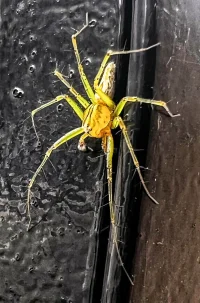
It was @neko_girl22 who started JREF's first spider thread by sharing a photo of a nightly intruder: a Huntsman spider (アシダカグモ ashidakagumo). They rarely venture into urban homes but can often be found lurking on walls or in holes and cavities. And they are as fast as they are big.


spider-jpg.556


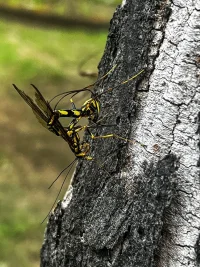
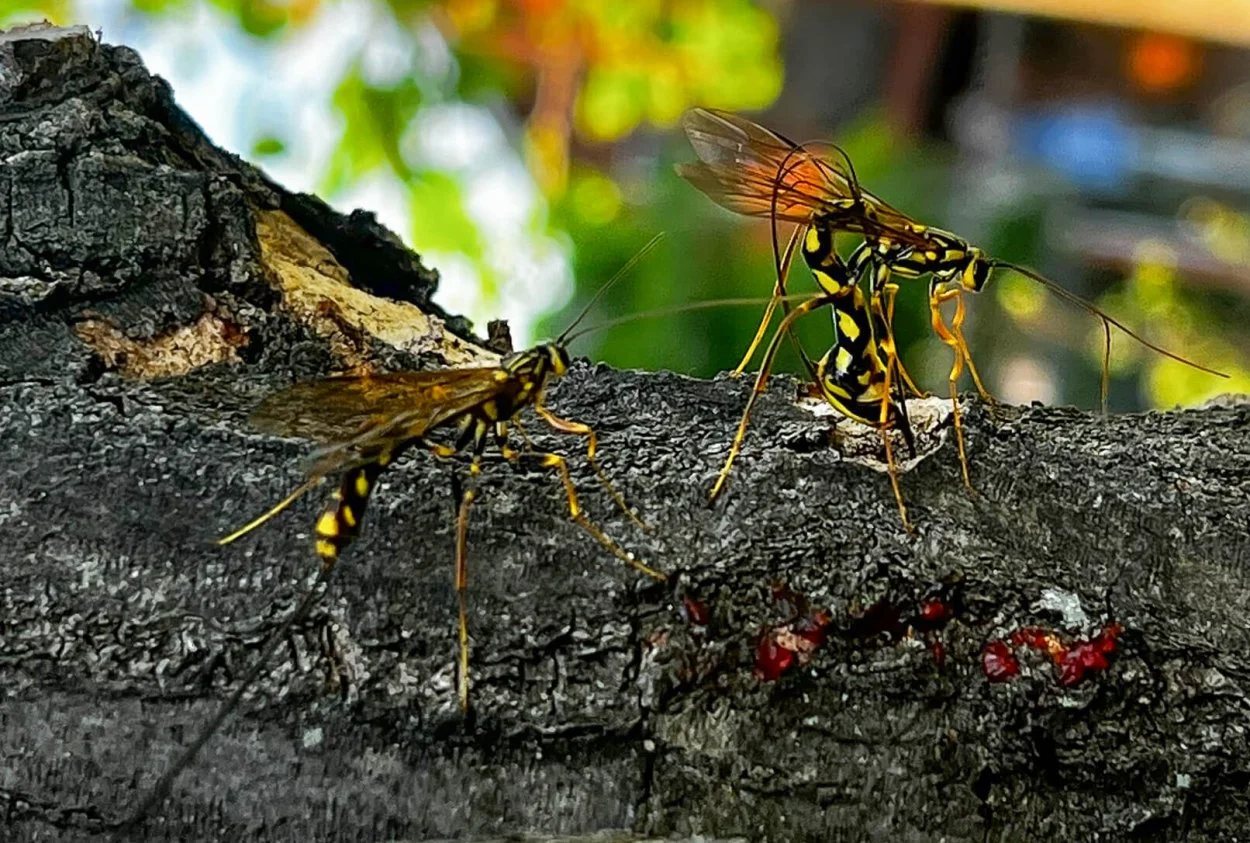
While walking the dog this afternoon, I found two specimens of parasitoid wasps laying eggs in tree cavities. According to Wikipedia, they deposit their eggs in larvae, pupae, or adults of other anthropods; in the photo below, obviously, in some species living under the tree bark. They use enormous ovipositors to lay their eggs. The specimen on the right is inserting its ovipositor in a tree cavity. Sorry, the photo quality isn't perfect (iPhone):
wasp-05.jpg


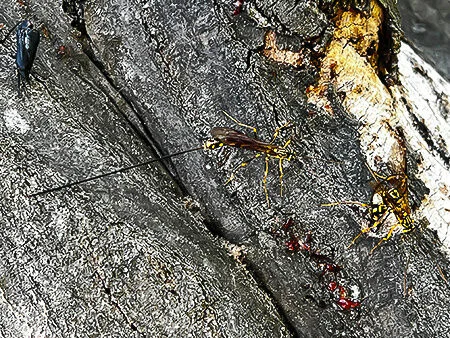
I have no idea which species this is or which hosts they prey on. Their bodies measure about 3 centimetres in length. The photo below gives an impression of their extremely long ovipositor.
wasp-04-2.jpg


Enough entomology for tonight, more to follow. :)
 
One thing I notice is the lack of frogs & snakes around my home. I used to have to be careful when I mowed the lawn not to hit them , now they have vanished. We had raccoons and opossums move in and I think they ate them all. I have to spray my foundation with a peppermint spray to keep ants out of the house. My garage seems to house tons of mice and spiders and I leave them to it.


200.gif
 
Last edited:
Instead of posting my critter pics to our photo thread, I started a new thread dedicated to Japanese crawlers. We already have several threads expounding the 'horrors' of Japan's insects (here and here), but if you have any stories or photos to share (not restricted to insects or arthropods, of course), please post them here.

Disclaimer: This thread aims at showing the beauty, curiosities, and biodiversity of Japan's animal kingdom, not to evoke feelings of horror or revulsion. If you search the net for information on Japan's fauna, you will find results like "10 Horrifying Insects That Will Keep You Away from Japan". Horrifying our readers is not the intention of this thread. I maintain that each creature has its place and its own sort of beauty. So while I would not like to share my bedroom with most of them, we should respect and admire them.

It was @neko_girl22 who started JREF's first spider thread by sharing a photo of a nightly intruder: a Huntsman spider (アシダカグモ ashidakagumo). They rarely venture into urban homes but can often be found lurking on walls or in holes and cavities. And they are as fast as they are big.


spider-jpg.556


While walking the dog this afternoon, I found two specimens of parasitoid wasps laying eggs in tree cavities. According to Wikipedia, they deposit their eggs in larvae, pupae, or adults of other anthropods; in the photo below, obviously, in some species living under the tree bark. They use enormous ovipositors to lay their eggs. The specimen on the right is inserting its ovipositor in a tree cavity. Sorry, the photo quality isn't perfect (iPhone):

View attachment 87074

I have no idea which species this is or which hosts they prey on. Their bodies measure about 3 centimetres in length. The photo below gives an impression of their extremely long ovipositor.

View attachment 87075

Enough entomology for tonight, more to follow. :)
Good idea for a thread! And, yes, let's use it to celebrate the diversity of nature.
 
There is a fantastic abundance of giant beetles in Japan. Japanese children even keep them as pets. They have always fascinated me, as they are pretty rare in Europe.

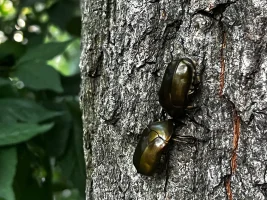
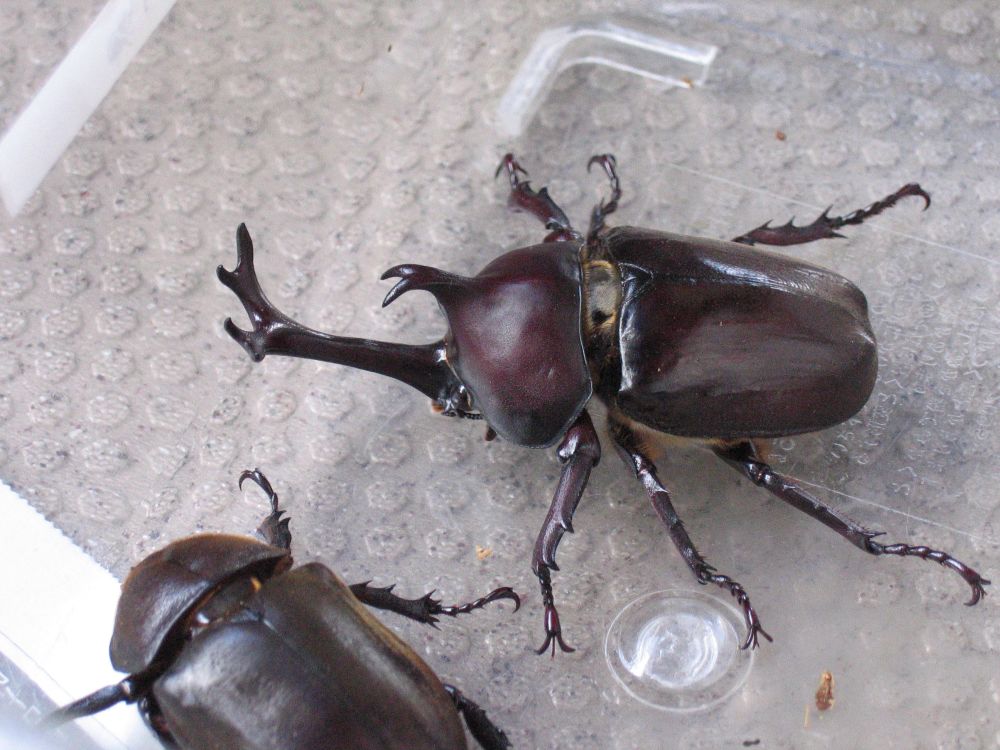
I have found this male specimen, a Japanese rhinoceros beetle (Allomyrina dichotoma, kabutomushi カブトムシ), belly up in our park. It was utterly intoxicated on tree sap and seemed happy to be placed back on the source of its inebriation.

kabutomushi.jpg


The female specimen below landed in our garden and seemed weakly. We tried to nurture her back, but she died the same day (obviously, she had already lost several of her limbs).

kabutomushi-female-2.jpg


Don't forget to upload your finds on inaturalist. I haven't taken many critter/crawler pictures but here's a couple -- Tiger Moth (prior to the moth stage) and a Hammerhead Worm.
1652307857365.png
1652307922982.png
 
Thanks, I will check out iNaturalist.

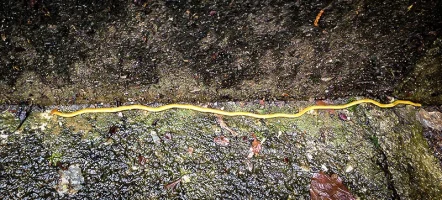
I have some "hammerheads" to share, too. With the rainy season forthcoming, they should be all over soon. They are called kōgaibiru (笄蛭, コウガイビル, "hairpin leech") in Japanese.

kougaibiru-02.jpg


They can grow pretty long. The specimen below reached over 30 centimetres in length. They prey on earthworms.

kougaibiru-01.jpg
 
Instead of posting my critter pics to our photo thread, I started a new thread dedicated to Japanese crawlers. We already have several threads expounding the 'horrors' of Japan's insects (here and here), but if you have any stories or photos to share (not restricted to insects or arthropods, of course), please post them here.

Disclaimer: This thread aims at showing the beauty, curiosities, and biodiversity of Japan's animal kingdom, not to evoke feelings of horror or revulsion. If you search the net for information on Japan's fauna, you will find results like "10 Horrifying Insects That Will Keep You Away from Japan". Horrifying our readers is not the intention of this thread. I maintain that each creature has its place and its own sort of beauty. So while I would not like to share my bedroom with most of them, we should respect and admire them.

It was @neko_girl22 who started JREF's first spider thread by sharing a photo of a nightly intruder: a Huntsman spider (アシダカグモ ashidakagumo). They rarely venture into urban homes but can often be found lurking on walls or in holes and cavities. And they are as fast as they are big.


spider-jpg.556


While walking the dog this afternoon, I found two specimens of parasitoid wasps laying eggs in tree cavities. According to Wikipedia, they deposit their eggs in larvae, pupae, or adults of other anthropods; in the photo below, obviously, in some species living under the tree bark. They use enormous ovipositors to lay their eggs. The specimen on the right is inserting its ovipositor in a tree cavity. Sorry, the photo quality isn't perfect (iPhone):

View attachment 87074

I have no idea which species this is or which hosts they prey on. Their bodies measure about 3 centimetres in length. The photo below gives an impression of their extremely long ovipositor.

View attachment 87075

Enough entomology for tonight, more to follow. :)
The first picture of wasps, were you the one who took the pic? If so, are they big (and you had the courage)?
 
In Fukuoka , several small resturants were along the riverbanks. It seemed they all had a problem with cockroaches. Nothing like eatting your meal with the little critters running across your table or up the wall next to you. I soon learned to avoid those places to eat. The bar where I worked hung out over the river and you could always hear the rats running around under the floor boards and fighting. I'd pick bugs over rats if I had a choice I guess.(1970-72)
200.gif
 
Last edited:
Hi, thomas

This type of wasps with a similar shape but black color exists in Africa, as well. They are the fearless warriors that fight the tarantulas that are ten times bigger than the agile wasps! The wasp engages with the tarantulas and tries to bite its abdomen. Most of the time, the persistent wasp succeeds, and sometimes it is killed by the spider.
After the wasp kills the tarantula with its venomous biting takes it into its hole, puts its eggs into the tarantula's body and leaves the place forever.

Nature has many wonderful events.
 
The first picture of wasps, were you the one who took the pic? If so, are they big (and you had the courage)?

They are very docile and utterly focused on depositing their eggs. I observed that many of them perish with their ovipositor still stuck in the tree bark, only to be eaten by other insect predators. Nothing is wasted in nature.

This type of wasps with a similar shape but black color exists in Africa, as well. They are the fearless warriors that fight the tarantulas that are ten times bigger than the agile wasps! The wasp engages with the tarantulas and tries to bite its abdomen. Most of the time, the persistent wasp succeeds, and sometimes it is killed by the spider. After the wasp kills the tarantula with its venomous biting takes it into its hole, puts its eggs into the tarantula's body and leaves the place forever. Nature has many wonderful events.

That's quite fascinating, Mansoor! I have seen the type of wasps you described in documentaries, but they seem much smaller than the ones I observed on my "study tree." To my utmost regret, that tree was felled last week. Here's a final shot of those industrious wasps. Sadly, their efforts won't come to fruition.

parasitoid-wasp.webp
 
There's a wasp that zombifies cockroaches, maybe they do the same to tarantulas, hopefully not though as it can be disturbing. Anyway nature is nature
Of course, I had a mistake ( I remembered later).

The wasp doesn't kill the tarantula, but its venom paralyzes the tarantula. It is because the larvae of the wasp need fresh meat!

The purpose of the wasp is not to kill the tarantula. It injects a controlled amount of venom to paralyze the tarantula for weeks! Thus, the tarantula is alive but can not move or replace.
The wasp's larvae feed on the fresh meat of the live tarantula and grow! When they became mature wasps, they would leave the host like an empty can!
 
Let me tell a story of my teenage season. My friends and I journeyed around Shiraz city with our bikes, often. One day we were moving on a path between two vast gardens with short earthen walls with dry bushes on top:

This is a place in that area that I found on the internet:

garden_mhqp.jpg


As I was moving close to one of the walls, I felt a piece of a glowing coke stuck above my eyebrow! It was a red wasp that bitted my forehead!
I jumped down from the moving bike and ran toward a stream between the two gardens. As my eyebrow burned intensely, I sank my head into the water, but nothing got better. That day I had to tolerate the pain and burn for hours.

Tomorrow, my eye swelled like an apple and turned black, as I couldn't see anywhere for two days. After a week, I got better, but I had itching in the biting place for a few days.

Now I'm thinking, what is the venom of the damn wasps that have such effects.
 
Another adventure:

When I was a kid, my playmates and I beat one of the red wasps with a piece of carton. As it was confused we took its wings and pull out its bite with a match stick! Then we tied a thin thread to one of its legs. We flew it and played LOL
 
Last edited:
I excuse Mr. thomas that I sometimes meddle in the thread and tell some things that are not relevant to the subject anymore.

When I was a kid, I heard some ordinary people call the chubby beetle " snake's pillow"!

When one of them appeared in the yard, my mother said; Oh, a snake's pillow is there!

At the time, I supposed the snakes use it as a pillow at night and sleep LOL
 
Back
Top Bottom