Good explanation.
So basically they are stuck with Kanji because too many words sound the same?.
But you know just like in English where honophones are spelled differently and then people can instantly distuinguish between them after familiarity with their different spelling they can easily overcome that by inventing a few special symbols just to distinguish beteeen them.
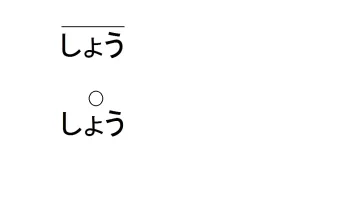
For instance しょう with a circle above will only mean 'smallness"/ しょう with a straight line above will only mean "ilness"/ しょう with a wavy line above will only mean "commander" and so on, and just like an English speaker instantly sees the difference between "ad" and "add" , so will the Japanese speakers easily see it .
Yes they will have to memorize these special homophone words but it surely is easier than memorizing thousands of Kanji.
Your proposed solution to facilitate the elimination of kanji is to make kana more complicated, and as
@Toritoribe pointed out, essentially reinvent bushu, one of the very things that make kanji so useful in the first place?
Probably because you are not studying Japanese and don't understand how kanji work, you seem to be laboring under the assumption that in order to learn kanji, one must memorize all the kanji as individual characters, like some kind of monstrous alphabet. If this were the case, kanji probably would have been abolished long ago...
...But it's still around. 124 million Japanese people and at least a million non-native speakers use it. And a lot of those who have learned it may acknowledge it was challenging, but very few of them seem to think abolishing kanji is a good idea. Is it possible they know something you don't?
The more you learn and understand kanji, the more you understand
how to learn kanji, which is all about connecting neurons, forming relational memories between the characters and their constituent parts, and the words in which they appear. You don't learn it through rote memorization, you learn it through exposure and relating it to what you've already learned. You learn how to visually dissect it into its constituent parts to get an idea of what the character might mean, and put it in the context where you're exposed to it to solidify that in your mind. You learn that the etymology of the word is baked right into the word itself. When you learn kanji, you learn to appreciate and respect it. You don't seem to have learned much, so you don't seem to have much respect.
The homophones themselves aren't necessarily the entire word, but different kanji may share readings, which can become hard to distinguish from one another. One of the most useful phrases when learning new vocabulary in context was XのY. Say you hear the word 感激 (かんげき) for the first time, you can casually ask your friend (it helps to realize that the speakers are identifying the kanji in question without seeing them):
You: 感激の「かん」は何の漢字?漢字の「漢」?それか観光の「観」?
What's the "kan" in "kangeki?" Is it the "kan" in "kanji," or the "kan" in "kankou/tourism"?
Friend: いいえ、「感じる」とか「感想」の「かん」。「いい感じ」っていうだろう?それと同じ。
No, it's the "kan" in "kanjiru/to feel" and "kansou/thoughts." You know how we say "ii kanji/feels good?" It's that one.
You: 「げき」は?劇場の劇?
What about the "geki?" Is it like "gekijou/theater/stage"?
Friend: 違う。訓読みは「激しい」。意味は「すごく」と近いんだ。
No, it's different, it means/is also read "Hageshii/Intense." The meaning is similar to "sugoku/extremely."
You: へぇ、じゃあ、感激って激しく感動するってこと?
Ohh, so kangeki means "To be very/intensely moved by something?"
Friend: 当たり。
That's it!
So, in this conversation you've learned a new word and its meaning by relating its constituent characters to other vocabulary you already knew, both strengthening and expanding your vocabulary by making new connections between words. This exact kind of conversation happens all the time, and even native people use it when trying to figure out place names, or when they're explaining how to write something over the telephone. You could imagine that as your vocabulary grows, you rely less on rote memorization and begin learning new characters in context, which is far more effective at ensuring recollection. This can't be done if you remove kanji from the equation.
This argument has been hashed out many times over, and many people seem to think that they know how to better structure a language that is not their own, but when you look at their argument it usually comes down to "kanji is/was/seems hard to me, so it shouldn't be used," and their proposed solution leaves Japanese a poorer language.
So, can Japanese be written using only kana? Can a language change drastically and quickly on a national scale? Sure,
Korea ditched hanja and changed its writing system in the mid 20th century and you barely see Chinese characters anymore, and
Vietnam uses a modified alphabet now... But both of those languages are heavily influenced by Chinese, and knowledge of those characters is important to understanding the etymology of their own languages. So in Korea, "Chinese" is still a mandatory course, like if English speakers had to study Greek and Latin. Vietnam seems to have moved away from
Chu Nom as a concerted effort. And sure, in an effort to make Hanzi more accessible and increase literacy rates,
China forced the simplified character set on the PRC. But even a totalitarian regime can't control everyone, and so it may have had some of the intended effect on the mainland, it now has a similar-but-different character set from Hong Kong and Taiwan, and Kanji in Japan, and Hanja in Korea, and Chữ Nôm in Vietnam.