Need a word or phrase translated?

In this picture:
Beywheels.webp


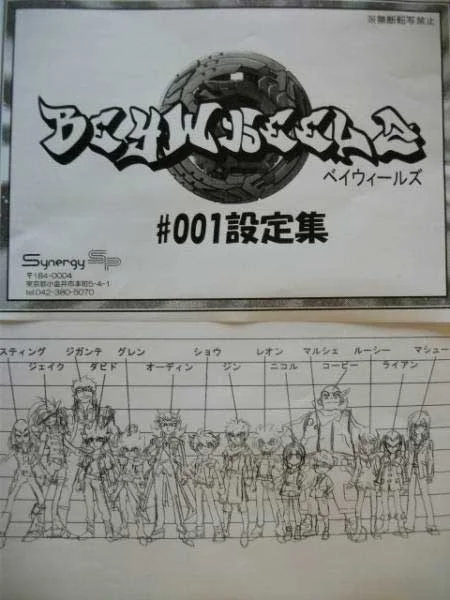
it shows 001 and then some kanji. what's the kanji there, and what's it translate to?

Please.
 
設定 setting(s) 集 collection/compilation

Just out of curiosity, are you learning Japanese?
 
Translate these words for me?

How would one write "Crystalline" and "Japan Gamer" or "Gamer in Japan"?

I just can't trust google translator or other kinds of shady websites.

Thanks to whoever decides to reply to my translation request :emoji_grinning:
 
"Crystalline", not "crystal line". It's an adjective. Try again.
 
Sonna... I really don't know how to say crystalline, sorry then. XD

EDIT: wait, I found one according to a japanese image on internet. It should be 水晶 (suishou).
 
How would one write "Crystalline" and "Japan Gamer" or "Gamer in Japan"?
What's the context, "crystalline" as a medical term, a chemical term, an adjectival form of the name of a mineral or a refined expression for "clear"? The translation differs depending on the meaning.
 
I would be thankful if someone could explain this please.
I have encountered the expression 代わりと言ってはなんだが at the start of sentences a few times but can't seem to make sense of it.
 
I know this can't be an alternative, but..., or something along the line.
 
I know this can't be an alternative, but..., or something along the line.
I have no idea really but was thinking it might be limited to situations that were inevitable when you feel like you should say something but are almost apologizing for not knowing exactly what to say.
 
As post-retirement Harpo Marx used to open his remarks when addressing civic group luncheons and the like, "Unaccustomed as I am to public speaking....."
 
I have no idea really but was thinking it might be limited to situations that were inevitable when you feel like you should say something but are almost apologizing for not knowing exactly what to say.
Prabably you are thinking about お詫びといってはなんですが?;-)
 
Thanks for the help on that one.

This is a part of a text about giving special assignments to school children, and with this particular part I have problems understanding the nuances. I hope someone can help to clarify the parts marked with bold text.

それも無理のないことで、最近では草むしりをしようにも自宅に庭がなかったり、学校のグラウンドもいつも綺麗に整備されていたりします。カタツムリはまだしも山菜に至ってはそこらで見つけられるものでもないでしょう
現代の子供たちがそうした経験をする機会は、実際多くはないだろうと思います。

I understand the general idea here that these specific things cannot be experienced because of the reasons listed but I don't understand the exact meaning of "カタツムリはまだしも", the "madashimo" part that is, and "山菜に至ってはそこらで見つけられるものでもないでしょう". For this last part about wild plants there's first the に至っては part which I haven't found an adequate translation for but interpret kind of like "when it comes to". Secondly there's the そこらで見つけられるものでもないでしょう part where I'm not even sure if it refers to something physical in or around a certain area or if it's something abstract like an experience among a group of people (students in this case).
 
まだしも is a classical expression for まだありえるが or like that.

山菜 refers to edible wild plants.

The former interpritation is correct for そこらで. You can think it as そこら辺で.
 
What does this mean?

今日、オフィスを出て、廊下ですれ違った人に「デカイ のが邪魔してるー。」って!

Maybe something like:

Today, after leaving the office I passed someone in the corridor and heard them say "Big ones are causing lots of trouble!"

But I don't really get the meaning properly. Is "デカイ" just "でかい" written in katakana for whatever reason? And what does the quoted phrase actually mean?
 
Katakana is used for emphasis.

I don't know the context exactly, but it seems to me that デカイの refers to the subject "I"(not the speaker of the quotation), and 邪魔してる means "stands in the way (to pass through the corridor)".
 
Sorry, back at home ...

Please make your idea more clear before asking us to translate it. No one knows your own image that is only in your mind. So, what is the EXACT English sentence you want to translate???
:hum:

the sentence is Which knows the cat, knows the black back alleys .
thx to your attempt 猫を知る者は,暗き路地裏を知る。

about black/dark : i did'nt understand the association 暗き , now it's fine .

just one question please : what is 孰れ vs 孰ク vs 誰人 vs [FONT=&amp]者は[/FONT]
 
What's the whole sentence (probably you got in another place)?
 
Thanks for the help. I will probably be posting here regularly since it's better to ask about things than to just guess and not know for sure.

Here's another expression which is beyond my understanding in this context.

海外で暮らす日本人のお母さん方のいちばんの不安は、子供の日本語学習が遅れることです。
しかし、ここで国語のドリルなどをやっても力はつきません。
解く勉強や書く勉強は、形が残るので勉強をしている気になりますが、その分絶対量が不足するのです。

What I think the text is saying is that by just doing standard exercises with paper and pencil (writing and solving various problems etc), the total amount of exposure to the native language will be insufficient (for proper development) for a child living abroad. I still don't understand what a method of studying where "形が残る" actually is though. Only thing I can think of is that writing and answering things on a test paper produces something "visible and structured" and therefore leads to a greater inclination towards studying, but this is one of many instances where japanese is stretching my logical capacity.
 
Here's another expression which is beyond my understanding in this context.

海外で暮らす日本人のお母さん方のいちばんの不安は、子供の日本語学習が遅れることです。
しかし、ここで国語のドリルなどをやっても力はつきません。
解く勉強や書く勉強は、形が残るので勉強をしている気になりますが、その分絶対量が不足するのです。

What I think the text is saying is that by just doing standard exercises with paper and pencil (writing and solving various problems etc), the total amount of exposure to the native language will be insufficient (for proper development) for a child living abroad. I still don't understand what a method of studying where "形が残る" actually is though. Only thing I can think of is that writing and answering things on a test paper produces something "visible and structured" and therefore leads to a greater inclination towards studying, but this is one of many instances where japanese is stretching my logical capacity.
Your interpritation "visible" is correct, but the sentence is 勉強している気, not 勉強する気. Children feel that they study enough/much by 形が残る勉強.


so, if i write 猫を知る (孰れ or 孰ク or 誰人) , is this completely incorrect ?
Yes, COMPLETELY incorrect. What do you mean by "Which knows the cat"?
 
Back
Top Bottom