Japanese-English Translation

AmgedIsmail

先輩
Joined
19 Sep 2011
Messages
60
Reaction score
2
Hello,
Can you check my translation...
I have tried to translate it my self along with the help of the translation machine to check the words' meaning..

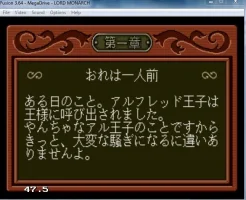
ある日のこと。アルフレッド王子は
王様に呼び出されました。
やんちゃなアル王子のことですから
きっと、大変な騒きになるに遣いあ
りませんよ。

One day. Prince Alfred was called to the king.
Since Prince's Alfred matter is surely mischievous, he wouldn't have come out to make a lot of noise.
Or/ He wouldn't have to become serious.
 
Can you check the original or give a link to it? It seems there are some typos (e.g. surely that's 違いありません not 遣いありません).
 
Yes, you're right.
And here is the text again:
ある日のこと。アルフレッド王子は
王様に呼び出されました。
やんちゃなアル王子のことですから
きっと、大変な騒きになるに違いあ
りませんよ。

It's from this picture..
 

Attachments

  • All-In-One (1).webp
    All-In-One (1).webp
    35.9 KB · Views: 157
There's another typo -- 騒き should be 騒.

"Since this is Prince Alfred, who is mischievous, it'll certainly end up being some big to-do." ...or something along those lines.

のことですから means "because we're talking about so-and-so..." This sets up something that the speaker believes to be a characteristic behavior of the person or thing in question.

に違いありません means "most certainly" or something like that, and shows that the speaker believes something is almost definitely the case.
 
Thanks you so much.
Do you know a better program than Readiris and ABBYY FineReader?
Because they are not that good and they sometimes don't read the picture correctly.
These typos are the results of these two programs and since I don't know Kanji I couldn't correct them...
 
No, I don't. I can read Japanese, so I have no need for any such programs, which means I know nothing of them.
 
Hello,
I wonder why in Japanese language the text is stacked to each other unlike English the subject is separated from the verb, object and from any part of the sentence.

That is why I cannot identify the parts of the sentence in Japanese....
I just convert the Hiragana into Romaji and just see they're all stacked together...

So, is there a way to identify the verb and the parts of the Japanese sentence when I encounter any text in the game??

For example, the sentence..
kare wa futatsu desu.
The Japanese Hiragana is stacked together when the sentence is written.
かれはふたつです。
Is there any way to separate them please, just like:
かれ は ふたつ です。
So that I can easily look up for every word....

Because when I see a text like this:
かれはふたつです。
When I convert it to Romaji I will make it like this:
karewafutatsudesu.

Just like this one:


ある日のこと。アルフレッド王子は
aru日nokoto. arufuredo王子wa
王様に呼び出されました。
王様ni呼bi出saremashita.
やんちゃなアル王子のことですから
yanchunaaru王子nokotodesukara
きっと、大変な騒ぎになるに遣いあ
kitto, 大変na騒gininaru遣ia
りませんよ。
rimasenyo.
 
One solution would be to learn Japanese using regular materials.
 
I purchased a book called "Listen to and speak Japanese" from Egypt, but it's not good.
It doesn't teach any grammar. It only contains the Hiragana and Katakana alphabets and expressions and some words and verbs.....
 
Perhaps some others here can recommend some good texts for you. The way you're doing it now is ineffective and must be very frustrating for you.
 
Since your location says "Cairo", I suggest going to the Japan Foundation Cairo:
http://jfcairo.org/home.html
http://jfcairo.org/

They have a library and run language courses including some for beginners. You may be able to borrow a textbook from their library, or look at some different textbooks before you decide which one you want to buy.

Genki – Page and Audio Samples - there are some sample pages here from Genki, which is a popular textbook. Most textbooks will use similar formats.
 
What do you mean by this textbooks??
In the link you gave me, there are different PDF books, which one you recommend?
Dialogue & Grammar: Lesson 6 (PDF)
Reading & Writing: Lesson 6 (PDF)

So, you mean that the way I am doing of using romaji is wrong?
So what else should I use??
And how can I benefit from this textbook?
 
Please try the link to the Japan Foundation in Cairo - they do have a Arabic version of their site ( http://jfcairo.org/ar/ )

That link is just a sample, one chapter of a textbook called Genki. It is only meant to show you what sort of thing is in the book. The different files are just different parts of the chapter. The "workbook" contains some extra practice questions. A textbook (or any beginner course) will start with very simple sentences like "My name is John" or "This is a book.", and then add more complex grammar as you go on.

You can use romaji initially, but you should start learning hiragana/katakana if you haven't already. The problem isn't using romaji. You say yourself that you cannot recognise the words in the sentence. So you cannot look up the words in a dictionary. Even if you can look up the words, if you don't know the grammar you might not understand the sentence. So even one sentence from the game can take you a long time to figure out. Which is often frustrating.

If you first learn some grammar, then it will be much easier to recognise the words in a sentence. You can also learn ways to look up kanji you don't know yet. That way you won't need to use computer programs, which often make mistakes. It will be easier to do it by yourself.

It is like learning music: you start by learning scales and chords and "twinkle twinkle little star". You don't start by looking at something like ( this ) and trying to figure out how each note should be played.
 
Thanks.
But I already learned about the Subject, object and the verbs and verb conjugation in the Forums About.com

But when I encountered the lesson "Sentence ending particles" I stopped. I thought it's difficult....

And I already know some questions which I learned from Kids web Japan.

A: What's your name?
namae wa nan desu ka.
なまえはなんですか。

B: My name is Kenta.
namae wa kenta desu.
なまえはけんらです。

ِA: What's your friend's name?
Tomodachi no namae wa nan desu ka.
ともだちのなまえはなんですか。

B: My friend's name is Tanaka.
ともだちのなまえはたなかです。

A: What's your teacher's name?
sensei no namae wa nan desu ka.
せんせいのなまえはなんですか。

B: My teacher's name is Kenta.
せんせいのなまえはけんたです。

I also learned about the objects.

A: Did you eat hamburger?
Hanbaagaa o tabemashitaka.
ハンバーガーをたべましたか。

But, the translation is my problem,
I can't just identify(know) where is the verb, nouns, objects in the sentence as all the letters are stacked together.

or example no の means 's
Teacher's name
せんせいのなまえ

But the problem is that sometimes I think that "no の" is one of the letters of a verb or a noun.
just like the verb nomu のむ
 
Well, we tried to help.....
 
Hello,
I have found that this Japan Foundation on Cairo offers the book "Chuukyuu e Ikou" for studying in the intermediate level course. It is said that this book talks about the Japanese Grammar.
So, is this text book good for me??

Also, I have found it as a PDF book in the internet but it is in Japanese...
I want to understand it in English.
Is there an English version for it?
 
some advice would be to learn particles. once you learn those, you have a better understanding of where the "spaces" should be. and btw, connect your Ka to the verb as in desuka. i guess it doesnt matter tho lol. also download some cds and such, thats what i use. I also made a japanese girl my friend today in college lmfao. so i practice with her now. My girl is Chinese but i kinda wish she was Japanese no offense lmao.
 
So, why particles??
Really??!
If I understood particles I will know where the spaces are??
OK, I downloaded some books..

- All about Particles - A Handbook of Japanese Function Words
- Barron's Japanese Grammar

Are these two books good enough?
 
So, why particles??
Really??!
If I understood particles I will know where the spaces are??
OK, I downloaded some books..
- All about Particles - A Handbook of Japanese Function Words
- Barron's Japanese Grammar
Are these two books good enough?
never read any books on them. but using them is important.
ex.
sushiwotabemasu
i don't know how to use hiragana on my computer but pretend it is ;).
sushi-wo-tabemasu once you read "wo" pronounced "o" you will know that the word before that is usually the item thats being used in the verb. theres a bunch of particles. I need to get my game up with that, but i just found this forum. I don't really have time also, someone may want to sticky this in another topic but heres a great CD, if not already mentioned
Pimsleur Japanese
DO NOT USE pimsleurapproach IT IS A FAKE, as what i read.
Make sure you always look up what your going to buy.
but goodnight. Oyasuminasai. which hopefully means goodnight lol.
 
Back
Top Bottom