Need a word or phrase translated?

Thanks Elizabeth.

Thanks for the translation Elizabeth.
I write a blog about my mother's dementia. I guess someone was just having some fun with me.
-Jonthy
 
Is anybody able to translate this? They're Japanese dog tags, I think. I'm curious as to what they say. It's a bit too large to post plainly.
 
Is anybody able to translate this? They're Japanese dog tags, I think. I'm curious as to what they say. It's a bit too large to post plainly.
Most of them are just numbers, plus some kanji 玉(tama = ball), 中(naka = middle/inside), and 番(ban = number). (Tama might be the name of the dog.)
 
Well I didn't mean dog tag literally they were worn by Japanese WWII soldiers as far as I could find out during research.

Apparently it's supposed to specify name, rank, job ( like engineer, or something ), etc. I guess I was hoping I'd find out what kind of soldier wore it.

Thanks for some of the translation
 
Well I didn't mean dog tag literally they were worn by Japanese WWII soldiers as far as I could find out during research.

Apparently it's supposed to specify name, rank, job ( like engineer, or something ), etc. I guess I was hoping I'd find out what kind of soldier wore it.

Thanks for some of the translation
Oh, sorry for my misunderstanding. :p
From Google search result, the right column of each tags shows their unit. (The picture turned around.)

From left to right (the third one has the same unit number to the first one.)

玉五九ニ〇
陸軍第一師団野砲兵第一連隊
Imperial Japanese Army 1st Division 1st Field Artillery Regiment

玉五九一四
陸軍第一師団歩兵第一連隊
Imperial Japanese Army 1st Division 1st Infantry Regiment

玉五九一五
陸軍第一師団歩兵第四十九連隊
Imperial Japanese Army 1st Division 49th Infantry Regiment
 
Hi!

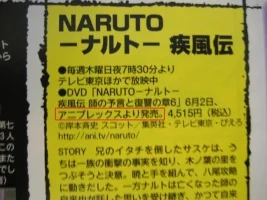
I am trying to start and learn the Japanese alphabet system. For motivation I picked up an anime magazine and am trying to decipher text. See the image below and please let me know what each syllable stands for. Also it seams that the letters are mixed with katakana and hiragana? Is that correct?

This is what I think is right so far:

1) A
2) Ni
3) Pu
4) Re
5) Tsu
6) Ku
7) Su
8) Yo
9) ?
10) ?
11) ?

Thanks!
 

Attachments

  • IMG_2755.webp
    IMG_2755.webp
    59.7 KB · Views: 143
All are right. The last three are ri, hatsu, and bai, the last two being kanji. It should be noted that the tsu in there is the small one that represents a geminate, so the spelling should be anipurekkusu. All together it's Anipurekkusu yori hatsubai. Anipurekkusu is in katakana, yori in hiragana, and as I said above hatsubai in kanji.
 
All are right. The last three are ri, hatsu, and bai, the last two being kanji. It should be noted that the tsu in there is the small one that represents a geminate, so the spelling should be anipurekkusu. All together it's Anipurekkusu yori hatsubai. Anipurekkusu is in katakana, yori in hiragana, and as I said above hatsubai in kanji.

Thanks!! Then from the translation I deciphered it is something along the lines of:
"For sale from Anipurekkusu"
 
For 'The one that's red' (just that phrase by itself), would it be '赤の' or '赤いもの'? And what about other 'The one that's [adjective]' constructions? の or もの at the end?
 
Last edited:
赤いの would be "the red one". 赤い物 is more like "a red thing". の is the indefinite pronoun in Japanese, the same as "one" in English (in this instance).
 
赤いもの is also probably most often used with 何か to mean not "red thing" or "red stuff" but "something red."
 
Hey everyone, back again for help. Communicating with a pen pal this time, but this is kinda difficult for me to figure out. I get the gist of it but a few things I don't understand, can someone translate for me please?

オーストラリアは、高校の時に行ってたんだ。だから、今はもう東京に戻ってきてるよ☆アメリカの大学で、日本語勉強する人は多いの???
 
Hey everyone, back again for help. Communicating with a pen pal this time, but this is kinda difficult for me to figure out. I get the gist of it but a few things I don't understand, can someone translate for me please?

オーストラリアは、高校の時に行ってたんだ。だから、今はもう東京に戻ってきてるよ☆アメリカの大学で、日本語勉強する人は多いの???
I went to Australia in high school. Therefore I am back in Tokyo now. Are there a lot of Americans that study Japanese in college ??
 
Thank you Glenn and Elizabeth! (:
So for a sentence with that structure containing a verb (such as 'The one I read every day'), would it be 毎日読むの?
 
Thank you Glenn and Elizabeth! :)
So for a sentence with that structure containing a verb (such as 'The one I read every day'), would it be 毎日読むの?
もの would be more common for the case, since の can be interpreted as a nominalizer, that is, "the action that I read every day" or like that.
 
Can you pass me that paper ? その紙取ってくれる?
This one? Or that one? これ?それ?
The red one. 赤いやつ。
Oh, the one on the right. ああ、右 のやつね。

As one example....
 
ゆうパック...Is Japan's Parcel Service written this way half in hiragana and half katakana funny to anyone else ? I know it's the way things are supposed to be (sort of) because "you" isn't a common noun in the language. But the style looks stodgy to me, probably because it is new, except of course in hybrids like "keshigomu" or something where it makes sense as there is a kanji or katakana equivalent.

Not a place I would take business - especially now that they are behind on everything ! 😲
 
Back
Top Bottom