- 23 Sep 2005
- 1,295
- 76
I have wanted to know this for a while now, but I have not been able to find any/much information about the subject.
On the one hand, while there is plenty of information on samurai in Japan, I can hardly find any info on the horses they rode or even horse breeds in Japan. I'm not specifically looking at the horses of samurai alone, but also horses of all different classes in Japan and information on the different breeds of horses in Japan, whether native/ancient Japanese breeds or more recent ones in the last couple of hundred years etc. (as long as these breeds aren't western, as I know plenty on western breeds of horses already).
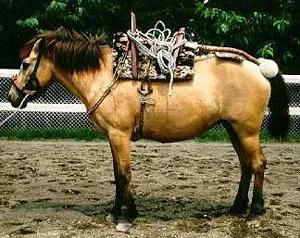
The only breeds of Japanese horses that I have found so far are the Hokkaido/Washu Horse:
And the Yonaguni Horse:
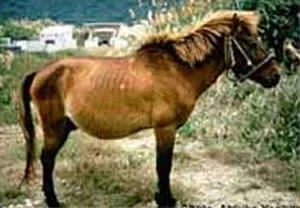
The Yonaguni horse looks like a far cry from the horses of Japanese nobility and samurai; it is more like a packhorse and does not look particularly graceful/noble or attractive in general as far as horses go, with its sparse tail and ewe's neck etc.
The Washu looks closer to the horses that the samurai used to ride. However, I can find no information confirming this. I also have no idea whether these are the only two Japanese horse breeds in Japan or whether there are more Japanese breeds of horses than just these two- I'm sure there must be?
Also, does Japan have any truly native breeds of horses? Or have horses been introduced to Japan over the centuries, perhaps from places like China or Korea?
I would really appreciate any info on this subject as I have been finding much difficulty shedding any light on these matters myself- one of the reasons why I would like more info on these subjects/questions is not only out of curiosity, but also so I can gather better information for myself on these matters to help aid my art research (i would like to draw a Japanese scene with horses in it. However, I would like to depict the horses in the scene with as much accuracy/authenticity as possible, so it would be useful to know what Japanese horses look like etc.) .
.
On the one hand, while there is plenty of information on samurai in Japan, I can hardly find any info on the horses they rode or even horse breeds in Japan. I'm not specifically looking at the horses of samurai alone, but also horses of all different classes in Japan and information on the different breeds of horses in Japan, whether native/ancient Japanese breeds or more recent ones in the last couple of hundred years etc. (as long as these breeds aren't western, as I know plenty on western breeds of horses already).
The only breeds of Japanese horses that I have found so far are the Hokkaido/Washu Horse:
Horse Breeds - The Hokkaido Horse
World of Horses - Hokkaido Horses - Visit the breed pages for information on this breed and other horses and ponies from around the world.
web.archive.org
| Generally called Do-san-ko in Japan as a term of endearment, the Hokkaido Washu horse is an old breed. The Hokkaido Washu horse is thought to have been brought during the Edo era (1600-1867) to Hokkaido by fishermen. These original importation came from Honshu. |
| Origin: Japan. |
| Colour: most solid colours, and many are roan. White markings of any kind are rare and not allowed for registration. |
| Height: between 12.2 and 13hh. |
| Conformation: Plain head, thickset body, flat withers, slender legs, good feet. |
| Character: extremely hardy and strong and can survive, and even thrive, under very severe conditions. |
| Uses: trail riding, packing and harness. |
And the Yonaguni Horse:
Horse Breeds - The Yonaguni Horse
World of Horses - Yonaguni Horses - Visit the breed pages for information on this breed and other horses and ponies from around the world.
web.archive.org
| The Yonaguni is a small native pony of the southwest islands of Japan. In 1996 there were about seventy-five living Yonaguni ponies on East and North Ranches on Yonaguni Island, located on the west side of the Yaeyama Islands. |
| Origin: Japan. |
| Colour: usually chestnut. |
| Height: about 11hh. |
| Conformation: head is large with well-placed eyes and relatively small ears; the neck is short and thick; the shoulders tend to be straight; the back is long; the croup is often quite level with a high tail-set; the quarters are slight; the legs often tend to be splayed; the hooves are vertically long and very hard. |
| Character: gentle in nature and very strong and enduring. |
The Yonaguni horse looks like a far cry from the horses of Japanese nobility and samurai; it is more like a packhorse and does not look particularly graceful/noble or attractive in general as far as horses go, with its sparse tail and ewe's neck etc.
The Washu looks closer to the horses that the samurai used to ride. However, I can find no information confirming this. I also have no idea whether these are the only two Japanese horse breeds in Japan or whether there are more Japanese breeds of horses than just these two- I'm sure there must be?
Also, does Japan have any truly native breeds of horses? Or have horses been introduced to Japan over the centuries, perhaps from places like China or Korea?
I would really appreciate any info on this subject as I have been finding much difficulty shedding any light on these matters myself- one of the reasons why I would like more info on these subjects/questions is not only out of curiosity, but also so I can gather better information for myself on these matters to help aid my art research (i would like to draw a Japanese scene with horses in it. However, I would like to depict the horses in the scene with as much accuracy/authenticity as possible, so it would be useful to know what Japanese horses look like etc.)
.