Politics The Takaichi Sanae Thread - Japan's first female Prime Minister

Honestly, as a potential immigrant, Shinjiro Koizumi would be a better PM. I don't agree with him on the issue of separate surnames and same sex marriage, but at least, he's generally more inclusive and has a more positive stance for immigration. It would, from what I know, give more breathing room and be more flexible for visas. I agree with Takaichi on a few of her views, but, at the current time I don't really know what's really better for Japan as a whole, I just know as a potential immigrant, Shinjiro seems to be a bit better, though not by much. Also, for what @Ukigumo said, I don't see what's wrong with having Thatcher as her idol and role model.


Edit: not political views, just my thoughts on this.
They are political views, but there's nothing wrong with that!

Many British people of a certain age (@Ukigumo and I) loathed Mrs Thatcher. One of her most infamous speeches included the phrase 'There's no such thing as society'. Her vision for Britain involved individuals and families competing against each other and grabbing what they can, instead of looking after each other through the formation of communities. She was obsessed with privatisation, which has often been a disaster in the UK. It has resulted in extremely high utility prices and rivers full of **** (literally) while shareholders have received huge dividends. That may well be why he made the comment about Thatcher.
 
A touch of realism and moderation or pressure from LDP brass and Komeito? Ms Takaichi mulls skipping the autumn festival at Yasukuni Shrine.

Takaichi, who has long made regular visits to Tokyo's Yasukuni Shrine, is said to be holding back this time after being urged by advisers to avoid stirring diplomatic tensions ahead of what could be her historic appointment as Japan's first female prime minister. People close to her reportedly warned that another visit, even before she officially assumes office later this month, would almost certainly invite criticism from China and South Korea. Out of caution, she is believed to be carefully weighing her next steps. During a meeting on Tuesday, Tetsuo Saitō, leader of the Komeito party—the LDP's junior coalition partner—told Takaichi that the Yasukuni issue "should not be turned into a diplomatic matter," especially given the increasingly tense security situation around Japan. Relations between the ruling Liberal Democratic Party and Komeito remain uncertain. Takaichi's strong stance on defence and foreign affairs contrasts sharply with Komeito's self-declared role as a "party of peace."

Past visits to the shrine by Japanese leaders, including the late Prime Minister Shinzo Abe, whose nationalist stance on Japan's wartime history has influenced Takaichi, have drawn harsh criticism from China and South Korea.

 
They are political views, but there's nothing wrong with that!

Many British people of a certain age (@Ukigumo and I) loathed Mrs Thatcher. One of her most infamous speeches included the phrase 'There's no such thing as society'. Her vision for Britain involved individuals and families competing against each other and grabbing what they can,
This is very true. Thatcher favoured a 'Darwinian' British society of survival of the best adapted. If you couldn't take the pace regardless of the reason, you should fall by the wayside and be trampled.
instead of looking after each other through the formation of communities.
'The needs of the many, outweigh the needs of the few' 🖖🏽
She was obsessed with privatisation, which has often been a disaster in the UK. It has resulted in extremely high utility prices and rivers full of **** (literally) while shareholders have received huge dividends. That may well be why he made the comment about Thatcher.
Thatcher was right-wing and those ideologies favour the wealthy. We continue to suffer the consequences of Thatcher's ideas here in the UK.

I spent my formative early years in Thatcher's birthplace (Grantham) until my family moved to the greatest City on earth. After her death, a statue of her likeness was commissioned to be placed somewhere such as Parliament square in London. However they couldn't find a place where it would be safe, free from vandalism and desecration. Various people threaten to destroy it. Eventually it went to Grantham but onto a very high plinth in the town centre's island. At the other end of the Island is a statue of Isaac Newton for whom Grantham would much rather be remembered.

Grantham is now a rundown horrid little former market town because of Thatcher's Darwinian policies.
 
The Japanese media are slaughtering Team Takaichi before it's even formally constituted:

The ruling party has reverted to outdated factional politics. The lack of genuine reform is nothing short of astonishing. Of the four key party posts, the crucial role of secretary-general has gone to former Finance Minister Shunichi Suzuki, who is Aso's brother-in-law. Haruko Arimura, former minister for women's empowerment, was named chair of the party's General Council. Aso himself has been appointed LDP vice-president. This is a blatant reward for political loyalty. During the party leadership race, Aso rallied his faction behind Takaichi, helping secure her victory. Lawmakers from the former faction run by Toshimitsu Motegi, who backed Takaichi in the runoff, have also been given party posts in quick succession. Takaichi, whose base within the party is weak, is seeking to stabilize her position by relying on Aso. However, maintaining power through factional dynamics is no different from the LDP's old ways.


The surprise was not simply who won, but what the result exposed: a widening gap between the assumptions of the party elite and the sentiments of its grassroots. With public trust in the LDP eroding and doubts rising about its future appeal, many registered members rejected the business-as-usual approach. In choosing Takaichi, they voiced not reformist hope but frustration -- a demand that the party acknowledge their discontent. Her victory symbolized not a new political vision but the LDP's most sophisticated form of symbolic politics: change performed rather than practiced. Creating Japan's first female prime minister offered the image of change without real reform. Known for her uncompromising conservatism, Takaichi could appear new as a woman while preserving the party's conservative base.

Paywall alert:
 
Komeito, the LDP's Soka Gakkai-aligned coalition partner of 26 years, might consider a break-up. Not a good start.

Sanae Takaichi's election as the president of the ruling Liberal Democratic Party has sparked concern within coalition partner Komeito over her stance on political funding scandals, historical issues and plans to expand their alliance. Her positions are viewed by some as a threat to Komeito's influence and core values. "I frankly conveyed our supporters' deep concerns," Komeito leader Tetsuo Saito said following his first meeting with Takaichi on Oct. 4. "Without resolving these concerns, there can be no coalition government." His stern demeanor stood in stark contrast to the celebratory mood typically accompanying such political transitions.


In a highly unusual move, ruling coalition junior partner Komeito has said that it will continue talking with the Liberal Democratic Party about remaining in the coalition, as the party and its core supporters remain concerned about new LDP President Sanae Takaichi.The refusal by Komeito to immediately endorse Takaichi, a hard-line conservative hawk, reflects deep apprehension among millions of Soka Gakkai members, the party's main supporters in the lay Buddhist group, about her ideology and policies. After meeting with Takaichi on Tuesday, Komeito's leader Tetsuo Saito outlined a number of concerns the party and its Soka Gakkai members have with Takaichi, especially her desire to visit Yasukuni Shrine and the lack of LDP party executives with close ties to Komeito.

 
It's quite reassuring that the media are being so critical at this early stage. They allowed themselves to be pushed around by Abe, but they seem to be showing more backbone this time.
 
Things could end before they even start. Komeito is out of the coalition! That's the first (and probably last) time I applaud Soka Gakkai. 👏

This is also the price Takaichi has to pay for allowing Aso to infiltrate the next cabinet.

The head of Japan's Komeito says it is leaving the ruling coalition headed by the Liberal Democratic Party due to concerns over corruption. The decision announced Friday by Komeito leader Tetsuo Saito dealt a severe blow to the Liberal Democrats, who last weekend chose ultra-conservative lawmaker Sanae Takaichi as their leader. Takaichi could still become Japan's first female prime minister. Still, the departure of the Buddhist-backed Komeito will compel the Liberal Democrats to find at least one other coalition partner to stay in power. The ruling coalition had already lost its majorities in both houses of parliament. The lower house is due to vote on a new prime minister later this month.


Komeito leader Tetsuo Saito told Takaichi of the party's decision at a meeting in parliament. He also denied a confidence and supply agreement with the LDP, in which a party supports others for crucial decision-making in parliament. The exit of its ally is a major blow to the LDP, which already lacks a majority in both houses of the parliament, although it remains the largest party. For Takaichi to become Japan's first female prime minister, she must be appointed by the Diet, Japan's parliament. Komeito's withdrawal increases the chances that opposition parties will unite around an alternative candidate. It also means the LDP will no longer receive support from Komeito in elections.

He said Komeito will not vote for Takaichi in the Diet session to choose the country's new leader. "We cannot write the name of Takaichi Sanae in a vote for a new prime minister," Saito said.

Paywall alert:
 
And the consequence: The LDP, in particular, will likely lose 20% of the single-seat district seats it currently holds without the partner's voter mobilisation power.

Paywall alert:
 
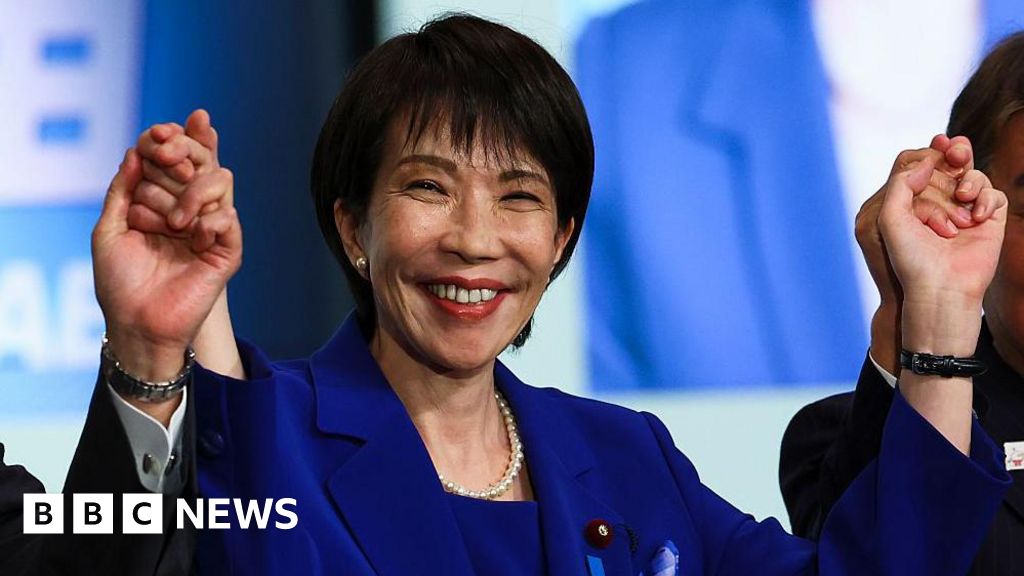
Takaichi Sanae was elected Japan's 104th prime minister on 21 October, becoming the first woman to hold the country's top office. At 64, she was set to form a new Cabinet later that evening. During the extraordinary Diet session convened the same day, Takaichi received 237 of 465 votes in the Lower House and 123 of 246 in the Upper House on the first ballot. Because she had not secured a majority in the Upper House, a runoff was held there against Noda Yoshihiko, leader of the main opposition Constitutional Democratic Party of Japan. In that vote, Takaichi obtained 125 of 246, while Noda won 46; 47 ballots were invalid and 28 left blank, confirming her victory.

Takaichi Sanae


Takaichi had been elected president of the ruling Liberal Democratic Party on 4 October, succeeding Ishiba Shigeru, who had resigned mid-term to take responsibility for the party's back-to-back losses in national elections.


As for some of the members of her new Cabinet:
  • Later in the day, new Chief Cabinet Secretary Kihara Minoru announced the list of Cabinet members, including Katayama Satsuki, a fiscally dovish LDP lawmaker, who became Japan's first female finance minister. By appointing Katayama, a former senior Finance Ministry bureaucrat and former minister for regional revitalisation, Takaichi is apparently aiming to project a sense of renewal for the LDP-led government by including women in some key positions.
  • Female LDP lawmaker Onoda Kimi, a hawkish politician, became economic security minister and will hold a concurrent post as minister responsible for policies on foreigners.
  • Takaichi, meanwhile, picked Akazawa Ryosei, Japan's chief tariff negotiator with the United States, as trade minister to ensure continuity in bilateral talks. She also offered major posts to her four rivals in the October LDP leadership election, signalling her intention to project party unity through the new Cabinet.
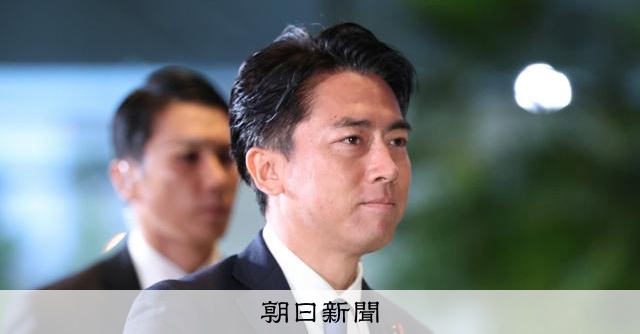
  • Most surprisingly, Koizumi Shintaro will serve as the Minister of Defence.


Oh, and here's another first:

Takaichi's appointment also brought the country's first-ever "first gentleman." After her confirmation, her husband, former Lower House member Taku Yamamoto, 73, spoke to the media alongside her in a joint phone interview. He expressed relief that both houses of the Diet had officially nominated her and emphasised the importance of implementing concrete policies on issues that mattered to the public, such as economic measures, and ensuring tangible results.

Takaichi and Yamamoto had first married in 2004, later divorced over differences in political views, and remarried in 2021. On assuming the unusual role of "first gentleman," Yamamoto said he did not feel any change in status. He added, however, that he intended to support her quietly as a "stealth husband," ensuring that his presence would not overshadow the prime ministerial image she had long aspired to achieve.

 
Oh, and here's another first:

Takaichi's appointment also brought the country's first-ever "first gentleman." After her confirmation, her husband, former Lower House member Taku Yamamoto, 73, spoke to the media alongside her in a joint phone interview. He expressed relief that both houses of the Diet had officially nominated her and emphasised the importance of implementing concrete policies on issues that mattered to the public, such as economic measures, and ensuring tangible results.

Takaichi and Yamamoto had first married in 2004, later divorced over differences in political views, and remarried in 2021. On assuming the unusual role of "first gentleman," Yamamoto said he did not feel any change in status. He added, however, that he intended to support her quietly as a "stealth husband," ensuring that his presence would not overshadow the prime ministerial image she had long aspired to achieve.

"First Gentlemen"

Never thought I'd see the day!
 
What do you all think about her premiership as residents of Japan?

Early days, but I don't have high hopes. I am curious about how long their coalition will hold, given that the JIP seems dead set on restricting political donations and reducing the number of deputies, while the LDP is not. I'm quoting my wife, who said she frowns upon the thought of having to see that woman's face on the news every day. 😅
 
I saw photos of the cabinet members on the front of today's newspaper. There were only two women, so Takaichi also lied about having 'Nordic levels' of women in her cabinet. She lies as naturally as she breathes, just like her mentor Abe.

It's likely that the LDP will break their promises to their coalition partner, who will break off the coalition, and that will be the end of the current government.
 
When Liz Truss became our PM, a tabloid newspaper suggested she wouldn't last longer than a lettuce! So they took an iceberg lettuce, placed upon it a blonde wig and a face and put it on a CCTV internet feed, alongside a clock so anyone could watch it's slow decline in accordance to the the 2nd Law of Thermodynamics.

It did, indeed last longer than her premiership! 😄
 
Asahi poking their finger in open wounds:

Deep-seated mistrust lingers in the hastily formed coalition between the Liberal Democratic Party and Nippon Ishin (Japan Innovation Party), adding to the fragility of the alliance, which lacks majorities in both Diet chambers. The potential disunity can be seen in the lineup of Prime Minister Sanae Takaichi's Cabinet. All ministerial positions were filled by LDP lawmakers on Oct. 21, after Nippon Ishin chose to provide support from outside the Cabinet. If a political party provides a minister, it shares responsibility for Cabinet decisions on budgets and key policies and is expected to act in unison to vote down a no-confidence motion against the Cabinet. For example, a lawmaker from Komeito, the LDP's previous coalition partner, had served as land minister in the LDP-led government. But Komeito decided to end its 26-year partnership with the LDP after Takaichi was elected party president earlier this month. The LDP leadership under Takaichi believed that bringing Nippon Ishin ministers into the Cabinet would be essential for stabilizing the administration. The LDP put forward posts, such as the internal affairs minister, to its new partner. However, Nippon Ishin had strong reservations about becoming integrated with the LDP.


And:

Prime Minister Sanae Takaichi on Wednesday appointed seven Liberal Democratic Party lawmakers implicated in a high-profile slush fund scandal as senior or parliamentary vice ministers, reversing the approach of her predecessors in a move that may draw backlash from opposition parties. The government led by Takaichi, who on Tuesday became Japan's first female prime minister, approved a list of 26 senior vice ministers, including Iwao Horii, Yukinori Nemoto, Hajime Sasaki and Yasuyuki Sakai. In addition, 28 parliamentary vice ministers were approved, including Harumi Takahashi, Takuo Komori and Ryusho Kato. The seven lawmakers were all linked to the political funds scandal and belonged to a now-defunct LDP faction formerly led by the late Prime Minister Shinzo Abe.


Same old, same old.


Domestic and foreign media pointed out the discrepancy between Takaichi's "Nordic promises" and the reality of her new cabinet.

Sanae Takaichi took office on Tuesday as Japan's first female prime minister, but her surprisingly male-dominated cabinet and socially conservative track record have left some women ambivalent in a country that lags on gender equality. Takaichi on Tuesday appointed only two female ministers in a 19-member cabinet, matching her predecessor and falling short of her previously announced plan to ensure women's representation in top posts "not particularly lower than Nordic countries". "The line-up she announced betrayed that promise from the outset," said Tohko Tanaka, a media and gender studies professor at the University of Tokyo. "This is extremely disappointing and offers no hope for women's empowerment." When asked about her cabinet's gender imbalance, Takaichi told a Tuesday press conference that she "prioritised equal opportunity" and "assigned the right people to the right positions". Her options were limited, given that only 13% of her Liberal Democratic Party (LDP) lawmakers are women. The party aims to raise the ratio to 30% by 2033.

Japan's new PM Sanae Takaichi makes history, but women ask what changes now?
 
According to Kyodo, she has an approval rating of 64.4%.

The approval rating for Japanese Prime Minister Sanae Takaichi's cabinet stands at 64.4%, higher than the initial ratings of her predecessors Shigeru Ishiba and Fumio Kishida, a Kyodo news agency poll showed on Wednesday. Ishiba's initial approval rate was 50.7% while Kishida's was 55.7%, Kyodo said.

Source

According to Yomiuri, even 71% (some 80% among young voters, 18-39 age group).

 
Another one to watch out for is Onoda Kimi, the Minister of State for Economic Security, also in charge of overseeing foreign nationals. She was born in Chicago to a Japanese mother and an American father. Social media has described her as "the LDP member most hostile to foreigners and immigration." Known for her nationalist and disciplined style, she is viewed as one of the most outspoken pro-Japan voices in the ruling LDP.

She has made waves with her quote: "What's wrong with patriotism? What's wrong with loving Japan? If you hate Japan, then leave Japan!" During the COVID pandemic, she opposed stimulus payments to foreign residents. She announced plans to tighten rules for foreign residents, citing "crime and misuse of public systems."

Here she is pledging to create a Japan with zero illegal foreigners:


She moved back to Japan at age one, so she is not a native English speaker.


One area that will be affected is government policy toward foreign residents. Economic Security Minister Kimi Onoda will also serve as the "minister in charge of a society of well-ordered and harmonious coexistence with foreign nationals." "We will strictly handle foreign nationals who do not follow the rules," Onoda said at a news conference on Wednesday. "We'll also review systems that are not adequately addressing the situation when it comes to foreign nationals." She pointed to crimes committed by overseas nationals and the improper use of social systems, noting that "there are cases that citizens feel are disturbing or unfair." There were 3.76 million foreign residents in Japan at the end of 2024, according to the Immigration Services Agency (ISA), up nearly 80% from the end of 2014.

Paywall alert:

Links:


Back
Top Bottom