News Surging global demand for matcha sparks fears of shortage in Japan

thomas

Unswerving cyclist
Admin
Joined
14 Mar 2002
Messages
21,053
Reaction score
18,908
Darned tourists: First, they contributed to the rice shortage, but now they are causing a matcha crisis.

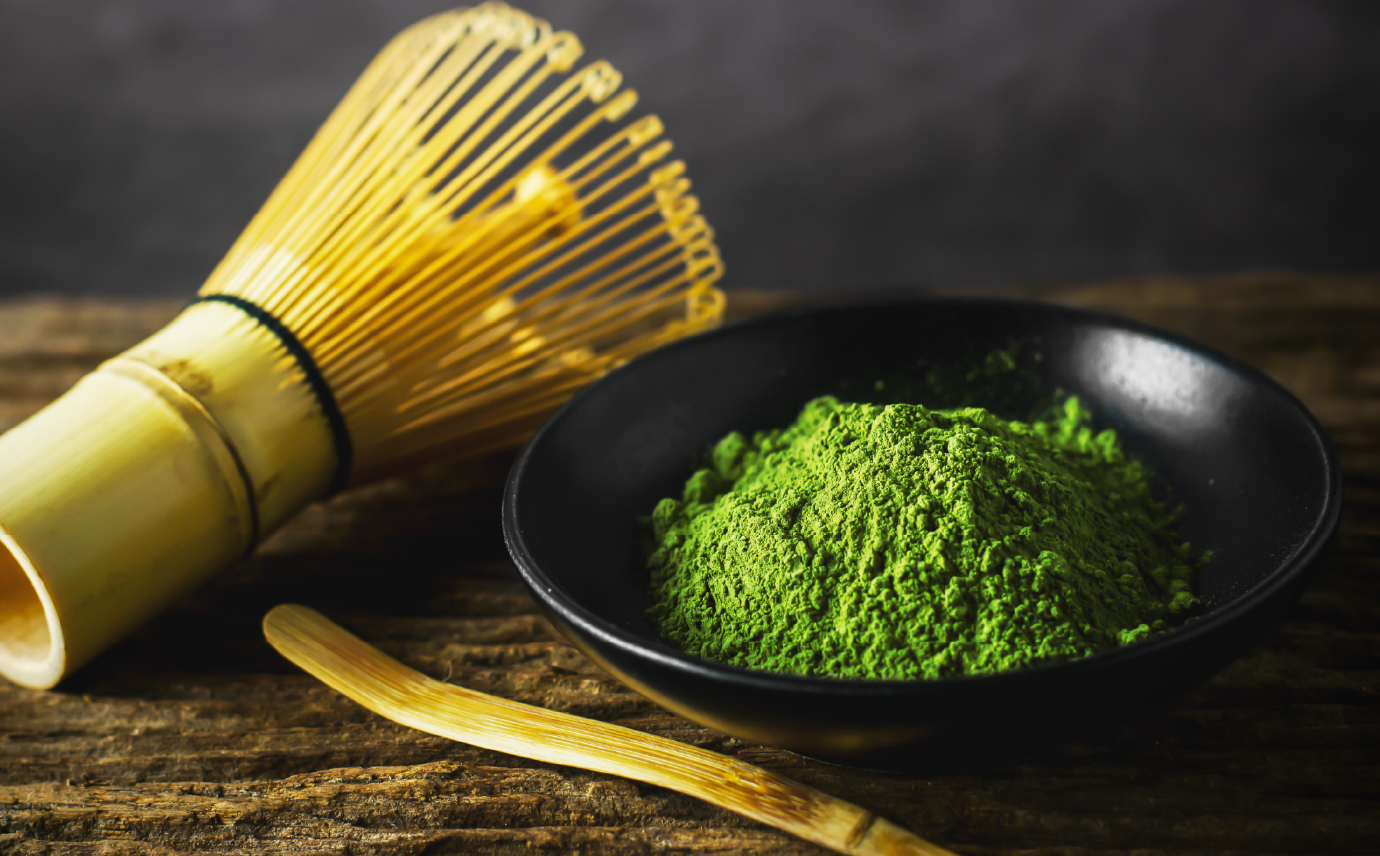
Made from the leaves of the Camellia sinensis plant and originally served in a highly stylised fashion at formal tea ceremonies by masters of sado—the way of tea—matcha is the flavour profile of the times, the must-have ingredient in everything from lattes and chocolates to ice cream and boiled sweets.
Surging global demand for matcha sparks fears of shortage in Japan

The bright green matcha powder brings smiles, delighted reactions, and a sense of eager anticipation from the tea enthusiasts. After carefully grinding their tea leaves by hand, they are now ready to whisk the powder into hot water and enjoy the fruits of their effort. These international visitors, taking part in a matcha-making workshop in Uji near Kyoto in western Japan, share a deep appreciation for the powdered, slightly bitter green tea that has been a cornerstone of Japanese culture for centuries—and is now driving a worldwide trend. Following the downturn caused by the COVID-19 pandemic, Uji—renowned for its historical ties to the matcha trade—is thriving again. Riding a wave of record-breaking tourism in Japan, local businesses are embracing the matcha craze in full force. Restaurants have woven the green tea into their menus with flair, offering dishes like gyoza and takoyaki drizzled with matcha sauces and even "stamina" ramen topped with the nutrient-dense green powder. On a grey and rainy afternoon, cafés are overflowing with customers, and family-owned shops are doing brisk business selling locally grown tea, colourful canisters, and sweets inspired by matcha.

Yet the soaring global fascination with matcha presents a dilemma. Concerns over supply surfaced last autumn, leading tea producers in Kyoto to take the rare step of placing limits on purchases of the finely ground powder, a staple in Japan since its introduction by Buddhist monks from China in the 12th century.

Demand continues to climb rapidly in Europe, the United States and Australia, fuelling fears that shortages may worsen in the coming months. While consumption of loose-leaf green tea and matcha has been falling domestically, international enthusiasm shows no sign of slowing. Industry projections suggest the global market for matcha could grow from $2.8 billion (£2.2 billion) in 2023 to around $5 billion by 2028.

Data from the agriculture ministry shows that Japan produced 4,176 tonnes of matcha in 2023—nearly triple the output of 2010. With commercial opportunities expanding, the Japanese government is said to be preparing subsidies to encourage tea farmers to shift away from traditional sencha (煎茶) and increase production of tencha (碾茶), the shade-grown leaf used to make matcha.

 
I bought a Camellia sinensis shrub recently and it's growing well. I didn't anticipate the sheer number of leaves that'd be required to make even a small cup of tea; I'd have to virtually strip the shrub bare, thus killing it, to make a pot of tea!
 
I just saw this on the news last night here in the US!
There really is matcha everywhere here in the US. Usually highly sugared. But yeah, high demand and inelastic production, coupled with potential tariffs, and a declining population of tea farmers, is causing pricing waves.
 
I just saw this on the news last night here in the US!
There really is matcha everywhere here in the US. Usually highly sugared. But yeah, high demand and inelastic production, coupled with potential tariffs, and a declining population of tea farmers, is causing pricing waves.
The only thing surprising about this to me is that we are using enough real matcha to affect the market. I'd expect most "matcha" flavored stuff here to be all chemicals and nothing to do with the real plant. Just like every "strawberry" flavored product in the supermarket here have no actual strawberries in them.
 
I've never had the Costco variety. To be honest, my favorite use for matcha is in ice cream. Unless I'm being polite, matcha ice cream is the only kind I eat.

I feel that people can Anglicize pronunciation when using foreign words without harm. But just try saying it that way in Japan and expect to be understood!

 
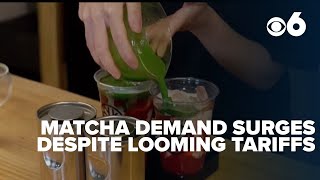
And as if short supplies weren't bad enough, U.S. consumers will now be hit with a 15% tariff on their matcha!

Matcha has become a very popular drink in the last few years, using green tea imported from Japan. However, with the newly announced tariffs, this product and other Japanese imports could cost you a little bit more. Last month, President Donald Trump announced he reached a 15% tariff deal with Japan, lowering it from the 25% rate he had threatened Japan with a few months before. Dr Alan Gin, a professor of economics at the University of San Diego, said Japan is one of the largest trading partners for the U.S. "We import a lot of stuff from Japan, and I think last year we imported about $150 billion worth of stuff from Japan," Gin said. The volatility in tariff rates creates a lot of uncertainty for businesses, according to Gin. He said the Japanese goods that may feel the most significant impact are cars and machinery, but also food items. "Those could be expected to go up in price. So things like Japanese rice, the matcha tea, and Fuji apples — these are items that come to mind immediately in terms of Japanese food products," he said.

 
I haven't bothered cultivating any business acumen because it bores me and I share the feudal Japan's attitude toward 'merchants' 🤢 From what I understand, good business is about buying a commodity at one price, inflating it somehow and selling it a higher price.

With this in mind, you'd think tea producers would determine the amount of matcha required for the Japanese market (you mustn't deprive that or risk old men's wrath towards…overseas people) and the demand from export markets and titrate the proportions they allocate to each, adjusting their profit margins accordingly (upwards…always upward) taking care not to stifle the market. Since there's currently an insufficient supply of matcha, I'd reduce exports to the 'Tariff US' to increase their overall demand while also finding other markets closer to home whilst concurrently increasing supplies by gradual increases in cultivation over the longer term. Add a bit of deceitful marketing (isn't all marketing intrinsically deceitful?) such as expounding it's supposed health and social benefits; 57% of respondents said it possibly reverses baldness, 48% of respondents said that it might put 'lead in your pencil', has been known to increase skin smoothness and suppleness in people under the age of 12 years and could make you more attractive to the opposite sex. Enlisting a celebrity or two to endorse your product would help, Sanada Yukihiro and Anna Sawai, spring to mind…especially the latter 😍 and BANZAI! you're a matcha millionaire.

But what do I know…
 
The problem is they get higher profits overseas so there's not as much incentive to supply the domestic market.
 
The problem is they get higher profits overseas so there's not as much incentive to supply the domestic market.
Then virtually stop supplying the ungrateful domestic market and sell more overseas. When tea masters are gagging for a consistent, regular supply of the good stuff, trickle a little into their hands using a subscription-only service (I hate those) and give a pinch here and there to domestic tea/coffee shops for their silly ice creams and fancy sugar-laden knickerbocker glories. When they complain, simply tell them your products appeared to be unappreciated in the past so you took your custom to the uncouth barbarians overseas.

Matcha makers should consider setting up nice Japanese tea rooms around the world with tea masters, to teach Sado and thus create a demand. We used have one in Cambridge's 'Kaetsu Educational & Cultural Centre' but it's so expensive to stay in Cambridge I think it's been disbanded. If they were attached to British tearooms/coffee houses, they might prove to be a popular novelty and maybe good for entertaining in a business context. I'd've rather had a Sado stag night than be dragged around Glasgow on a dark wet night, being forced to drink expensive whiskey in every bar until I explosively vomited and woke up the next morning with the worst imaginable hangover and with several praline truffles stuffed and melting in my boxer shorts 🤷🏾
 
With soaring demand outpacing supply, tea giant Ito En recently announced it will raise prices by up to twice the current rate to manage the imbalance. Driven by the overseas boom, exports of green tea—including matcha—have set new records for five consecutive years. More than 10% of Japan's green tea production is now shipped overseas. As a result, domestic matcha supply has fallen into a severe shortage.


Ito En announced it would raise prices by up to 100%. Matcha used in traditional tea ceremonies will rise from 3,024 yen to 4,536 yen, while regular green tea will increase from 1,296 yen to 1,360 yen. Tea producers are also being forced to adapt. At Yame Miryokuen Seicha in Fukuoka Prefecture, company head Kazunobu Ejima explained, "All of the tea fields here have been converted to tencha, the raw material for matcha." Previously, tencha made up just 30% of production, but that figure has now risen to 70%. However, limited equipment capacity makes further expansion difficult. Adding to the challenge is Japan's aging farming population. Nationwide, cultivation areas have shrunk by around 20% over the past decade. Maintaining a stable supply-demand balance will be a key issue for the industry moving forward.

 
Hmmmm... this video claims matcha sold in Japan is imported from China and repackaged.


However:

 
Oh can you imagine the uproar from the Japanese if it turned out they'd been drinking Chinese green tea all these years? 😆 They did invent the stuff, having said that.
 
It wouldn't surprise me at all if a good amount of the matcha found in ice cream, chocolate, etc. was indeed from China. Japan can only produce so much of it on their own, after all. Instead of supplying their entire domestic (and indeed worldwide through export) needs, they would be smart to use it where they can command the best price for their product.
 
Yes, Japan does source green tea from China and other Asian countries. While Japan is known for its domestic green tea production, especially high-quality varieties like sencha and matcha, the country also imports green tea to meet demand—particularly for use in bottled teas and other large-scale products.
  • About 84% of the green tea imported into Japan comes from China. Vietnam is the next largest supplier with around 6%, and Australia also accounts for about 6%. A small percentage also comes from countries like Taiwan and Myanmar, but these shares are much smaller.
  • Imported green tea is often used for bottled green tea beverages, where cost is a factor and very high-quality loose-leaf tea is less critical.
  • Domestic production overwhelmingly fills the high-end and specialty green tea market within Japan, but imports play a significant role in the mass-market sector, particularly for affordable or bulk products.
In summary, although Japan is famous for its homegrown green tea, it does import significant quantities from China and a few other Asian countries, especially to satisfy demand for lower-cost products and bottled beverages.
 
I wonder if 'country of origin' is of any really importance (as long as it's made explicit on the product). I drink a lot of green teas and some matcha and I know what I like and buy very specifically from Ippodo and Sanzen purveyors of tea, but I doubt, in a blind tasting, I'd be able to tell the difference between Chinese 'sencha' and Uji/Shizuoka-grown sencha of comparable qualities. Perhaps a professional tea-taster can spot the differences in the 'terroir' of different regions and countries but the general tea enthusiast? And on ice cream or bottled green tea…green powder paint might fool most consumers!

A friend of a friend was a 'Professor of whisky' (actually of 'Brewing' at Herriot-Watt university in Scotland). He carried around little medicine bottles of various whiskies to give impromptu tutorials! It was only when he explicitly pointed out the subtle differences between the whiskies could I discern them (although the fieriness of whiskies brewed from water filtering through granite is obvious as are mellower, smoky peat-filtered whiskies), but other than those, a helpful explanation was required by my palette.
 
I asked ChatGPT:

What Makes Matcha "Matcha"?
  • Shade-Grown: Matcha leaves are shaded for several weeks before harvest, which increases chlorophyll and results in a sweeter, umami-rich flavour.
  • Tencha: The leaves are processed into "tencha" (碾茶), which is the base for matcha.
  • Stone-Ground: Tencha leaves are finely ground into a powder using traditional stone mills.
  • From Japan: Authentic matcha traditionally comes from Japan.
Unlike the "ceremonial" and "culinary" distinction common elsewhere, Japan doesn't have official matcha grades with regulatory oversight. Japanese matcha is evaluated based on its colour, taste, texture, and other sensory qualities.


And:

While green tea can be grown and processed into a powdered form outside of Japan, authentic matcha, with its distinctive characteristics and quality, is generally considered to be produced in Japan. While other countries like China and Kenya may produce powdered green tea, the meticulous shading, hand-picking, and stone-grinding methods traditionally used in Japan are rarely replicated elsewhere with the same level of care and precision, leading to a difference in quality.
 
I can taste the difference between brands of green tea ice cream, but I couldn't tell you where the flavoring comes from. Sadly, it's been quite a long time since my last tasting due to trying to keep sugar intake low.

Please don't paint my ice cream and/or tea! How does one spray paint tea, anyway? :unsure:
 
I can taste the difference between brands of green tea ice cream, but I couldn't tell you where the flavoring comes from. Sadly, it's been quite a long time since my last tasting due to trying to keep sugar intake low.

Please don't paint my ice cream and/or tea! How does one spray paint tea, anyway? :unsure:
Speaking of food, paint and China…
My main concern with ingredients sourced from China is that I don't trust them as much.
 
I can taste the difference between brands of green tea ice cream, but I couldn't tell you where the flavoring comes from. Sadly, it's been quite a long time since my last tasting due to trying to keep sugar intake low.

Please don't paint my ice cream and/or tea! How does one spray paint tea, anyway? :unsure:
When I tell people that I don't like ice cream they give me the sort of look they'd give to a 'kicker of puppies'. 😐 🐶
 
When I tell people that I don't like ice cream they give me the sort of look they'd give to a 'kicker of puppies'. 😐 🐶
The only valid reason not to like ice cream is if it causes you extreme digestive distress. But even then such people should be able to at least eat gelato or vegan ice cream.
 
Back
Top Bottom