zeroh4nter
後輩
- 17 Aug 2021
- 138
- 7
( ⸝⸝´꒳`⸝⸝)Much love anyone who could explain what did these 2 characters said here.
Context: Recently a new princess from a foreign country got marriage with 渚/Nagisa (a leader of a clan and also she's a protagonist friend). Protagonist is also living with another little girl 鈴果/Rinka at Nagisa's house. The princess seems to be very depressed and doesn't show any emotions/ or talk with anyone since she become a political wife of Nagisa. All 3 of them are trying to find a way to cheer up this princess.
One day protagonist is hiding with Rinka (this little girl had been entrusted by Nagisa to take care of the princess daily needs) outside the princess's hut, and he's surprised to see Nagisa- a very shy girl is trying to talk with the princess. Normally Nagisa only talk with protagonist and hide behind him when see strangers.
鈴果(Rinka Little girl)「お帰り~。剣ぼう」
剣ぼう(Protagonist)「こんな所でどうしたんだ?鈴果」
鈴果が俺を迎えてくれたのは、帰蝶姫の庵を囲む生け垣から。正直、ちょっと怪しい。
鈴果「あれ見て、あれ~」
剣ぼう「…………おお」
鈴果がこっそり指さした先……庵の縁側に並んで座っているのは、帰蝶姫と渚だった。
姫はいつものように黙ったままだったけど、渚はぽつりぽつりと、何かを話しかけているように見えて。
剣ぼう「……何を話してるんだろうな、渚」
鈴果「何でもいいんじゃない?」
剣ぼう「ま、それもそうか」
心を失った帰蝶姫がどう思ってるかは分からないけど、人見知りの渚がああして喋れてるのは、決して悪い事じゃないと思う。
そんな夫婦の場面を、こうやって盗み聞きしてるのはどうかと思うけど。
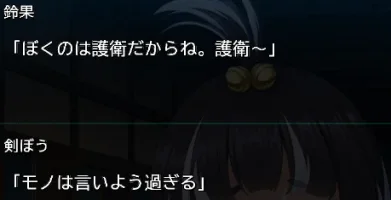
鈴果「ぼくのは護衛だからね。護衛~」(>>1)
剣ぼう「モノは言いよう過ぎる」(>>2)
鈴果「でも、ああいうのが割れ鍋に綴じ蓋って言うんだろうね~」