Need a Kanji Translated? Just ask!

No, its as we said above.

Suffer the consequences of the Dragon King's sword.
Or, to say it shorter: "Eat the Dragon King's sword".

It's an imperative (command), with the verb being "eat". In this case, it doesn't literally mean "eat", but instead its more of a euphemism for taking the blow/strike of a fist, or in this case, a sword.

In this case, its a taunt being said by the person who is doing the striking. Kind of like "taste the steel of my sword!".
 
No, its as we said above.

Suffer the consequences of the Dragon King's sword.
Or, to say it shorter: "Eat the Dragon King's sword".

It's an imperative (command), with the verb being "eat". In this case, it doesn't literally mean "eat", but instead its more of a euphemism for taking the blow/strike of a fist, or in this case, a sword.

In this case, its a taunt being said by the person who is doing the striking. Kind of like "taste the steel of my sword!".
Yes i know, however, Overwatch meant it to be interpreted how i said it up there.
 
@Majestic @Mikawa Ossan heres my proof.

IMG_0047.webp
 
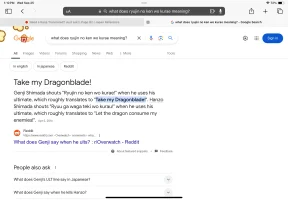
You are presenting two completely different sentences.

Your first sentence was 竜神の剣を喰らえ! (Ryūjin no ken wo kurae!), which, as I said, is an imperative.
The sentence you posted above is Ryū ga waga teki wo kurau, which is different in structure and intent and meaning.
 
Not only that, but 竜が我が敵を喰らう literally means "The/A dragon eats/devours my enemies". My proof? I spent years learning the language and lived in Japan for a decade. If you think some rando on Reddit has more credibility than I do, that really doesn't concern me. In either case, it does you a service to double-check, because what am I but some rando on Jref? lol

EDIT: For the sake of being thorough, it can also mean "...will eat/devour..." depending on context. Japanese can be very context specific when it comes to things like that.
 
Oh **** i totally forgot to search up Genji ult line i accidentally looked up Hanzos LOL
 
Last edited:
Not only that, but 竜が我が敵を喰らう literally means "The/A dragon eats/devours my enemies". My proof? I spent years learning the language and lived in Japan for a decade. If you think some rando on Reddit has more credibility than I do, that really doesn't concern me. In either case, it does you a service to double-check, because what am I but some rando on Jref? lol
Stop paraphrasing what i say about me being a dumb teenager. GRRRRRRR. (lol I'm joking)
 
AND....just so you know , using the "F" word by anyone makes them look like a low IQ thug wannabe , please stop.
200.gif
 
@derekiscool , notice the difference in the way we qualify our translations: 'roughly' vs 'literally'
 
@derekiscool , notice the difference in the way we qualify our translations: 'roughly' vs 'literally'
I have a vendetta against literal translations in Japanese. (Stupid, I know) but i have a terrible habit of challenging people who know more than I do about random stuff, especially Japanese.
 
I wouldn't necessarily. Just because I am a native English speaker doesn't mean that I can translate English into Japanese better than a native Japanese speaker. It might be true, but it doesn't logically follow. Same applies going in the opposite direction. That's why it's always good to double-check. I'm glad to see that you are doing so!

Having said that, your latest example is a pretty good translation. Given that it is surrounded by the context of the surrounding dialogue, it makes the job that much easier. Also, whoever translated that obviously tried to make the translation sound more natural in English, which wasn't a concern of mine.

It's interesting. One can translate the same thing multiple ways depending on your knowledge base, motivations, and intentions. In general, I tend to be more literal in translation than I could be. When no context is given, that's basically out of necessity. But aside from that, I'm more interested in the actual Japanese language and what it means and literally says than what a natural-sounding equivalent would be in English. I want to understand the Japanese, not the English. For the same reason, I never watch Japanese shows/movies/etc. with English subtitles or dubbed in English.

I had a professor in college who called natural-sounding translations a form of neo-colonialism. I kid you not. That particular professor was from Japan (Aichi Prefecture , of which Mikawa is a part of, in fact).
 
If the target language is English then you should trust a native English speaker over a native Japanese speaker. And vice-versa for Japanese. I highly doubt "Taste the blade of the Dragon God" was the work of a native Japanese person unless they were completely bilingual.
 
I wouldn't necessarily. Just because I am a native English speaker doesn't mean that I can translate English into Japanese better than a native Japanese speaker. It might be true, but it doesn't logically follow. Same applies going in the opposite direction. That's why it's always good to double-check. I'm glad to see that you are doing so!

Having said that, your latest example is a pretty good translation. Given that it is surrounded by the context of the surrounding dialogue, it makes the job that much easier. Also, whoever translated that obviously tried to make the translation sound more natural in English, which wasn't a concern of mine.

It's interesting. One can translate the same thing multiple ways depending on your knowledge base, motivations, and intentions. In general, I tend to be more literal in translation than I could be. When no context is given, that's basically out of necessity. But aside from that, I'm more interested in the actual Japanese language and what it means and literally says than what a natural-sounding equivalent would be in English. I want to understand the Japanese, not the English. For the same reason, I never watch Japanese shows/movies/etc. with English subtitles or dubbed in English.

I had a professor in college who called natural-sounding translations a form of neo-colonialism. I kid you not. That particular professor was from Japan (Aichi Prefecture, of which Mikawa is a part of, in fact).
I think toning might play a role but i honestly don't know. I haven't started Japanese lessons yet.
 
If the target language is English then you should trust a native English speaker over a native Japanese speaker. And vice-versa for Japanese. I highly doubt "Taste the blade of the Dragon God" was the work of a native Japanese person unless they were completely bilingual.
Look up who gaku space is. Then look up Genji English voice lines in Overwatch, then tell me if he's not bilingual.


On a side note.


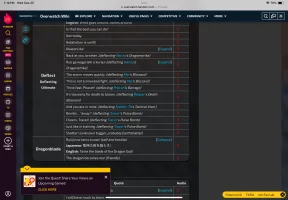
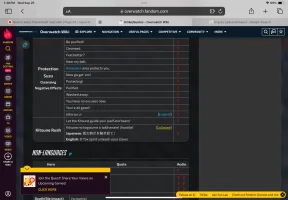
@Mikawa Ossan since I'm on the topic of Overwatch stuff, is this an accurate translation? Look at the picture.
 

Attachments

  • IMG_0052.webp
    IMG_0052.webp
    131 KB · Views: 139
You mean 「狐の鉤爪を解き放て!」?
I would literally translate that as "Release the fox's claw(s)!" Who is being addressed is not specifically mentioned.

So depending on the context, yes, that could be a decent translation or oppositely, it could be wrong. You be the judge.
 
You mean 「狐の鉤爪を解き放て!」?
I would literally translate that as "Release the fox's claw(s)!" Who is being addressed is not specifically mentioned.

So depending on the context, yes, that could be a decent translation or oppositely, it could be wrong. You be the judge.
Nobody, that's kirikos ultmate line
 
Look up who gaku space is. Then look up Genji English voice lines in Overwatch, then tell me if he's not bilingual.


On a side note.


@Mikawa Ossan since I'm on the topic of Overwatch stuff, is this an accurate translation? Look at the picture.
I looked him up. It says he is a voice actor. It wasn't clear if he was the translator or not. Most likely not.
 
I looked him up. It says he is a voice actor. It wasn't clear if he was the translator or not. Most likely not.
Probably was. He's fluent in English and you can tell by his thick accent that he's native Japanese.
 
There are many Japanese proficient people here who would be more than happy to help you with kanji questions. What does this character mean? What is the character for such and such?
Ask away!
No question is "too stupid", and we promise to be nice in our replies! (This is a thread to help, so negative comments are not welcome here!)
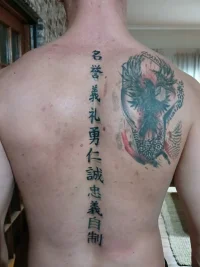
Hi everyone. I have a bizarre question regarding a tattoo idea and i just wanted to know if the wording and meaning is correct=
名誉, 義礼, 勇, 仁, 誠, 忠義,
Something similar to this picture.
 

Attachments

  • Image.webp
    Image.webp
    67.3 KB · Views: 136
Last edited:
I don't know exactly what you want it to mean, but it looks like something a martial arts enthusiast would think of. Do you want confirmation of the meaning of the individual words?
 
Back
Top Bottom