

Navigation
Install the app
How to install the app on iOS
Follow along with the video below to see how to install our site as a web app on your home screen.
Note: This feature may not be available in some browsers.
More options
Style variation
System
Light
Dark
You are using an out of date browser. It may not display this or other websites correctly.
You should upgrade or use an alternative browser.
You should upgrade or use an alternative browser.
Translation Assistance of Hinomaru no Yosegaki
- Thread starter Boongie
- Start date
- 5 May 2013
- 962
- 509
祈武運長久 kibuunchoukyuu: Prayer for Continuing Success in Battle
忠勇義烈 chuuyuu giretsu: Loyalty, Bravery, and Heroism
The four corners contain the characters: 盡忠奉公 (modern: 尽忠奉公) jinchuu, houkou: Loyalty, Public Service
If we read vertically, 盡奉忠公 it doesn't appear to spell anything.
I would have expected vertical reading, especially given the other vertical inscriptions, but horizontal writing (usually right to left) was sometimes done in the war years and on flags. I also would have expected 盡忠報國, a fixed expression for Loyalty & Patriotism but there is variation in flags.
御嶽教普寛元厷阿講社結社社長清水清吉 This appears to be a name with a title, it may indicate the primary presenter?
御嶽教 ontakekyou (a shinto sect)
普寛元厷阿? (the name of the organization?)
講社 kousha: religious asociation
結社 kessha: society
社長 shachou: president
清水清吉 Shimizu Seikichi (?): A person's name, but there are many possible readings.
Most or all of the other writing is just signatures.
I believe the name to the left of 祈武運長久 is likely the receiver but I can't read it.
The colors of this flag are extremely well preserved, and the ink oddly shows no signs of discoloration or fading, but it's possibly just a high quality flag with high quality ink provided for the signing along with being well cared for, or at least stored in a beneficial environment. It would be extremely elaborate for a fake, but if you want to be certain you will need to have it examined by an expert (unless someone here finds giveaway red flags that I missed).
忠勇義烈 chuuyuu giretsu: Loyalty, Bravery, and Heroism
The four corners contain the characters: 盡忠奉公 (modern: 尽忠奉公) jinchuu, houkou: Loyalty, Public Service
If we read vertically, 盡奉忠公 it doesn't appear to spell anything.
I would have expected vertical reading, especially given the other vertical inscriptions, but horizontal writing (usually right to left) was sometimes done in the war years and on flags. I also would have expected 盡忠報國, a fixed expression for Loyalty & Patriotism but there is variation in flags.
御嶽教普寛元厷阿講社結社社長清水清吉 This appears to be a name with a title, it may indicate the primary presenter?
御嶽教 ontakekyou (a shinto sect)
普寛元厷阿? (the name of the organization?)
講社 kousha: religious asociation
結社 kessha: society
社長 shachou: president
清水清吉 Shimizu Seikichi (?): A person's name, but there are many possible readings.
Most or all of the other writing is just signatures.
I believe the name to the left of 祈武運長久 is likely the receiver but I can't read it.
The colors of this flag are extremely well preserved, and the ink oddly shows no signs of discoloration or fading, but it's possibly just a high quality flag with high quality ink provided for the signing along with being well cared for, or at least stored in a beneficial environment. It would be extremely elaborate for a fake, but if you want to be certain you will need to have it examined by an expert (unless someone here finds giveaway red flags that I missed).
- Thread starter
- #3
Thank you for your assistance.祈武運長久 kibuunchoukyuu: Prayer for Continuing Success in Battle
忠勇義烈 chuuyuu giretsu: Loyalty, Bravery, and Heroism
The four corners contain the characters: 盡忠奉公 (modern: 尽忠奉公) jinchuu, houkou: Loyalty, Public Service
If we read vertically, 盡奉忠公 it doesn't appear to spell anything.
I would have expected vertical reading, especially given the other vertical inscriptions, but horizontal writing (usually right to left) was sometimes done in the war years and on flags. I also would have expected 盡忠報國, a fixed expression for Loyalty & Patriotism but there is variation in flags.
御嶽教普寛元厷阿講社結社社長清水清吉 This appears to be a name with a title, it may indicate the primary presenter?
御嶽教 ontakekyou (a shinto sect)
普寛元厷阿? (the name of the organization?)
講社 kousha: religious asociation
結社 kessha: society
社長 shachou: president
清水清吉 Shimizu Seikichi (?): A person's name, but there are many possible readings.
Most or all of the other writing is just signatures.
I believe the name to the left of 祈武運長久 is likely the receiver but I can't read it.
The colors of this flag are extremely well preserved, and the ink oddly shows no signs of discoloration or fading, but it's possibly just a high quality flag with high quality ink provided for the signing along with being well cared for, or at least stored in a beneficial environment. It would be extremely elaborate for a fake, but if you want to be certain you will need to have it examined by an expert (unless someone here finds giveaway red flags that I missed).

- 12 Oct 2013
- 4,071
- 5,023
The letters to the left of 祈武運長久 is a phrase "samuhara" using kanji that are unique to Japan,
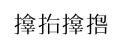
or a slight variation of such. Actually these aren't even used in Japan, except to express this one Shinto concept of self-protection.
I think Mr. Shimizu would have been the former president of this religious association (hence the 元). And maybe the full name of the organization is 九阿講社結社, representing some formal organization of this Shintō sect (Ontakekyō Fukan). Unsure of the kanji in red, but I think that smudge on the middle of the right side is unintentional.
or a slight variation of such. Actually these aren't even used in Japan, except to express this one Shinto concept of self-protection.
I think Mr. Shimizu would have been the former president of this religious association (hence the 元). And maybe the full name of the organization is 九阿講社結社, representing some formal organization of this Shintō sect (Ontakekyō Fukan). Unsure of the kanji in red, but I think that smudge on the middle of the right side is unintentional.
- 5 May 2013
- 962
- 509
Interesting. Do they not have UTF codepoints? I notice you didn't put them in as text... that's extremely rare for kanji that aren't simply obsolete variants of more commonly used contemporary characters.The letters to the left of 祈武運長久 is a phrase "samuhara" using kanji that are unique to Japan,
View attachment 113212
or a slight variation of such. Actually these aren't even used in Japan, except to express this one Shinto concept of self-protection.
I think Mr. Shimizu would have been the former president of this religious association (hence the 元). And maybe the full name of the organization is 九阿講社結社, representing some formal organization of this Shintō sect (Ontakekyō Fukan). Unsure of the kanji in red, but I think that smudge on the middle of the right side is unintentional.
Former makes sense, but I've also seen 元 in names so I didn't want to assume meaning where a continuation of names could make sense. Maybe that was an error, idk.
But, if Samuhara is a slogan, than perhaps the association president is the recipient and not the giver after all? I would think such a person would be too old to draft, but no other name is highlighted.
These very obscure but consistent details also argue against fakery, IMO.
- Thread starter
- #6
Thank you Majestic. Would this appear to be a period correct flag? Given to someone that was going off to war?The letters to the left of 祈武運長久 is a phrase "samuhara" using kanji that are unique to Japan,
View attachment 113212
or a slight variation of such. Actually these aren't even used in Japan, except to express this one Shinto concept of self-protection.
I think Mr. Shimizu would have been the former president of this religious association (hence the 元). And maybe the full name of the organization is 九阿講社結社, representing some formal organization of this Shintō sect (Ontakekyō Fukan). Unsure of the kanji in red, but I think that smudge on the middle of the right side is unintentional.
- Thread starter
- #7
Very interesting information. Thank you.Interesting. Do they not have UTF codepoints? I notice you didn't put them in as text... that's extremely rare for kanji that aren't simply obsolete variants of more commonly used contemporary characters.
Former makes sense, but I've also seen 元 in names so I didn't want to assume meaning where a continuation of names could make sense. Maybe that was an error, idk.
But, if Samuhara is a slogan, than perhaps the association president is the recipient and not the giver after all? I would think such a person would be too old to draft, but no other name is highlighted.
These very obscure but consistent details also argue against fakery, IMO.
- 12 Oct 2013
- 4,071
- 5,023
As far as I know, those kanji are not included in any font set. I can only display them as an image. They have no other utility beyond this very obscure usage, so I don't think any font developer has seen it worthwhile to create UTF codes for these.
I think the President is the giver, otherwise the "President" (社長) would come at the end, as an honorific.
The name to the left of the President's name might be the recipient, but the lack of honorific makes me hesitant to make a judgment on that.
I think the President is the giver, otherwise the "President" (社長) would come at the end, as an honorific.
The name to the left of the President's name might be the recipient, but the lack of honorific makes me hesitant to make a judgment on that.
- 12 Oct 2013
- 4,071
- 5,023
Would this appear to be a period correct flag? Given to someone that was going off to war?
It looks to me like it has a high chance of being an authentic wartime yosegaki, given to someone going off to war. Given possibly to the person by the President of that organization, and the signers are all members of that group (some Shintō-affiliated shrine or other community organization).
- Thread starter
- #10
Thank you!It looks to me like it has a high chance of being an authentic wartime yosegaki, given to someone going off to war. Given possibly to the person by the President of that organization, and the signers are all members of that group (some Shintō-affiliated shrine or other community organization).
Similar threads


- Replies
- 20
- Views
- 6K
