


- 14 Mar 2002
- 21,050
- 18,903
Vertical solar panels, although still uncommon on Japanese farmland—including rice paddies—are expected to gradually reshape the country's agricultural landscape. This approach is part of an emerging system known as agrivoltaics, which enables farmland to be utilised for both agricultural purposes and solar power generation. Farmers can generate additional income from energy production.
In May 2024, Ashikaga-based Sharing Farm installed vertical solar panels on one of its rice fields. When the rice was harvested that autumn, the yield reached 868 kilograms, just 5% less than the previous year's harvest. Sharing Farm has entered into a contract with Marubeni Power Retail Corp., a Tokyo-based electricity supplier headquartered in Chiyoda Ward, to sell the power generated from the site.
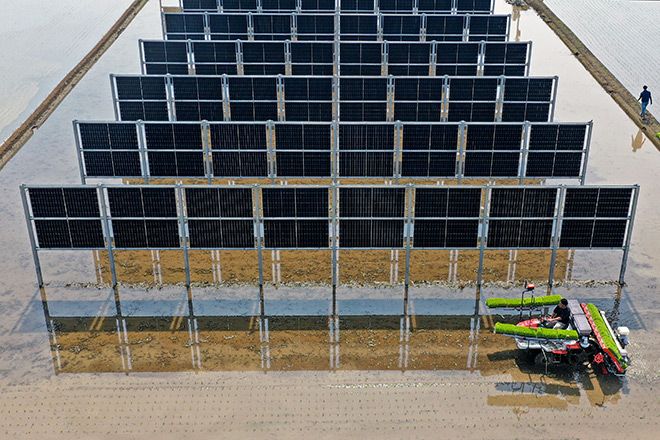
Photo credit: Asahi Shinbun
In May 2024, Ashikaga-based Sharing Farm installed vertical solar panels on one of its rice fields. When the rice was harvested that autumn, the yield reached 868 kilograms, just 5% less than the previous year's harvest. Sharing Farm has entered into a contract with Marubeni Power Retail Corp., a Tokyo-based electricity supplier headquartered in Chiyoda Ward, to sell the power generated from the site.
Photo credit: Asahi Shinbun
Unlike horizontal solar panels, vertical ones pose few restrictions on the height of farming equipment in dual-use farmland. Both sides of the vertical panels, which face east and west, can generate electricity in the mornings and evenings, when power demand is high, officials said. "(The vertical solar panels) turned out to have less of an impact on the crop than we had expected," said Taiki Akasaka, a member of Sharing Farm's board of directors. "We would like to spread the technology further if it can be built more cheaply." Officials of the Japan Photovoltaic Energy Association noted that vertical photovoltaic power generation equipment first arrived in Japan around 15 years ago. Erected in an upright position, they also have the advantage of being less susceptible to snowfall and being able to generate power by using light reflected from the snow surface.


