Legal Tokyo Court: unconstitutionality of same-sex marriage infringes human rights

thomas

Unswerving cyclist
Admin
Joined
14 Mar 2002
Messages
21,050
Reaction score
18,903
Yesterday, the Tokyo District Court ruled that the nation's ban on same-sex marriages is constitutional and denied the plaintiffs compensation, dealing a fresh blow to LGBT rights. However, the court also stated that the lack of a legal system that recognizes same-sex couples as a family is a "serious threat to and violation for gay people" and is in a state of unconstitutionality regarding the second paragraph of Article 24 of the Constitution.


The plaintiffs in the suit are eight people of same-sex couples living in Tokyo and other areas, ranging in age from their 30s to 60s. They argued that the Civil Law and Family Register Law that do not recognize same-sex marriages violates the Constitution's Article 14, which stipulates equality under the law, and Article 24, which guarantees the freedom of marriage. Based on the argument, they sought compensation from the central government for its failure to take legal measures to deal with the problem. Others have filed similar lawsuits in four other district courts: Sapporo, Nagoya, Osaka and Fukuoka. This was the third ruling among them, but the second to rule that the ban is constitutional. The Sapporo District Court ruled in March 2021 that legal provisions against same-sex couples are a clear violation of Article 14 and prevent them from enjoying the legal benefits of marriage. But in June this year, the Osaka District Court ruled that the ban is constitutional.


Paywall alert:
 
Today, the Tokyo High Court confirmed the 2022 ruling of the Tokyo District Court decision, which stipulated that the country's lack of legal recognition for same-sex marriage is unconstitutional. However, it upheld a lower court ruling rejecting the plaintiffs' claim for damages.

The ruling by the Tokyo High Court was issued after the Tokyo District Court determined in 2022 that the same-sex marriage ban is in a "state of unconstitutionality." The term used by the lower court, while stopping short of declaring the ban unconstitutional, is seen as a call for the Diet to take action on the issue. The seven plaintiffs, including same-sex couples, had demanded 1 million yen ($6,500) each from the government. They argue that civil law provisions not allowing same-sex marriage violate the right to equality under the Constitution and its guarantee of the freedom of marriage.


Japan's Constitution guarantees the freedom of marriage, stating, "Marriage shall be based only on the mutual consent of both sexes." However, recent court rulings have challenged this interpretation. The Sapporo and Nagoya district courts have declared the lack of legal recognition for same-sex marriage unconstitutional, and the Tokyo and Fukuoka district courts have deemed it a "state of unconstitutionality." The Sapporo High Court upheld the lower court's ruling, declaring the country's failure to recognize same-sex marriage unconstitutional.


The Fukuoka High Court today ruled that the country's ban on same-sex marriage is unconstitutional. However, the court upheld a lower court's decision to dismiss the plaintiffs' claim for damages. This is the third Japanese high court to declare the ban unconstitutional. The lower court previously stated that the same-sex marriage ban is in a "state of unconstitutionality," urging the Diet to address the issue.

 
The Tokyo High Court ruled that the government's decision not to recognise same-sex marriage falls within the bounds of the Constitution. This judgment, handed down on Friday, marks the outcome at the high court in six parallel lawsuits that are now expected to move toward a unified ruling at the Supreme Court, possibly next year.

In overturning a lower court's decision issued last year, the judges stated that Japanese law continues to treat marriage as a union between a man and a woman. Presiding Judge Ayumi Higashi argued that the legal framework defining a family as a couple and their children remains a coherent and legitimate basis for the current system. On that ground, the exclusion of same-sex couples was upheld. The court also rejected the claim for damages of one million yen each filed by the eight plaintiffs, who had sought compensation alongside legal recognition of their partnerships.

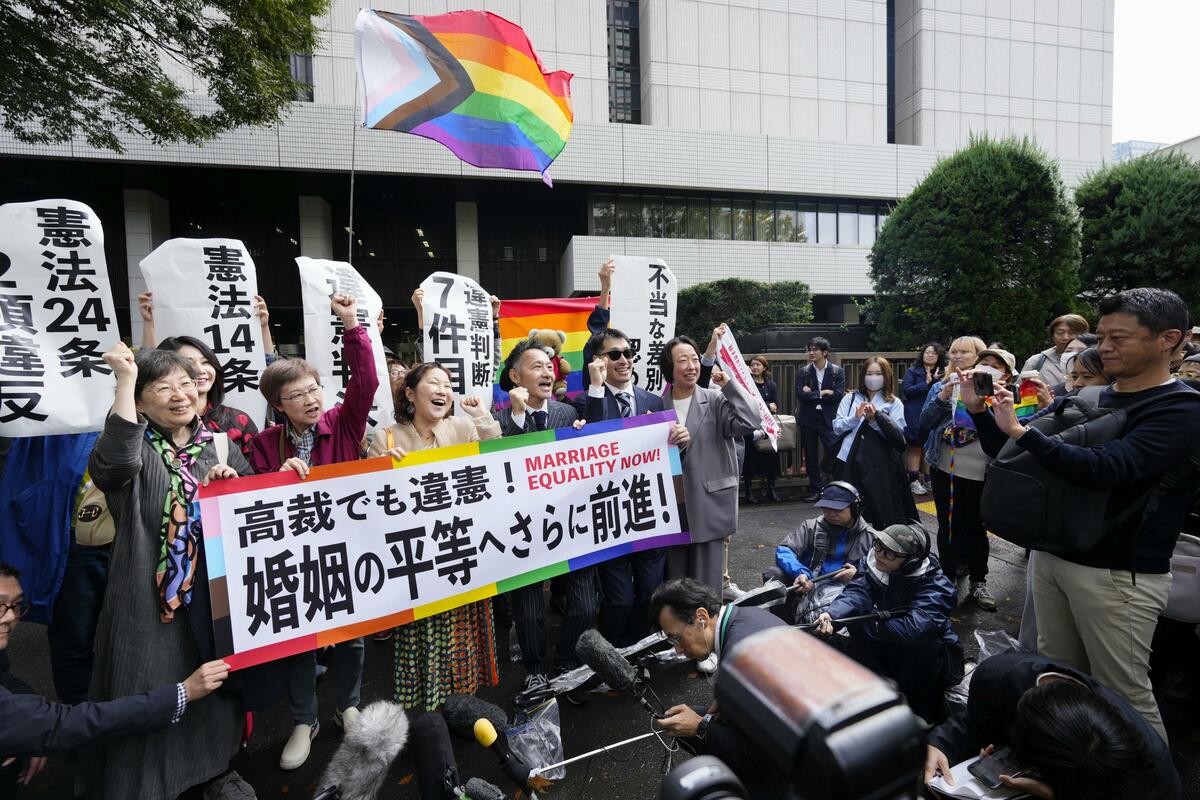
After the verdict, the plaintiffs and their legal team described the outcome as deeply disappointing. They said they intended to press on and pursue their case before the Supreme Court, where they hope to secure a definitive ruling on marriage equality.


The ruling was met with disappointment from plaintiffs and their legal team who had gathered outside the Tokyo courthouse. Japan is the only G7 country that does not fully recognise same-sex couples or offer them clear legal protection. But it's not an outlier in Asia, where only Taiwan, Thailand and Nepal offer same-sex marriages. [...] The verdict on Friday is the last among six high court rulings on same-sex marriage lawsuits filed between 2019 and 2021, in courts across the country from Sapporo to Osaka to Fukuoka. Among them, five found the ban unconstitutional - though they rejected the plaintiffs' compensation claims. Friday's ruling by the Tokyo high court marks an exception to this series of verdicts, which had been adding weight to the push for same-sex marriage to be legalised in Japan. The cases will next be taken to the Supreme Court.

 
Back
Top Bottom