The Sake Appreciation Thread đŸ¶

More on the Noto breweries, which all suffered severe blows to their business. Noto was famous for its own brewers' guild, the Noto Toji.

The powerful earthquake that struck the Noto Peninsula in central Japan on New Year's Day has devastated the region's centuries-old sake-making industry. All eleven sake brewers in the northern part of the peninsula have been severely impacted by the magnitude-7.6 quake, leading them to suspend operations for at least a year. Tragically, five of these breweries have been destroyed, leaving their futures uncertain. A local industry group representing these manufacturers has initiated donation efforts in response to this dire situation. The earthquake, which claimed more than 230 lives, has left the owner of one brewery with no choice but to "continue squeaking out a living" without immediate prospects for rebuilding. Their breweries are located in three of the four municipalities on the Sea of Japan coast in the hardest-hit Okunoto, or Inner Noto, region, known for its distinct tradition of having top-level guilds of "toji" master brewers.


Sake brands from Okunoto have long been a major specialty of Ishikawa Prefecture owing to the work of the guilds, reputed as one of Japan's four prominent toji alongside those in Hyogo, Niigata and Iwate prefectures. [...] But the devastation caused by the quake seems certain to affect the link between guilds of master craftsmen that has made Noto brands so special, and could have an impact on the entire culture of sake making over the long term. [...] The prefectural federation of sake brewers associations has made clear that this year's shipments are all but doomed for brewers in the cities of Suzu and Wajima, as well as those from Noto town. "We need assistance from the entire country to rebuild. We really need your help," said Shigehisa Uratani, 68, the federation's managing director.


Hokkaido-based breweries are rallying to a call to produce a familiar brand of Japanese sake and taking things a step further by ageing the product in barrels made of Japanese oak. The idea is for the companies to combine their expertise to create a unique brand of sake called Kitasake, whose kanji characters for north and sake (挗酒) pay homage to Japan's northernmost main island.

Kitasake Brewery

Sake is not typically aged in barrels made of Japanese oak. But doing so, producers say, gives the rice wine a distinctive smoky flavour and aroma. But the real rarity value derives from the fact that only one or two in 100 Japanese oak trees can be processed into barrels. The trees must be at least four meters tall and have no twists or scars.


The Kitasake project was first mooted in March 2020, immediately after the COVID-19 pandemic hit. Sapporo-based Soin de Beaute Co., which distributes natural cosmetics products online under the Sabina brand name, called on breweries across Hokkaido to join the cause and make the best out of a bad situation. So far, Tanaka Sake Brewing Co. in Otaru, Kunimare Sake Brewery Co. in Mashike and Takasagoshuzo Co. in Asahikawa have signed up. Others are also considering answering the call. A 720-ml bottle of Kitasake sells for 30,000 JPY (USD 200), excluding tax. It is available at the Sabina Premium Shop inside the cosmetics maker's main office building in central Sapporo and through its online store. The company first exported Kitasake products to China in 2022 and now has its sights set on the U.S. market.


Links:


Kitasake Brewery:


Tanaka Shuzƍ:


Kunimare Sake Brewery:


Takasago Shuzƍ:
 
One Hyogo-based sake brewery landed a veritable PR coup: French actress Eva Green, famous for her roles in the James Bond film "Casino Royale" (2006), "Sin City", and "300", among other works, recently joined seven other people from France to experience the unique sake production process at Tajime Sake Brewery in Asago.

9.webp

This was the fourth tour organized by Simeon Molard and Julien Casorla, who run a sake import and wholesale business in France, to learn more about the beverage. The participants came from a variety of professions, including a bookstore owner, a beer brewer and a laboratory technician, but all either love sake or have an interest in it. The brewing experience at Tajime Sake Brewery, known for the local "Chikusen" brand, was set up for three days, two nights as part of a week-long itinerary that included visits to a koji yeast manufacturer and a rice mill.


More EU-related sake news: EU officials recently proposed regulations requiring businesses producing or selling alcohol to package at least 10% of their products in reusable or refillable containers. However, Japanese sake faced a potential challenge due to its unique bottle shapes, which differ from wine bottles. Reusing these distinct sake bottles in Europe would have been impractical and costly.

sake-bottles.jpg

Sake bottles have different shapes than wine bottles, making them difficult to reuse in Europe.

Tokyo, representing the Japanese government, successfully lobbied for an exception. They argued that applying the recyclable containers requirement to sake would effectively create a non-tariff barrier for sake imports into the EU. As a result, sake has been cleared from the new regulations, allowing it to continue its exports to the common market.


Paywall alert:
 
Following up on the post above, Nikkei had an insightful piece of sake's narrow escape from being banned in the EU, highlighting the difficulty of navigating the complex European trade rules.


"Isn't sake a distilled alcoholic beverage?" Japanese diplomats were stunned by a question from a European Commission official in early January. Sake is brewed, not distilled, from sake rice. The regulation agreed to on March 4 will require makers and sellers of alcoholic beverages to put at least 10% of their products in reusable or refillable containers from 2030. With a push from the U.S. and Italy, final rules were set to exempt wine and distilled spirits like whiskey. Their target was beer, and the treatment of sake had not even come up during discussions. The problem with sake was raised in the fall of 2023 by a Japanese farm ministry official who reread the proposal while working on the Japanese government's mission to the EU. The official realized that if the language were to be taken at face value, sake would be subject to the restriction. Since sake bottles have different shapes than wine bottles, reusing them in Europe would have been difficult. Reuse would have entailed shipping them back to Japan, costing both money and fuel -- seemingly at odds with the intent of the regulation. The EC did not realize that its environmental conservation efforts would lead to sake being singled out. Japan swiftly lobbied for changes, but the EC was reluctant to alter an already-announced proposal.


There are lessons to be learned. Although the draft proposal was released in 2022, the Japanese government and related businesses were slow to realize the implications for sake. For its part, the EU did not adequately consider the scope of its rules and was slow to respond. Although sake managed to escape restrictions, the multilayer film used to package such products as Japanese beef might not. Those exports will become difficult unless producers switch to recyclable packaging by 2030.


Paywall alert:
 
The Sendai Regional Taxation Bureau recently organized a sake brewery tour at the Kariho Brewery in Daisen, Akita Prefecture. This tour was designed for international students and university instructors in Akita. The primary goal was to promote sake's appeal to a global audience by providing an inside look at the brewing process and offering tastings.

9.jpg

The Kariho Brewery, with its long-established tradition, has been faithfully passing down brewing techniques for many years. Their history and expertise contribute to the unique and deep flavours found in their sake, which cannot be replicated elsewhere. Participants had the opportunity to explore the brewery, learn about the craft, and savour the distinct taste of this traditional Japanese beverage. This initiative follows similar successful events held in Aomori and Yamagata prefectures in 2023. In 2024, the program expanded to include the four prefectures of Akita, Aomori, Miyagi, and Fukushima. It's a beautiful way to introduce sake to a diverse audience and foster appreciation for this cultural treasure.


Thirteen international students and two faculty members from Akita University and Akita International University participated in the March 23 event. Following a greeting from brewery President Yohei Ito, the participants watched a video on how sake is made and went on the brewery tour. In addition, they were treated to five kinds of sake, including "Kassei Rokushu," paired with five dishes made with local ingredients such as fried sandfish. Moira Lunge from Papua New Guinea, an Akita University Graduate School doctoral student, commented, "This is my first time to drink sake. They are all delicious. Beer is popular in my country, but if there is an opportunity to drink sake, it will likely be a hit."


Good news for Tokyo sake lovers: Noguchi Brewery in Fuchu has reopened after a forty-year hiatus.


Noguchi Brewery

Taken from John Gaunter's 'Sake Industry News' (and Yomiuri).

Noguchi Shuzƍten in Fuchu, Tokyo, has resumed sake production this spring after a 40-year hiatus. The brewery originally ceased brewing as the area became more urbanized, affecting the quality of water. The current 7th-generation owner revived onsite production with the help of a local university. Noguchi Shuzƍten was founded in 1860. Its original business model was a general store offering liquor and food; however, in 1869, the company switched to sake production.

For many years, the brewery released sake using high-quality local Fuchu water under the label Kƍzuru. However, toward the end of the Shƍwa Era (mid-1980s), rapid urbanization around the brewery began to hurt water quality. As a result, the brewery outsourced production to relatives in Nagano Prefecture who also run a sake brewery. According to Eiichirƍ Noguchi, 7th-generation owner, the Graduate School of Tokyo University of Agriculture and Technology, headquartered in Fuchu, helped revive local sake brewing. The School was developing a new rice strain and approached Noguchi about using the rice to brew sake.

Assistance came from Daisuke Kinoshita, who previously led brewing duties at his family's brewery, Amabuki Shuzƍ, in Saga Prefecture. In recent years, Kinoshita has been chiefly away from Saga and involved in his family's business sales and administration. However, the brewing itch is a tricky one to scratch, and as luck would have it, Kinoshita had been on the lookout for a brewing project in the Tokyo area, where his wife's family is located when Noguchi called.

Noguchi Shuzƍten began renovations at its Fuchu facility in September last year. The brewery added a new two-story sake brewing plant with thermal tanks and rebuilt the kƍji room, which was completed in mid-March this year. Brewing began in April using the new rice variety Sakura Fukuhime and a new underground water source. The first releases will be on sale in May. The latest brewing facility is equipped to brew mostly year-round to produce fresh, sustainable sake for the immediate Tokyo metropolitan area.
 
The days when UK revellers confused "sake" with "shakes" are over: no longer just drunk for courage at karaoke clubs, the 'food-friendly' rice spirit is becoming a first-choice of connoisseurs.


China and the US are the biggest consumers of sake, but the UK market is growing. Sake is no longer drunk just for courage at karaoke clubs, but sold in specialist shops and sophisticated bars. Waitrose reported searches for sake on its website have increased 241% year on year, while searches for plum sake were also up 100% on 2023. Even Wagamama – one of the first restaurants to offer the drink nationwide – has just added a sparkling sake to its list.

The UK also shows growing interest in other Asian spirits and drinks. Shochu, a spirit made from grains such as rice and barley, sweet potato, and molasses, is now regularly featured as a cocktail ingredient at British bars. Baijiu, a potent traditional Chinese drink made from fermented sorghum, is actually the world's bestselling spirit and has finally been discovered by British drinkers.

 
Asahi had an interesting feature on craft sake, explaining that Japanese craft breweries were hoping for an "avocado sushi effect."

Breweries are experimenting with infusing fragrances and flavours from fruits and other ingredients to create what is known as "craft sake." These innovative brewers, often younger and more adventurous, aim to tap into the global market with unique concoctions. However, they first want to establish themselves domestically. Unlike traditional Japanese sake, which relies primarily on rice and koji mould, craft sake falls under the official classification of "other brewed beverages" according to the Liquor Tax Law. This classification allows brewers to mix in non-traditional ingredients, making it easier to obtain licenses for craft sake production. The concept of craft sake was introduced by the Japan Craft Sake Breweries Association, founded by seven companies in 2022.


Shuhei Okazumi stands in front of Ine to Agave Brewery in Akita

Photo credit: Hirai Shigeo via Asahi


According to the National Tax Agency, the issuance of new sake brewing licenses has basically been suspended for more than half a century for domestic production and distribution. Given the sluggish sales of sake in Japan, authorities have limited new entrants to the market to avoid excessive competition and prevent bankruptcies. Tax authorities use a "prerequisite for supply-demand adjustments" in decisions to issue sake-brewing licenses.


The members of the Japan Craft Sake Breweries Association are also looking overseas.

Konohanano Brewery opened a facility in Singapore in May, while Fukuoka-based Librom Craft Sake Brewery, known for drinks marked by herbs and fruits, is increasing exports to China, Taiwan and Hong Kong. Behind their moves is the possibility that craft sake will be more readily accepted abroad than in the domestic market. The number of sake brewers outside Japan is rising, and up to 60 breweries now operate mainly in the United States and Europe. Breweries overseas do not face restrictions on side ingredients used in sake, so their products can take full advantage of local delicacies and specialties.


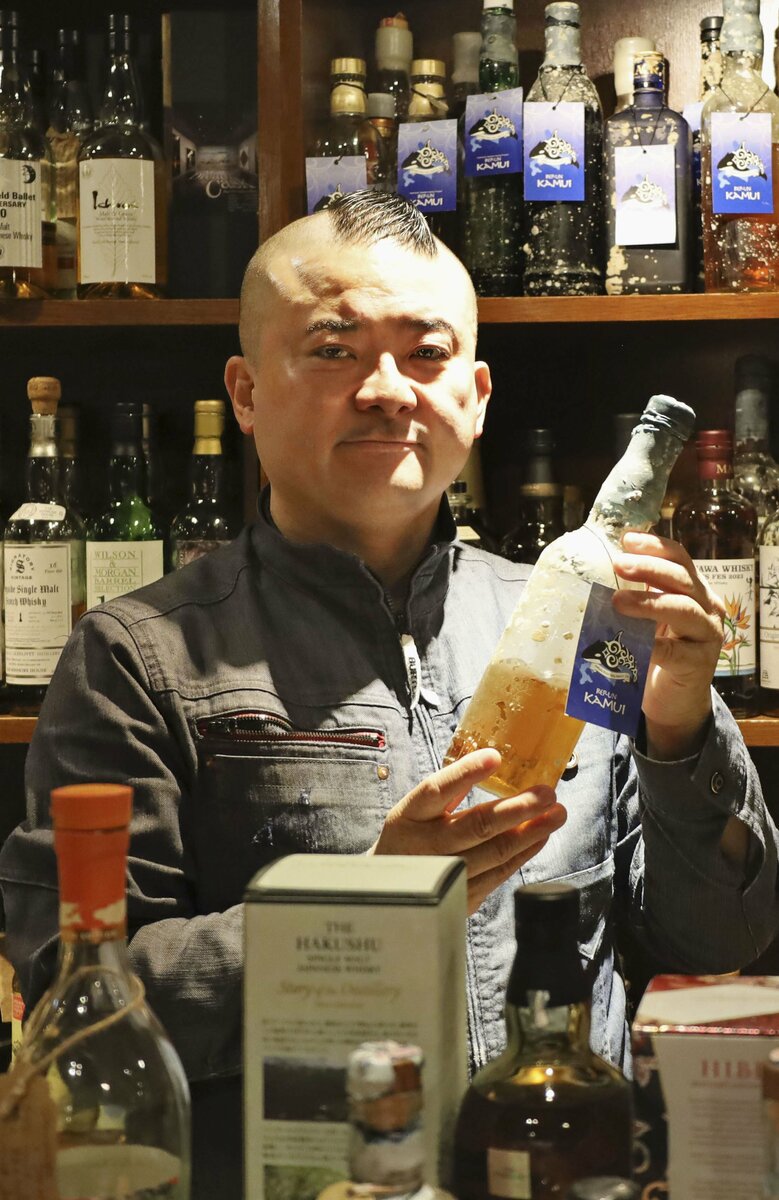
The town of Yubetsu on Hokkaido developed a new local speciality by submerging sake in Lake Saroma, hoping that the water's vibrations would enhance the alcohol's taste. Following field tests in May, 100 bottles of sake from Kamikawa Taisetsu Sake Brewery will be submerged at 10 metres from late July. A local official hoped that using the famous Lake Saroma for sake production would increase the town's recognition. Some bottles will be retrieved every two to three months to monitor flavour changes, with the final batch being lifted after about a year.

Kamikawa Taisetsu Sake Brewery stored in a lake


The company's alcoholic beverages have previously been used in the country's hometown tax program, which allows people to direct some of their tax payments to a municipality of their choice in return for gifts or experiences. Ikkei Honma, 45, representative director of the firm, believes that submerging sake in Lake Saroma "could take the edge off the alcohol" to create a richer flavour, as the currents in the lake differ as it is connected to the Sea of Okhotsk. Yubetsu has budgeted 1.6 million yen ($9,950) in the current fiscal year to cover payments to local fishermen who are helping with the project and analytic costs. According to a town official, the town hopes to commercialize the sake, branded "Yubetsu," starting next summer and promoting it with locally produced scallops and oysters.


A 234-year-old sake brewery in Ibaraki Prefecture aims to serve its sake at Dodger Stadium. Yoshikubo Brewing Co.'s Premium Ippin Junmai Daiginjo is now available on the VIP seat menu for USD 90 (14,400 JPY) per 720-ml bottle. Hiroyuki Yoshikubo, the 12th-generation proprietor, expressed pride in gaining recognition alongside the performances of Japanese players. The selection coincides with Shohei Ohtani and Yoshinobu Yamamoto joining the Los Angeles Dodgers. The sake was chosen during a U.S. tasting process to introduce Japanese flavours to this season's concessions stand.


4e2a96520124c71b9583e9e7a1c849fa.webp

Yoshikubo Brewery president and 12th-generation owner Yoshikubo Hiroyuki (photo credit: Asahi)


The brewery, founded in 1790, produces about 320,000 litres annually. "Many steps are carried out by hand, and we are small in scale as a sake brewery," Yoshikubo said. Mito City is home to both the brewery and the rice it uses. The sake also relies on extra soft water drawn from Kasahara town. These local elements translate into a fruitiness and a distinct taste of rice. But how exactly should that pair with ballpark staples like the Dodger Dog? Apparently, well. And that's not by luck. Yoshikubo Brewery's hopes to charm the international market are imbued into its sake. It currently exports around 40 per cent of its products and began its international foray 20 years ago. Ippin's strong rice flavour was created to match the richly flavoured dishes of other countries. The bottle's label also got a makeover around ten years ago after the brewery sought opinions from overseas friends. Japanese armour and the "kabuto" helmet inspired its current black, red and gold design. The "ume" plum blossom branch is often associated with Mito and is a nod to the city.


I just realised we have the prized Junmai Daiginjƍ in our Sake section. :)


Japanese brewers and distillers increasingly promote their distinctive beer, sake, and whisky flavours abroad.

Faced with numerous challenges at home, Japan's alcoholic beverages sector seeks to expand into new markets globally, hoping consumers will develop a taste for their premium sake, beer, and whisky. The industry acknowledges that recent years have been tough, with a noticeable decline in social drinking even before the COVID-19 pandemic forced bars and restaurants to close. Hiromi Iuchi, spokeswoman for the Japan Sake and Shochu Makers' Association attributes this decline to factors such as Japan's shrinking population, the perception of sake as an older person's drink, and a general shift away from alcohol among younger consumers due to health concerns.


The sake market has also been squeezed by imports of foreign liquor and beers, Iuchi said, which has severely impacted Japan's traditional drinks sector. Around 40 years ago, there were as many as 4,000 sake brewers across the country, but today, that number has shrunk to just 1,400 producers, she told DW. [...] Iuchi said sake is primarily exported to China, the US and Hong Kong. Still, she aims to expand into other markets — including Singapore, Australia, Brazil, and Mexico — and increase the exports by 6%, which are presently making their way to Europe. "A lot of it is education. We need to work with sommeliers to explain to them which sakes go well with different dishes, for example, and then encourage them to share that with their customers," she noted. "It's about explaining the culture of sake, providing people with the back story and explaining how it works with European cuisine," she added.


I saw a feature on NHK about Niida Honke, a sake brewery in Fukushima that produces organic sake and uses piano music (the toji's wife is a jazz pianist) to stimulate the growth of microbes in the mash. Believe it or not, other breweries employ similar methods:


In a cramped Tokyo loft, the gentle melody of a flute mingles with the rhythmic burble of a 670-litre sake vat. This unusual pairing is the brainchild of Yoshimi Terasawa, the chief brewer behind Tokyo Port Brewing. He believes the music carried through the air to the vat influences the taste of fermenting rice and water.

Yoshimi Terasawa, chief brewer at Tokyo Port Brewing

Yoshimi Terasawa, chief brewer at Tokyo Port Brewing (photo credit: Reuters via Asahi)

Terasawa's urban brewery is a stark contrast to the traditional open-air sake factories found in the countryside. Housed in a narrow four-story building, it's a model of efficiency and innovation. Terasawa has created a controlled environment ideal for consistent sake-making by minimising the production space. His methods are designed to address the industry's growing challenges: labour shortages, rising energy costs, and the unpredictable impacts of climate change.

The industry faces headwinds despite producing a respectable 30 kilometres of sake annually. Declining birthrates and changing consumer preferences have led to a dramatic drop in sake breweries. Coupled with the challenges of securing rice and the physical demands of traditional brewing, the industry is under pressure. Terasawa's experimental approach offers a glimmer of hope for a tradition-bound sector.


Links:


RiceWine, a sake venture founded in Odawara, Kanagawa Prefecture, tries new ways to entice young ladies into the world of sake: the Hinemos brand offers more than an unconventional taste. Its brightly coloured, slim bottles stand out on store shelves, as seen recently in Tokyo's Harajuku district.

A woman in her 20s admitted that she hadn't expected the drink to be sake. She added that it was easy to drink and that she liked it. Another customer, a woman in her 60s, bought a set of the bottles. She said they looked cool and would give them to her husband. She also commented that they differed from what you could find at local liquor stores.

Hinemos

Behind the colourful bottles is RiceWine, a sake venture founded in Odawara, Kanagawa Prefecture, in 2018 by CEO Yuta Sakai. Inspired by the concept of "all day long," RiceWine produces various Hinemos sake varieties to cater to drinkers at different times of the day.

Sake has traditionally been offered in Issho bin, or 1.8-liter glass bottles. Hinemos comes in 12 varieties, starting with "Ichiji," or 1 p.m., and ending with "Reiji," or midnight. The labels feature boldly designed numbers. "I believe more young people are 'allergic' to the kanji characters on the labels of sake," said Takuma Koga, 42, who designed the Hinemos bottles. "So I stuck to making them stylish and simple." The 12 varieties each assume a situation when and where people drink, and they provide a different taste for each occasion. A bottle of "Shichiji" (7 p.m.) features sparkling sake that people can consume to start their dinners. "Hachiji" (8 p.m.) is cloudy with a smooth taste that whets the appetite. "Kuji" (9 p.m.) is Junmai Daiginjo, a premium type using rice that is more than 50 percent polished and containing no added distilled alcohol. It pairs well with the main courses of dinners.

It's interesting that kanji on sake labels turns younger generations off. :p


Japan's Sake Know-How Recognized by UNESCO


Japan's traditional techniques for producing sake and shochu, a distilled spirit, are poised to be recognized as UNESCO Intangible Cultural Heritage. An advisory panel to UNESCO has recommended their inclusion in the prestigious list; formal endorsement is expected later this year. This recognition will mark Japan's 23rd entry on the list. Traditional sake brewing, a centuries-old process, involves fermenting rice and other ingredients using koji moulds. This unique method allows multiple fermentation stages to occur simultaneously within a single container.

Many in the industry also welcomed the move, hoping the recommendation and the expected listing will draw attention to the traditional drinks and their production methods. "It is an honor for Japan's sake brewing," said Hideharu Ota, the 64-year-old president of Daishichi Sake Brewery Co., a sake brewery in Japan's northeastern Fukushima Prefecture. "I hope people will renew their interest in Japan's world-recognized sake." Genuemon Sudo, the 55th head of Sudohonke Co., which is said to date back to 1141, in Ibaraki Prefecture, northeast of Tokyo, said the recommendation is a "rediscovery of a Japanese traditional culture." "I'd be happy if the listing will help attract people's attention and help prevent traditional sake-making from dying out," he said. The Japanese government nominated sake-making in 2022 for the UNESCO listing.


Related to the news posted above, Japan's sake brewers hope that the UNESCO heritage listing will boost the global appeal of sake.

I wish JREF had a press accreditation so we could be invited to events like the one below at Ozawa Brewery ("Sawanoi") in western Tokyo. :LOL:


Sake exports from Japan total more than 41 billion yen ($265 million) a year, with the most prominent destinations being the U.S. and China, according to the Japan Sake and Shochu Makers Association. That's up from about 22 billion yen in 2018. However, exports still comprise a tiny fraction of Japan's sake production. Brazil, Mexico, Southeast Asia, France and the rest of Europe, where Japanese restaurants are gaining popularity, are starting to take a liking to sake.

One reason for sake's growing popularity worldwide is that its smooth flavour goes well with various foods, including sushi, spicy Asian, and Western dishes, says Max Del Vita, a certified sake sommelier and co-founder of The Sake Company, an import and distribution retailer in Singapore.

 
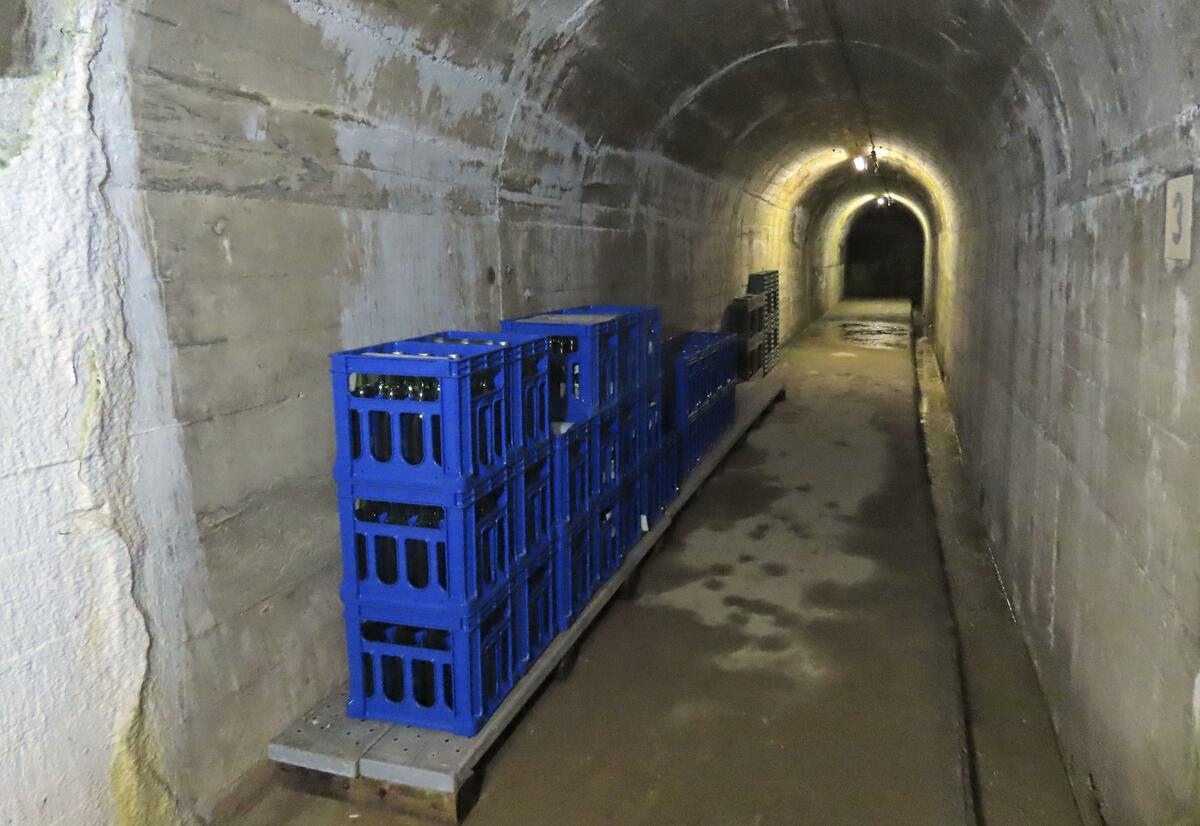
Just as wine can be aged to create a smoother flavour, sake can also benefit from ageing. However, maintaining the ideal storage conditions can be costly. A group of sake brewers in central Japan has found a unique and cost-effective solution: storing their sake in dam tunnels.

Maruyama Dam in Gifu Prefecture

Maruyama Dam in Gifu Prefecture (photo credit Maruyama Dam via Kyodo)

Thirteen breweries in central Japan are storing their sake in the Maruyama, Agigawa, Origawa, and Yahagi dams in Gifu and Aichi Prefectures at no cost to the breweries. While most sake is typically aged for a year, some varieties can benefit from longer ageing. Traditionally, this requires significant investment in temperature-controlled storage facilities to prevent fluctuations and UV exposure.


Tunnels within the dams, however, can be maintained at an ideal temperature of around 15 C, eliminating the need for refrigeration. They are also dark. The ability to save on costs may help the brewers take advantage of the growing international appreciation of sake products. Japanese exports of the rice-based drink soared to around 47.5 billion yen ($307 million) in 2022 from 8.9 billion yen in 2012. Meanwhile, the knowledge and skills for making it and "shochu" distilled spirits are expected to be formally endorsed for inclusion on the U.N. Educational, Scientific and Cultural Organization's Intangible Cultural Heritage list later this year.


We've had a couple different bottles of ăČやおろし, I think maybe „1700-1800 for a standard sized bottle. Perhaps slightly above average, as prices go, but certainly not the priciest. They've been good, first one (sorry, don't remember the name :rolleyes:) was distinctly 'fruity'.

What can you tell someone about this type of sake, who doesn't know much about it?
 
Last edited:
Hiyaoroshi is the first autumn release. Made in winter, matured during summer.

Taken from our sake glossary:

Hiyaoroshi (ć†·ă‚„ăŠă‚ă—): shiboritate sake pasteurised once in early spring and stored and aged during summer; around September, the sake is ready for consumption without second pasteurisation; it has a deep-matured aroma and is sold only in September and October as a seasonal sake of limited production.

We had this Noto-hanto hiyaoroshi the other day:

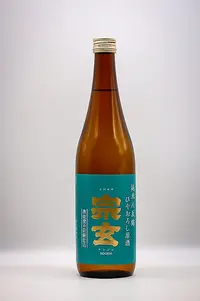
Sƍgen Junmai Hattannishiki Hiyaoroshi Genshu

Sƍgen Junmai Hattannishiki Hiyaoroshi Genshu

Sƍgen Junmai Hattannishiki Hiyaoroshi Genshu (漗玄 そうげん çŽ”ç±łćŽŸé…’ ăČやおろし) is made of Hatannishiki rice grown in Hiroshima Prefecture and milled to 55%. Hiyaoroshi is seasonal sake with a mellow aroma and round taste, released in the autumn. The sake is brewed with new rice harvested in the previous...

If it's local sake, you probably had a Fukumitsuya. They're no.1 in Kanazawa.
 
Gosh, I guess I know who to ask with naive questions about sake...!

*
Tangential, but just had another quake a few minutes ago. Shindo 4 here, but 5- up the way. Epicenter seems to be off the coast of Togi/Hakui.
 
The United Nations Educational, Scientific and Cultural Organization (UNESCO) has recognized the traditional knowledge and techniques of making Japanese sake with kƍji mould as an Intangible Cultural Heritage. This ancient art of sake brewing passed down through generations, was acknowledged by the UNESCO committee for its high level of skill and its enduring significance in Japanese culture.


Nabedana Brewery Chiba

Workers mix "koji" rice with water and steamed rice at Nabedana, a sake brewer in Kozaki, Chiba (photo credit: Asahi)


Japanese sake

Photo credit: Reuters

"Each brewery in Japan has its own history, and over the years has produced sake using brewing techniques that have been refined and developed in each region," read a statement by Haruhiko Okura, the head of Japan Sake and Shochu Makers Association (JSS), in response to the news on Thursday. "Sake has been an integral part of local festivals and annual events and has been enjoyed with the lifestyle and food culture of each of the four seasons — to learn about national sake is to come into contact with traditional Japanese culture," he said.

Akira Sasaki, the head of Sasaki Sake Brewery in Kyoto, expressed his hope that the UNESCO recognition of traditional sake brewing would increase global attention for Japanese sake. He believes this could encourage people worldwide to visit Japan and explore the country's sake breweries.


If you are interested in premium nihonshu, watch Unpacking Japan's interview with the world's leading non-Japanese sake expert, John Gauntner, as he describes the intricacies of sake and the industry behind Japan's famous alcohol.

 
Back
Top Bottom