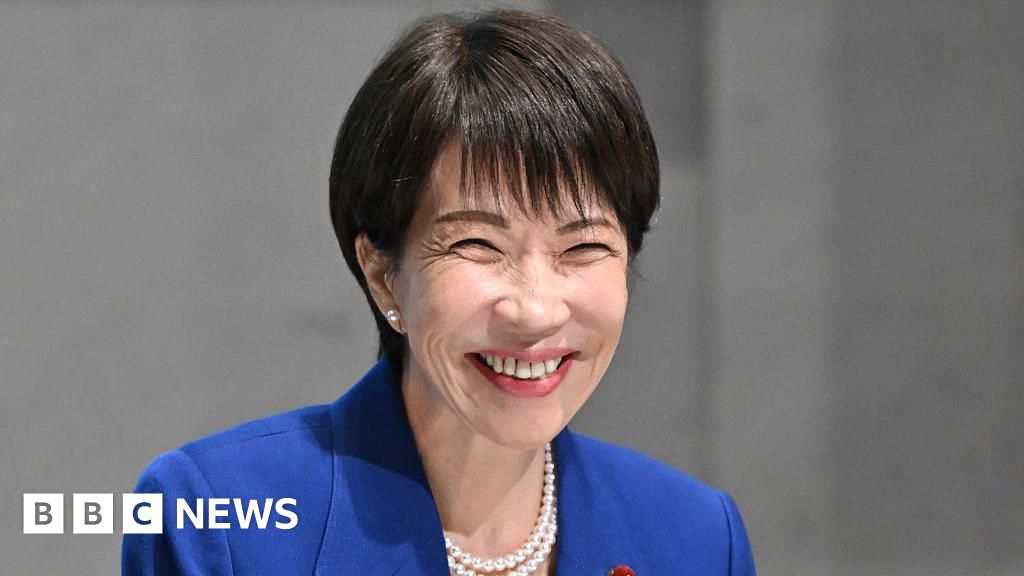
Politics Takaichi's Taiwan comments cause row with China

I'm posting a few international articles on the issue published over the past few days.

Here's an NYT guest commentary on how Japan has changed the way the world must think about Taiwan.

That's what happened last month when Prime Minister Sanae Takaichi of Japan told lawmakers in Tokyo that a Chinese attack or blockade against Taiwan would constitute a threat to Japan's "survival," a term that, under Japanese law, would permit the country to deploy its military overseas. Ms Takaichi merely said aloud what has long been understood — that a crisis involving Taiwan would threaten Japan's national security. But her comments were among the clearest public signals yet that Tokyo could help defend Taiwan from potential Chinese aggression.


And a look at the disruption of cultural events by China:

The Chinese government is most likely looking for ways to demonstrate to its nationalistic public that it is serious about punishing Japan for Ms Takaichi's comments, analysts said. Cancelling artists is a favoured option because it does not inflict significant economic damage on China. "They had to do something, and they picked a good target in celebrities and entertainers — something high profile that the nationalists couldn't miss, and something straightforward to put into practice," said Jonathan Sullivan, an associate professor at the University of Nottingham in England who studies China. He added that from Beijing's perspective, "it's much better to grab a celeb offstage than to impose harmful economic sanctions or have rioters in the street burning Toyotas." (During another flare-up between China and Japan in 2012, violent protests broke out against Japanese businesses, including car manufacturers.)


This one concerns growing doubts in South Korea and Japan about U.S. reliability, prompted by Trump's cosying up to authoritarian dictators in Russia, China and North Korea:
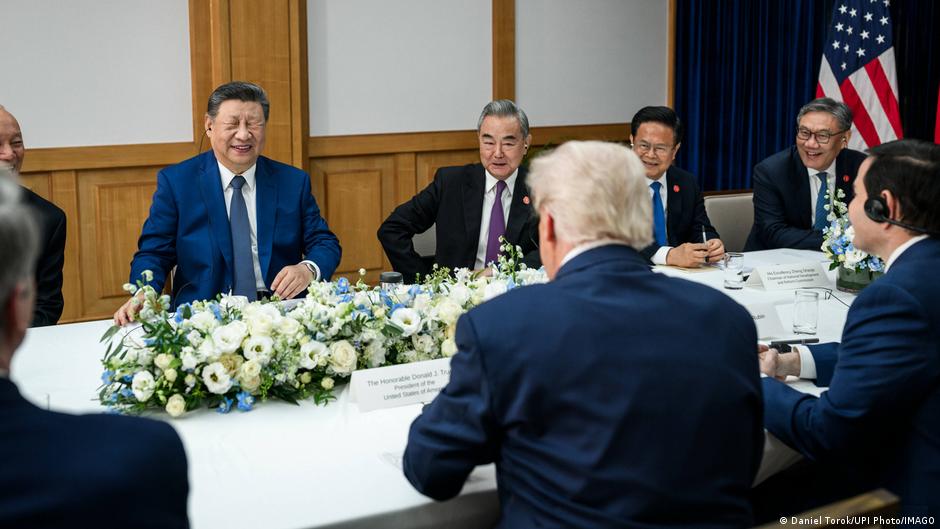
Kingston added that Japanese Prime Minister Sanae Takaichi was likely "disappointed" that Trump did not immediately come to her support during a recent row with Beijing. During her first parliamentary address as PM in the Diet, in response to a question from a lawmaker, Takaichi said that any Chinese armed intervention against Taiwan would be an "existential threat" to Japan that could require a response from Japan's self-defence forces. Beijing reacted angrily, demanding that Tokyo stay out of China's "internal affairs," and implementing several measures, including telling Chinese not to travel to Japan, delaying the release of Japanese films and cancelling cultural events and exchanges. Takaichi declined to withdraw her comments, but may have felt less than reassured when the US president reportedly told her in a phone call on November 24 that she should not "provoke" Beijing.

 
Recent Events Between China and Japan.

Sushiro Opens Its First Store in Shanghai — Wait Time Exceeds 10 Hours; Now 71 Stores in China (December 6, 2025)

The popular conveyor-belt sushi chain Sushiro opened its first location in Shanghai on the 6th. The store drew huge crowds, and the wait time exceeded 10 hours.
Male customer who visited the store:
"It's very delicious."
(Q: Which sushi do you like the most?)
"I'd say the fatty tuna. It really is excellent, so it's no surprise that people line up even in other cities."
Sushiro opened its first China location four years ago in Guangzhou, Guangdong Province, and has since expanded to Beijing, Suzhou, and other cities. On the 6th, it opened two stores simultaneously in Shanghai for the first time.
The opening had already become a hot topic on Chinese social media, and on the first day, the wait time reportedly surpassed 10 hours.
With these new openings, Sushiro now operates 71 stores in mainland China.
The chain's pricing—10 yuan (about 220 yen) per plate as the standard—remains popular, showing that conveyor-belt sushi is still in high demand in China.


Chinese Military Aircraft Direct Radar at JSDF Aircraft — No Injuries; Japan Lodges Strong Protest (December 7, 2025)

("Want to Know More!" / "Good! Morning" – December 7, 2025)
In the early hours of the 7th, Japan's Ministry of Defense announced that a Chinese military fighter jet directed its radar twice at a Japan Self-Defense Force (JSDF) aircraft.
Launched from the aircraft carrier Liaoning — Japan Issues Protest
According to the Ministry of Defense, starting around 4:30 p.m. on the 6th, over international waters southeast of Okinawa 's main island, a Chinese fighter jet that had taken off from the aircraft carrier Liaoning repeatedly directed its radar at a JSDF fighter that was responding to an airspace intrusion.
Additionally, after 6:30 p.m., Chinese aircraft also directed radar at a separate JSDF aircraft.
No damage or injuries occurred to the JSDF aircraft or personnel.
The Japanese government lodged a strong protest with China and firmly demanded measures to prevent a recurrence.
Besides the Liaoning, three Chinese missile destroyers passed between Okinawa's main island and Miyako Island on the 6th and proceeded into the Pacific Ocean.
It has been confirmed that the Liaoning conducted training involving takeoffs and landings of fighter jets and helicopters.
JSDF fighters were scrambled in response to aircraft launching from the Chinese carrier.
This is the first time Chinese aircraft carrier operations have been observed near Japan since China deployed its three-carrier fleet.

The Chinese government does not seem to have effective control over its own citizens.
 
So she did go off script.


A released government document confirms that Prime Minister Sanae Takaichi went off-script when responding in the Diet to a hypothetical question involving Taiwan that has worsened relations with China. Kiyomi Tsujimoto, an Upper House member of the main opposition Constitutional Democratic Party of Japan, submitted a written question regarding whether any draft of a suggested response in the Diet by Takaichi existed. She received a document from the Cabinet Secretariat by Dec. 12 that had one suggested response being, "I will refrain from responding to a question about a hypothetical military conflict over Taiwan."

 
Despite the ongoing spat between Japan and China, this year's Nanjing Massacre Memorial was low-key, with President Xi Jinping not attending.

At Saturday's ceremony being held at the national memorial centre in Nanjing, Shi Taifeng, head of the ruling Communist Party's powerful organisation department, referenced Xi's speech at a military parade in Beijing in September marking 80 years since the end of World War Two. But Shi's remarks were far less combative than recent rhetoric from Chinese government officials. "History has fully demonstrated that the Chinese nation is a great nation that fears no power and stands on its own feet," he said. He did not mention Takaichi but alluded to China's previous claims that she seeks to revive Japan's history of militarism.

 
Xi Jinping is trying to stop Chinese people from traveling to Japan because it is dangerous. In that case, Japan should do its utmost to welcome Chinese visitors to Japan.

Letting the Chinese people know that what Xi Jinping is saying is wrong would be the biggest blow to his face.

Mutual understanding is necessary to avoid war. What we need is a smile, not a threat.

NANGI

This is the biggest threat to people who rule and control through lies and depict. Of course some people will only see what they are told to see or expect to see, however those people are already unlikely to travel to a place they have been tricked into disliking, distrusting, or outright hating. People who go to those places anyway, for vacation no less, and bring back the details of personal experience can really be the sword cutting the lies to pieces. But they need to feel safe enough to speak of it and have the freedom to do so. That is why those leaders always clamp down on their own people the hardest. They have to prevent any spread of information that does not align with their lies.
 
The BBC, the Guardian, and the NYT all focused on the economic impact of China's recent boycott of Japan: the country's tourism sector and the wider economy are being affected by worsening relations with China, particularly over Taiwan. Chinese visitors — once a key driver of Japan's tourism recovery — have dropped sharply, and this decline is now having knock-on effects on the economy and on where travellers choose to go as diplomatic disputes continue.


I read the BBC article and that was more than enough - the long list of idiotic and childish comments and policies on both sides made it an utterly depressing read.

I'll just comment on one: Japan should never have had a policy to aim for 60 million tourists in a year. These days, countries are increasingly focusing on resilience. The UK is serious about creating a financial system that doesn't depend on US technology (Visa and Mastercard) and a medicines system that does not depend so heavily on Chinese active ingredients (over half the active ingredients for generic medicines come from China). Japan should not have sought to increase its dependence on an industry that is so vulnerable to political, economic, and medical (Covid) shocks, not to mention one that contributes so much to worldwide greenhouse gas emissions. Abe's aim to make Japan a centre of tourism was greedy and short-sighted.
 
Back
Top Bottom