- 14 Mar 2002
- 21,056
- 18,911
- Thread starter
- #26
I'm posting a few international articles on the issue published over the past few days.
Here's an NYT guest commentary on how Japan has changed the way the world must think about Taiwan.

 www.nytimes.com
And a look at the disruption of cultural events by China:
 www.nytimes.com
This one concerns growing doubts in South Korea and Japan about U.S. reliability, prompted by Trump's cosying up to authoritarian dictators in Russia, China and North Korea:
 www.dw.com
Here's an NYT guest commentary on how Japan has changed the way the world must think about Taiwan.
That's what happened last month when Prime Minister Sanae Takaichi of Japan told lawmakers in Tokyo that a Chinese attack or blockade against Taiwan would constitute a threat to Japan's "survival," a term that, under Japanese law, would permit the country to deploy its military overseas. Ms Takaichi merely said aloud what has long been understood — that a crisis involving Taiwan would threaten Japan's national security. But her comments were among the clearest public signals yet that Tokyo could help defend Taiwan from potential Chinese aggression.
Opinion | Japan Has Changed How the World Must Think About Taiwan
The Japanese leader’s candor over Taiwan brought the shared regional stakes out into the open, and the U.S. must stand behind its ally.
And a look at the disruption of cultural events by China:
The Chinese government is most likely looking for ways to demonstrate to its nationalistic public that it is serious about punishing Japan for Ms Takaichi's comments, analysts said. Cancelling artists is a favoured option because it does not inflict significant economic damage on China. "They had to do something, and they picked a good target in celebrities and entertainers — something high profile that the nationalists couldn't miss, and something straightforward to put into practice," said Jonathan Sullivan, an associate professor at the University of Nottingham in England who studies China. He added that from Beijing's perspective, "it's much better to grab a celeb offstage than to impose harmful economic sanctions or have rioters in the street burning Toyotas." (During another flare-up between China and Japan in 2012, violent protests broke out against Japanese businesses, including car manufacturers.)
China’s Mad at Japan, and Pop Stars Are Paying for It
Beijing is curbing Japanese movies, music and art as it seeks to punish Tokyo for its support of Taiwan.
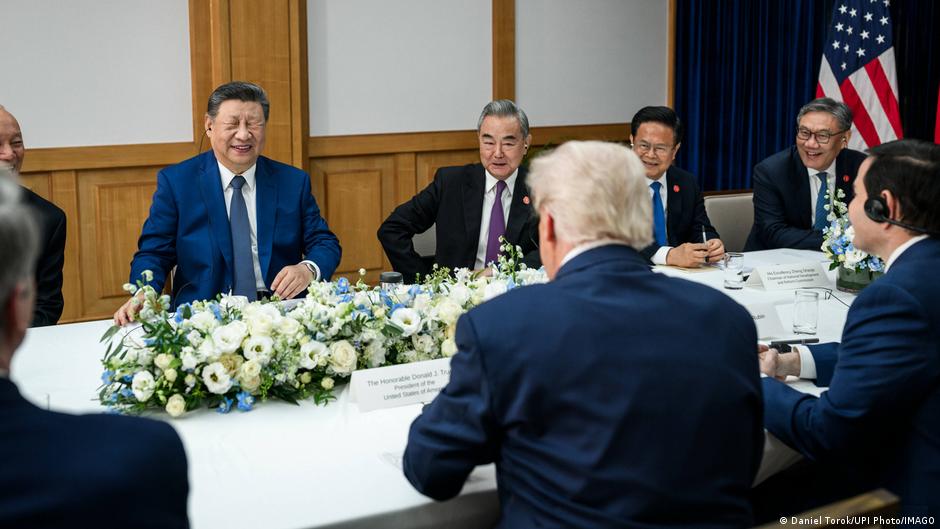
This one concerns growing doubts in South Korea and Japan about U.S. reliability, prompted by Trump's cosying up to authoritarian dictators in Russia, China and North Korea:
Kingston added that Japanese Prime Minister Sanae Takaichi was likely "disappointed" that Trump did not immediately come to her support during a recent row with Beijing. During her first parliamentary address as PM in the Diet, in response to a question from a lawmaker, Takaichi said that any Chinese armed intervention against Taiwan would be an "existential threat" to Japan that could require a response from Japan's self-defence forces. Beijing reacted angrily, demanding that Tokyo stay out of China's "internal affairs," and implementing several measures, including telling Chinese not to travel to Japan, delaying the release of Japanese films and cancelling cultural events and exchanges. Takaichi declined to withdraw her comments, but may have felt less than reassured when the US president reportedly told her in a phone call on November 24 that she should not "provoke" Beijing.
Trump's transactional diplomacy alarms Japan, South Korea – DW – 12/04/2025
Key US allies Japan and South Korea will likely be looking carefully at signals from the Trump administration's recent moves on Ukraine and China.
www.dw.com