


- 14 Mar 2002
- 21,050
- 18,903
「働いて働いて働いて働いて働いてまいります」, PM Takaichi's remark that she will "work, work, work, work and work" to show her determination to do her utmost as president of the Liberal Democratic Party in October was named 2025's buzzword of the year on Monday.
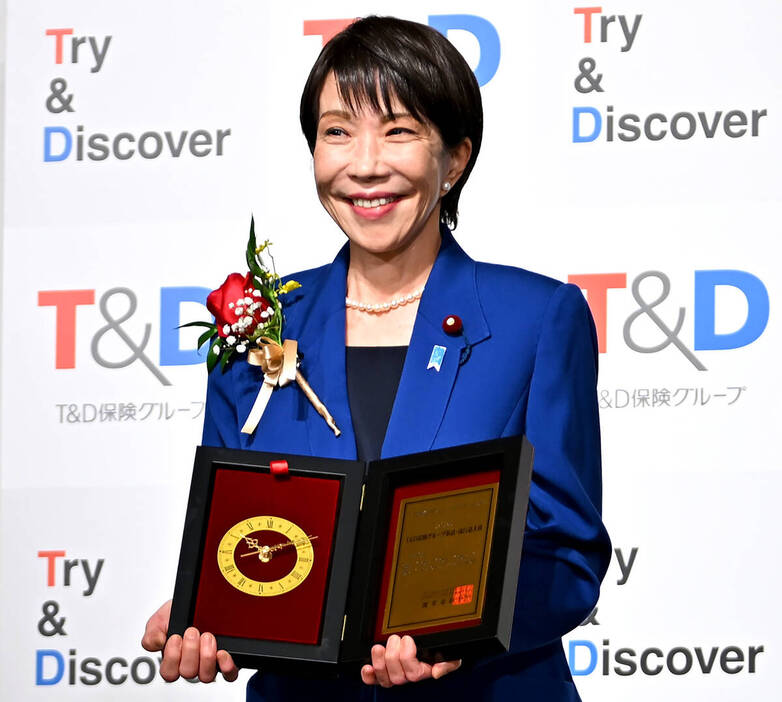
The organisers noted that, with Takaichi's rise to the premiership becoming one of Japan's biggest stories in 2025, they had also included the term josei shushō — "female prime minister" — among the year's buzzwords. At the ceremony, Takaichi was reported to have explained that stepping into a position overseeing the whole country left her with a strong urge to "work, work, work," as she put it, because she wanted to contribute to the nation and its people. She also referred to the many employees and business owners across Japan who put in long hours to support their workplaces and families.
She was then said to have stressed that she was not trying to encourage excessive working hours or suggest that long days on the job should be viewed as something admirable. Her remark about her own work ethic sparked debate, coming at a moment when the country has been trying to push workplace reform and promote a more balanced approach to working life.
Other nominated buzzwords:

 www.japantimes.co.jp

 news.yahoo.co.jp
The organisers noted that, with Takaichi's rise to the premiership becoming one of Japan's biggest stories in 2025, they had also included the term josei shushō — "female prime minister" — among the year's buzzwords. At the ceremony, Takaichi was reported to have explained that stepping into a position overseeing the whole country left her with a strong urge to "work, work, work," as she put it, because she wanted to contribute to the nation and its people. She also referred to the many employees and business owners across Japan who put in long hours to support their workplaces and families.
She was then said to have stressed that she was not trying to encourage excessive working hours or suggest that long days on the job should be viewed as something admirable. Her remark about her own work ethic sparked debate, coming at a moment when the country has been trying to push workplace reform and promote a more balanced approach to working life.
Proponents of reform were enraged by this apparent dismissal of the need for work-life balance. At the same time, many of the older generation looked on her conviction with compassion, reminiscing that work used to be like that when they were younger. The country has a long history with karōshi, or death from overwork, and has been tackling these issues over the past decade. The selection panel for the award noted that the buzzwords reflected the year's significant political changes.
Other nominated buzzwords:
- Toranpu kanzei (トランプ関税) refers to the "Trump tariffs" Japan has been dealing with since Donald Trump returned to the U.S. presidency. These tariffs forced Japan to confront new trade pressures, and Economy Minister Ryōsei Akazawa accepted the related award on behalf of the government.
- Kokokomai (古古米) literally means "old, old, old rice" — grain that has been kept in storage for three years or more. The government decided to release this older stock because fresh rice had become scarce and prices had risen sharply.
- Kinkyū jūryō (緊急銃猟) denotes a new measure introduced this year that lets local mayors authorise the shooting of wild animals inside residential areas when an emergency arises. The term reflects the recent surge in bear incidents, which have already led to thirteen deaths by November.
- Kuma higai (クマ被害) means "bear-related damage." It became a buzzword because of the unusually high number of attacks and sightings across the country.
- Myaku-Myaku (ミャクミャク) is the name of the Osaka Expo's mascot. The character drew enormous attention and became strongly associated with the event, which ran from April to October.
- Ōrudo media (オールドメディア) is the Japanese rendering of "old media." The term is used to contrast traditional outlets — newspapers, wire services and broadcasters — with social media platforms, where information spreads faster but is not always reliable.
- Ehho ehho (えっほ えっほ) comes from a TikTok clip that went viral, featuring an owl moving rhythmically while the sound "ehho ehho" played in the background. The phrase became widely quoted online.
- Kokuho (コクホ) comes from the hit kabuki -themed film Kokuho, which became a major box-office success and pushed its title into everyday conversation.
- Sengo hachijū-nen / Shōwa hyaku-nen (戦後80年・昭和100年) refers to two overlapping anniversaries: eighty years since the end of the Second World War, and what would be the one-hundredth year of the Shōwa era. The pair of phrases reflects how these markers have shaped public discussion about memory and history in 2025.
- Niki (二季) literally means "two seasons." It captures the sense that Japan's summers have become so long and intense that spring and autumn feel as though they are disappearing, leaving only a contrast between summer and winter.
- Misutā puro yakyū (ミスタープロ野球), "Mr Pro Baseball," received a special award outside the top ten. It honours the nickname of Shigeo Nagashima, the celebrated player and manager who passed away earlier in the year.
Takaichi’s work ethic sound bite wins Japan’s buzzword of the year
“Work, work, work, work and work” was named 2025’s buzzword of the year.
流行語年間大賞に高市早苗首相「働いて働いて働いて働いて働いてまいります/女性首相」(スポーツ報知) - Yahoo!ニュース
今年話題になった言葉を選ぶ「現代用語の基礎知識選 2025T&D保険グループ新語・流行語大賞」が1日に都内で発表され、高市早苗首相の「働いて働いて働いて働いて働いてまいります/女性首相」が年間大賞


