Need a word or phrase translated?

> I've PM'd him Elizabeth

おまたせ。 😎

目おし(meoshi) is a skill in pachi-suro. Pachi-suro (abbreviation of "Pachinko-slot") is a slotmachine-like gamble machine which is highly popular in Japan. Cylindrical spinning reels of pachi-suro are controlled by computers(or integrated circuit? I don't know it accurately) basically so you can't hit the jackpot constantly. But when the computer of the machine allows you, you can stop the reels in a 7-7-7 position by yourself, with eye-finger coordination (aka meoshi).

Pachi-suro pic:
http://www.sloters.tv/img/slit.jpg
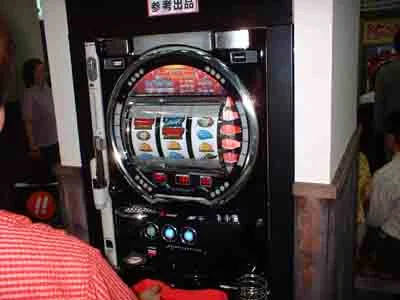
slit.webp


バッチシ is a colloquial or humorous way of saying ばっちり (batchiri/bacchiri). Batchiri means perfectly, excellently, superbly etc. So, "目おしでバッチシ きめられるかも ブタエドイン"--->"I'll make it perfectly with/by meoshi, butaEdwin"
 
Translation needed! Thank you

振込先

*銀行振込* 京都銀行 西京極支店 普通口座 67008
7 ミナミカタ タカコ(旧姓)

*ぱるる* 記号14470 番号32351031
オチダ タカコ

Which one is a Japanese residential address? Please advise. Thanks.
 
michaelkoh32 said:
振込先

*銀行振込* 京都銀行 西京極支店 普通口座 67008
7 ミナミカタ タカコ(旧姓)

*ぱるる* 記号14470 番号32351031
オチダ タカコ
As in a street mailing address ? These are bank transfer and phone numbers.
 
cacawate said:
次の質問だってばよ!

Is 歩ぶむ just the old style way of saying 歩む?

And also, what's with the suffix 「~えど」?
i.e. 歩めど 行けど 食べれど 読めど etc. does it imply repetitiveness or something?
お返事だってばよ!!

>歩ぶむ

6 years ago, a famous pro-wrestler(Antonio Inoki) said a word in his retirement ceremony:"この道を行けばどうなるものか。危ぶむなかれ。危ぶめば道はなし。踏み出せばその一足が道となり、その一足が道となる。迷わず行けよ。行けばわかるさ". Some people mistake 危ぶむ for 歩ぶむ. As far as I know, 歩ぶむ is a recent born misuse of saying 歩む.

>suffix 「~えど」

Suffix "ど(も)" makes a reverse connection.
食べど太らず--->ate much, but still slim
飲めども酔わず--->drunk much, but never intoxicated
大声で呼べど気づかない--->call (him) loudly, but (he) doesn't notice at all

I don't think suffix "ど(も)" imply repetitiveness in itself, but we often use it in repetitive way to express repetitiveness; 食べども食べども, 行けども行けども, 待てども待てども, 切れども切れども, 焼けども焼けども, 呼べども呼べども, 読めども読めども.......
 
Buntaro said:
Hi everybody!

I was studying Japanese chess, and I was looking at games recorded in a book. I sometimes recreate the games, laying out the pieces on a board, and following along.

How would you say to recreate or reconstruct a chess game from a book?
Are you referring to something like shougi or go ? As for recreate....再現する (create anew) may be closest in this case of copying/reproducing as opposed to reconditioning or restoring, actual rebuilding etc.
 
Hi Elizabeth,

Yes, I was referring to Shougi and Igo. They have books with games recorded in them, and it is good study to lay out the games.

Would you say, "Shiai o ~~~"?
 
Ooooh, now I see. Well that was a little beyond me but it's great to know because apart from the background info which is interesting, I can see I wasn't making any errors. Thanks Kara and everyone.
 
Buntaro said:
Yes, I was referring to Shougi and Igo. They have books with games recorded in them, and it is good study to lay out the games.

Would you say, "Shiai o ~~~"?

How about mohou suru? Though I've found that when I look for how to say things like this, I end up finding that it's normally said in simple terms I already know.

For example, if I had to say this on the fly, I'd probably say something like hon o mite (shiai o) renshuu suru.
 
Mdchachi San!

Thanks for the info. I can put it to good use. (I am working on learning Go.)

Mai do oki ni!
 
mdchachi said:
How about mohou suru? Though I've found that when I look for how to say things like this, I end up finding that it's normally said in simple terms I already know.
You really do have to keep this as the starting point of all your thoughts. Or as my tutor would put it : ただエリザベスさんに自然な日本語を身に着けてほしいだけです。 難しくしたことによって帰って文の意味がわからなくなったり不自然な感じを与えるのならやはり、使い方を間違っています。 :D
 
Hi Elizabeth,

I agree. Simple is best.
 
Although have you ever heard cases of English ESL students receiving criticism for using new or difficult words the way I was in Japanese ?
 
Elizabeth,

I was an ESL teacher in Tokyo for many years, and the answer is yes! Japanese students tend to be long-winded in vocabulary and severely lacking in basic grammar and phrases.
 
Holiday phrases

How to say:

1. Have a nice (good) holiday (ie. at the seaside)? Is this the same for "flight"?

2. I'm having a great time

3. We do a lot of sightseeing.

4. We are lazing at the beach the whole day.

5. (Warm/Hot/Sunny) greetings from XX place near YY. :? [I'm not sure, if this is acceptable in English or Japanese, so sorry. It's a direct translation from Polish.]

Arigatou.
 
1. Have a nice (good) holiday (ie. at the seaside)? Is this the same for "flight"?

Douzo tanoshii シーサイド no yasumi wo (goodbye - itterashai). (I don't follow what you mean by flight here....). Or, シーサイド no (de?) yasumi wo tanoshinde kudasai.

2. I'm having a great time.
Totemo tanoshinde imasu.


3. We do a lot of sightseeing.
Kankou ryokyou ni yoku iku. (We take a lot of sightseeing trips)

Kankou (kenbutsu) wo yoku suru. (We do a lot of sightseeing)
 
Yes, I know. I was just surprised that there is "shi-saido" written in the text.

And what about the sentences 4 and 5?
 
Kama said:
@ Elizabeth: Have a nice/good flight. (by plane) XD
はい、それは何でも旅行に出かける人を送る言葉ですね。

As for shore or seaside (also 岸辺 among others), not being familiar with the nuances of each translation I basically took the easy way out. On this board at least you may need to contact a native speaker directly for anything needing to be natural. 👋
 
それも言うなら「いちゃつきます」でやんす。

I gather やん is colloquial for "ii," but exactly when can you get away with, or resort to as the case may be, using it ? :?
 
Kama said:
Yes, I know. I was just surprised that there is "shi-saido" written in the text.

And what about the sentences 4 and 5?
Something involving のらくらして(過ごす) may well work (or even work well ?) for 4.
 
Last edited by a moderator:
how to say...?

"i just wanted to say <.....>"
"have a good day/have fun!"
"it will be fun"
"i want you to come back soon"
"ill wait here"
 
I always hear "-kure" ending a phrase or sentence, usually after a te form verb I think, and I'm not sure what this means. If someone could give me a clue that would give me much relief.
 
Apple Bomb said:
I always hear "-kure" ending a phrase or sentence, usually after a te form verb I think, and I'm not sure what this means. If someone could give me a clue that would give me much relief.
It means "give me ___." it's quite blunt and informal.

e.g. "ゆるしてくれ!" "Forgive me!" / "Let me off!" / "Don't kill me!" <- depending on circumstance ;-)
 
Back
Top Bottom