Need a word or phrase translated?

How would you translate this? 母は家族がみんな帰るまで寝ないで待っています。

Mother stays awake until every member of the family has come home.
 
how would you translate this? (two speed bubbles from a manga)
first bubble is this: また割つちゃつた
second bubble is this : 今月コレで枚目
(context: someone who broke a teacup saying this)
doesn't seem to make sense
今月 = this month
コレ = kore in katakana (it's from a manga, thus the katakana)
枚目 = fool? not quite sure
thanks in advance
 
Last edited:
how would you translate this? (two speed bubbles from a manga)
first bubble is this: また割つちゃつた
second bubble is this : 今月コレで枚目
(context: someone who broke a teacup saying this)
doesn't seem to make sense
今月 = this month
コレ = kore in katakana (it's from a manga, thus the katakana)
枚目 = fool? not quite sure
thanks in advance

That's the third one this month

目 is an ordinal suffix (like first, second, third)

枚 is a "counter" suffix for a wide variety of objects which are distinguished by their flatness.

また割つちゃつた should be:

なた割っちゃった

Notice the smaller size of the っ versus the regular つ. This is a significant point and one to be careful about.

The first literally says "Another one broke" (using an intransitive verb". In English we would be more likely to translate it as"I broke another one" (transitive verb).
 
Thanks a lot, Mike.
"枚 is a "counter" suffix for a wide variety of objects which are distinguished by their flatness."
This one really threw me off. Also the chiisai tsu is my fault as I've just written down the text without adjusting the size.
 
Thanks a lot, Mike.
"枚 is a "counter" suffix for a wide variety of objects which are distinguished by their flatness."
This one really threw me off. Also the chiisai tsu is my fault as I've just written down the text without adjusting the size.

Counter words
 
I'm believe that the speaker is referring to a teacup saucer, not a teacup, since 枚 is a counter for thin flat objects such like plates.
http://en.wiktionary.org/wiki/枚#Counter

Mike-san, 割っちゃった is transitive, and 割れちゃった is intransitive.;)

I should have known that, because one of the funniest things I have ever witnessed in Japanese interaction was based on a misunderstanding between酒を割った and 酒終わった.

Thank you. 気をつけます
 
I'm reading a manga right now about thaiboxing, and one guy is constantly attacking the other with middle kicks to which the commentator says after a while:

サーマートのミドルが面白いように当たっている!!

サーマート is the character's name, but I have no idea what the author means with 面白いように当たっている.

Thanks in advance.
 
I think this is a bit like "like it's easy/a game". Presuming the kicks are landing, that is. For example, you might also see 面白いように売れる for something that sells well/without too much effort. Here's an advertising line I stole off Google:
猫の毛が面白いように取れる!
 
car display.webp


Hi, Can someone please translate this for me. It is from a multi-display in my Toyota Marino . thanks
 
Battery? could it be water for the window washer?. Thanks for the reply.

If it had meant water for the window washer I would have said water for the window washer.

It says your battery is low on fluid.

Check your battery.

Here:

バッテリー液不足

Copy-paste that into Google Translate if you don't want to take my word for it.
 
Last edited:
I think this is a bit like "like it's easy/a game". Presuming the kicks are landing, that is. For example, you might also see 面白いように売れる for something that sells well/without too much effort. Here's an advertising line I stole off Google:
猫の毛が面白いように取れる!

That makes a lot of sense, thanks nekojita!
 
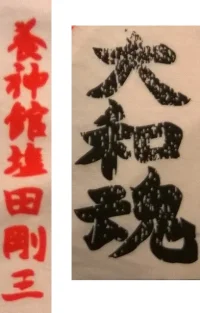
Hello everyone. I have some trouble identifying and translating these kanji, could someone please help me? I managed to identify the simpler ones, but I have no clue about the others.
 

Attachments

  • hgj.webp
    hgj.webp
    39.3 KB · Views: 199
What do you mean by "the simpler ones"? You don't need to translate the right column?
 
What do you mean by "the simpler ones"? You don't need to translate the right column?
Hi, thank you for the quick reply! Indeed, I'd like to know what both columns mean, I just meant that I was able to identify the simpler kanji, like 三 and 田, but I can't identify the others. I've just started learning, so I probably wouldn't be able to make much sense out of them even if I identified them anyway, so actually ignore my first post. Could you please translate the text in that image in English?
 
Hello there folks.

I'd like to get some confirmation that I'm reading the following lines correctly.

For context, these are said by two men to the villain, who's helped them in order to get their trust and then turned on both:

心ある者なら誰でもお前のやった事は許さない! - I'm reading this as "Anyone with a heart would call what you've done unforgivable".

そうやって理屈で誤魔化すのは悪人の証拠だ! - Main issue on this one is the bold part. Related to it, it should be noted that this line follows an incredibly vague explanation from the villain as to why what he did was "right".
I'm reading this as "Only a bona fide bad guy would give someone the runaround like that!" but is there a better interpretation of 理屈で誤魔化す?

Thanks for the insight.
 
You have the right idea. 理屈で誤魔化す is kind of like obfuscating the truth with spuriously logical arguments.

Your hiding behind casuistry proves you to be a true villain.
Your sophistry proves just how evil you are.
 
You have the right idea. 理屈で誤魔化す is kind of like obfuscating the truth with spuriously logical arguments.

Your hiding behind casuistry proves you to be a true villain.
Your sophistry proves just how evil you are.

Ah, I see how it is.

Many thanks, Majestic!
 
Hello there, I found this and don't know what it means:

Screen Shot 2014-12-18 at 3.48.18 PM.webp

Can someone help me, please?
Thanks a lot.
 
Back
Top Bottom