Need a word or phrase translated?

Hi i actually had two more things that i forgot to ask, because i rewatched the episode and realize i did not pick up on two more things.

20:08 高校生が胸のサイズは ~~~~興味があるのは仕方ないよね!

also right after what did everyone say in unison? like fukazushita or something
 
こ、高校生が胸のサイズを熱く語るんじゃありません!
きょ、興味があるのは仕方ないですけどね。

復活した
 
I can't understand how to correctly translate the following sentence.
「お狐様」の言うことだから、その共同体の中では客観性がる。
"Because 'Kitsune-sama' is the one who saying it, in that community(共同体 I can guess that it is about other people from the same village or something as this man) appears(?) objectivity."

1.webp
 
「お狐様」の言うこと means "what お狐様 says/said".
客観性がる: to have objectivity

The subject of the sentence is "what the man said".
 
Thank you very much for your reply!
So some thing like "Because it is what お狐様 says, so his word has an objectivity inside the community." would be more or less correct?
 
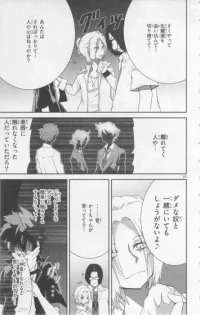
Hi, I can't seem to get my head around the meaning of the sentences below. Context comes down to the speaker commenting on the fact that other guy is a sociopath for his total disregard towards his surrounding, because he considers himself as such a gifted musician he's allowed to do as he pleases.

asahi.webp

離れてく人や...
楽器に触れなくなった人だっていただろ?

And would you think my translation for the last sentence is correct?

ダメな奴と一緒にいてもしょうがないよね (Can't be helped if you're together with useless people)


Thank you in advance.
 
Hi, I can't seem to get my head around the meaning of the sentences below. Context comes down to the speaker commenting on the fact that other guy is a sociopath for his total disregard towards his surrounding, because he considers himself as such a gifted musician he's allowed to do as he pleases.

離れてく人や...
楽器に触れなくなった人だっていただろ?

And would you think my translation for the last sentence is correct?

ダメな奴と一緒にいてもしょうがないよね (Can't be helped if you're together with useless people)


Thank you in advance.
That's ダメな奴と一緒にいてもしょうがないよ (ね is not there), thus, the speaker doesn't ask for agreement/confirmation.
しょうがない means "useless" in this case.
 
Hey! :) Need a lil help with japanese. So my girlfriends birthday is coming and i want to make a gift for her. So she loves japanese and dogs, i have the dog but i dont speak japanese ( I want to write the birthday card in japanese ) So anyone can help? English to japanese? In english characters ples if u can :)
" Hello! Im a little puppy named Junsu. I was born trough love between Bondsu and Sannu. I really hope that my new mama and papa take good care of me, because im still too little and cute to live alone. Happy birthday Sannu! "
 
That's ダメな奴と一緒にいてもしょうがないよ (ね is not there), thus, the speaker doesn't ask for agreement/confirmation.
しょうがない means "useless" in this case.

Thanks Toritoribe, I misread that there.

Do you happen to know what the other sentences of my precious post could mean as well? I've tried asking a few people already, but none of them were able to give me any answer at all.
 
Hey! :) Need a lil help with japanese. So my girlfriends birthday is coming and i want to make a gift for her. So she loves japanese and dogs, i have the dog but i dont speak japanese ( I want to write the birthday card in japanese ) So anyone can help? English to japanese? In english characters ples if u can :)
" Hello! Im a little puppy named Junsu. I was born trough love between Bondsu and Sannu. I really hope that my new mama and papa take good care of me, because im still too little and cute to live alone. Happy birthday Sannu! "
my attempt

こんにちは!僕、子犬の Junsu。
Bondsu と Sannu の愛から生まれたんだ。
新しいママとパパが僕を大事にしてくれるといいな。
だってまだ小さくて可愛すぎるから、一人ぼっちじゃ生きられないんだもん。
誕生日おめでとう Sannu!


Thanks Toritoribe, I misread that there.

Do you happen to know what the other sentences of my precious post could mean as well? I've tried asking a few people already, but none of them were able to give me any answer at all.
離れてく人 refers to お前から離れてく人 "people who went away from you", and 楽器に触れなくなった人 means "people who can't play an instrument anymore (because he disparaged their skill at playing instruments or something)".

Some went away from you and some can't play an instrument anymore, right?
 
Last edited:
Hi Friends,

I am writing a novel in which the main character is sitting Zen in the Soto style. His teacher trains him in a (fictional) practice called something like "That which does not exist is found," or "Finding what does not exist."

Google Translate renders this as Nani ga sonzai shite inai koto ga hanmei or 何 が 存在 して いない こと が 判明. Any thoughts?

Thanks in advance.
 
What I can think of is 存在しないものの探求 or 不存在の探求.
 
So I'm trying to really express my gratitude and thank my favorite cosplayer for giving me an autograph and a photo and really making my first Comic Market trip memorable and worth it.
What I have so far with considerable help is:

僕はサインと写真をいただいてすごく嬉しいです。本当にありがとうございました。

Is that correct?
 
Hi, I have 2 short questions.

1. (困難が多く過酷な〕from 研究社 dict/厳しい entry - I'm wondering about 多く here. There usually a comma after 多く and I doubt it's adverbial here, so I just want to confirm. Is this 連用形 (中止形), i.e., it's the same as 多くて, used as adj. enumeration 「Many difficulties and harsh -noun-」? Or is it something else?

2. 特色とする - From 広辞苑 dict/校風 entry -「その学校が特色とする気風」. I can't figure out the meaning of とする here. I'm aware that とする has a bunch of different usages/meanings, but none of them fit really well here. The phrase seems to mean just "(to) feature" and I'm starting to think that する is just used because 特色 is not a サ変名詞, but that's just my random guess. Can anyone tell me what とする means here? Also, I've seen a 特色となる which seems to have the similar meaning, any differences?

Thanks in advance.
 
1)
That's the continuous usage of the -ku form of i-adjectives, i.e., "and".

2)
と has a similar function to に there, indicating the target as same as 目標と/にする, 理想に/とする, 対象に/とする.
特色となっている has almost the same meaning as 特色とする/している, but 特色となる can be the future tense; to become the state "特色とする/している" in future.
 
Hi, I heard this in an anime:
ホントこういうネタだと一瞬で嗅ぎつけるな

I'm having a hard time understand the sentence meaning basically a girl calls out for this guy to talk about the festival but there's three people behind the hall hearing in their convo and not sure what the two are talking about

neta = joke/joke material, but idk what it really means here and how to interpret this. Can someone translate it for me
Im guessing something like

"Honestly, anytime something like this happens he involves himself instantly"

idk though not really sure bout neta
 
ネタ means 話題 "topic" in that case. You misinterpreted the meaning of of 嗅ぎつける. The subject of 嗅ぎつける is the three people.
 
wow thank you now i understand my mistake.I looked at the translation and they had the same translation as me, cant believe a sub group got that wrong :/. How would the sentence change if the subject was the guy talking to the girl

Also later at the end of the episode the guy convinces the girl to join the music club and one of the other friends says to the guy
"お前の電光石火のあや技に驚いただけ"

How do i interpret あや技? I presume it means something like " Rather im surprised at how you convinced her at such lightning speed"
 
The speaker can't be the subject of 嗅ぎつける. He is talking to himself, not her.

I'm pretty sure that's 早技/早業[やわざ].
 
No you misunderstand, of the three people spying on the boy and the girl around the hall, one of the three mutters under his breath
ホントこういうネタだと一瞬で嗅ぎつけるな, not the actual boy talking to the girl. So i was wondering can the boy among the 3 people be talking about the boy who is talking to the girl around the hall?
 
a girl calls out for this guy to talk about the festival but theres three people behind the hall hearing in their convo and not sure what the two are talking about
I misunderstood? Or, you miswrote? Anyway, you SHOULD have written clearly who the speaker is if you want to get the correct answer.
Then the subject of 嗅ぎつける is "we".
 
Yes you did misunderstand.I did not miswrite anything, writing a girl calls out for this guy does not entail the guy saying the sentence in question.I should have more clearly stated though what was going on sorry. It would probably been easier just to post the video tbh.
 
"This guy" USUALLY refers to the speaker of the words preceding that sentence, no? Why you used "this", then?
"We" makes sense, by the way? Can I ask you to show me your translation, please? (since you quite often misinterpret the meaning of sentences nevertheless tend to leave it wrong, as in your previous posts.)
 
"This guy" USUALLY refers to the speaker of the words preceding that sentence, no?
not really, it certainly could, I wouldnt make that bold assumption though. I know my question should have been more terse, but please do not say I miswrote.
Why you used "this", then?
Would you prefer me giving you his name? To be honest I cant remember what it is.
"We" makes sense, by the way? Can I ask you to show me your translation, please?

"Jeez when it comes to something like this ( I presume they thought the guy was asking the girl out, and it was a response to his confession, but they misunderstood) they'll come to check out the situation ( referring to the other 2 of the 3)."
Something like this is what my impression is.

(since you quite often misinterpret the meaning of sentences nevertheless tend to leave it wrong, as in your previous posts.)
I dont know what you are even trying to say, but thats why I come to this forum, to question stuff I am not sure about. hence the name of the thread.
 
Back
Top Bottom