Need a word or phrase translated?

かする3 擦る
graze
brush past something
scrape 《the door》

as given by the dictionary. Given by the context does it mean that the speaker didnt want the prize and yet was still jealous of her? Well thats the impression I get just reading the whole sentence and watching the drama im still unsure at to what the literal meaning is here.

The speaker is saying he never got close enough to a prize himself to even brush against it (much less actually receive one).
 
can someone tell me if this is correct, and if not where adjustments need to be made-sarah
I'll give you a frustrating answer, and then I'll give you a hint as to how to find the right answer.

The frustrating answer is: Your suggested translation suffers from two or three problems

1. "Respect" in English is broad enough to cover multiple meanings; Basic respect for humanity, respect for another's opinions, respectful attitude during performances, respect for elders, respect for rules, etc. Meanwhile 「尊敬」 tends to imply humble admiration towards a person (or organization, I suppose). But since it is the most economical of options, it will suffice here. It works better than, for example, 敬意. But be aware that by using 尊敬 the Japanese translation takes on a bit of baggage.

2. The original English works as an axiom because of the juxtaposition of "earn" and "give". In the Japanese translations these have been rendered as 「得られる」 and 「与えられる」, which both mean "to have received" or "to have been given". They don't carry the appositional effect of earn and give. Unfortunately the word earn has a specific meaning of achieving something through effort, and there isn't an exact verb in Japanese that captures that nuance. You've already sacrificed a bit of clarity for economy with the word "respect", but if you try to do the same with earn and give, the whole thing falls apart. Which means;

3. Your Japanese translation is probably not going to be as simple and as pithy as the original English. Since the life of the axiom is its simplicity, it means the Japanese translation will be a bit of a frankenstein's monster. It will lose a bit of its succinctness, be a bit wordy, and therefore won't pack exactly the same sharp punch as the English. This is why translation to/from Japanese is a bit of a dark art. If you aim for brevity, you will sacrifice clarity. Clarity is usually king.

But fear not, it can indeed be translated into English. It may have a slight wobble to it, but I'll take the slight wobble over the incomprehensible any day. The only reason I'm saying all of this is that students of Japanese (myself included) sometimes need to be reminded that a lot of translation work is deciding which option is the least worst. In determining the least worst, you may find that the translation has become more wordy than the original source. This is OK.

Now for the hint: put the English phrase into a search engine, and then type を日本語で after it. You will almost always find something useful if you do that.
 
I would try to work 努力 in there somewhere for more clarity.

Yeah, I changed a few seconds before you replied. Thought 勝ち得られます would work better.

I'll give you a frustrating answer, and then I'll give you a hint as to how to find the right answer.

The frustrating answer is: Your suggested translation suffers from two or three problems

1. "Respect" in English is broad enough to cover multiple meanings; Basic respect for humanity, respect for another's opinions, respectful attitude during performances, respect for elders, respect for rules, etc. Meanwhile 「尊敬」 tends to imply humble admiration towards a person (or organization, I suppose). But since it is the most economical of options, it will suffice here. It works better than, for example, 敬意. But be aware that by using 尊敬 the Japanese translation takes on a bit of baggage.

2. The original English works as an axiom because of the juxtaposition of "earn" and "give". In the Japanese translations these have been rendered as 「得られる」 and 「与えられる」, which both mean "to have received" or "to have been given". They don't carry the appositional effect of earn and give. Unfortunately the word earn has a specific meaning of achieving something through effort, and there isn't an exact verb in Japanese that captures that nuance. You've already sacrificed a bit of clarity for economy with the word "respect", but if you try to do the same with earn and give, the whole thing falls apart. Which means;

3. Your Japanese translation is probably not going to be as simple and as pithy as the original English. Since the life of the axiom is its simplicity, it means the Japanese translation will be a bit of a frankenstein's monster. It will lose a bit of its succinctness, be a bit wordy, and therefore won't pack exactly the same sharp punch as the English. This is why translation to/from Japanese is a bit of a dark art. If you aim for brevity, you will sacrifice clarity. Clarity is usually king.

But fear not, it can indeed be translated into English. It may have a slight wobble to it, but I'll take the slight wobble over the incomprehensible any day. The only reason I'm saying all of this is that students of Japanese (myself included) sometimes need to be reminded that a lot of translation work is deciding which option is the least worst. In determining the least worst, you may find that the translation has become more wordy than the original source. This is OK.

Now for the hint: put the English phrase into a search engine, and then type を日本語で after it. You will almost always find something useful if you do that.

Thank you for your very detailed reply. I have since done some more research, and found some other similarities I could use to achieve the same purpose.

1. 尊敬されたければ努力せよ
2. 敬意は努力して得るもの
3. 努力する者が尊重される

I was unable to find what you suggested searching google so I focused my efforts on a similar meaning. I still would like to be able to stick with the original "respect is earned not given" but I am open to other options to gain more clarity.

>.<
 
Number 2 looks best of the three.

I also used a translation service which had given me a "literal translation" being 敬意は努力して得るもの。当然のものではない。would you be able to tell me how relevant this is to my original quote.

Thank you :)
 
I also used a translation service which had given me a "literal translation" being 敬意は努力して得るもの。当然のものではない。would you be able to tell me how relevant this is to my original quote.

Thank you :)

It works.

It would probably help us help you if we had some idea why you're asking or what it is to be used for or something like that. You know what's going on but the rest of us are in the dark.
 
It works.

It would probably help us help you if we had some idea why you're asking or what it is to be used for or something like that. You know what's going on but the rest of us are in the dark.

It is to go along with a graphic illustration for a poster. ( Art project ) I can draw but it turns out I cannot write and read Japanese as much as I would like to :(
 
It is to go along with a graphic illustration for a poster. ( Art project ) I can draw but it turns out I cannot write and read Japanese as much as I would like to :emoji_frowning2:

Then use either #2 as is or with the extra bit after it, depending on which length goes best visually with the rest of the design.
 
尊敬はもらうものじゃない。
勝ちとるものだ。

Sonkei-wa morau mono jyanai.
Kachitoru monoda.

can I get the correct english translation for this. I think I know what it is but at the same time im not 100%
 
Sonkei-wa morau mono jyanai.
Kachitoru monoda.

Can I get the correct English translation for this. I think I know what it is but at the same time I'm not 100%

Are you studying Japanese?

"Respect is not something you receive. It is something you win (through victory)"

How many different whips do you need to beat this solitary horse? We've beat it death already, don't you think?

The above mentioned #2 is succinct and states the case just fine. This us essentially just a bit of kanji eye candy anyway, isn't it? Purely decorative? Let's not over-analyze it.
 
I had spoken to a friend but was unsure of the translation. He only just got back to me now. The end result will give me some commission so I am thankful for your help. This is the last one I promise :emoji_flushed:

Then use either #2 as is or with the extra bit after it, depending on which length goes best visually with the rest of the design.

What did you mean by With the extra bit after it? Am i missing something
 
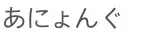
Can someone translate this, please? thank you!
sdfssfdfsd.webp
 
Can someone translate this, please? Thank you!/QUOTE]

Where did you get that? It doesn't seem to be Japanese. Perhaps a Korean word/name written in Japanese?
 
Where did you get that? It doesn't seem to be Japanese. Perhaps a Korean word/name written in Japanese?


Oh really? I thought it said something along the lines of "hello," but it's difficult for me to recognize Japanese characters still :emoji_frowning2: Is it a Korean name then?
Thank you!
 
It could possibly be a (incorrect) attempt to write "an nyong" (hello in Korean) in kana. Since you haven't told us the context/where you saw it, that's only guessing, though.
 
Hello folks,

I was trying to translate a few lines and I ran into one that I'm not 100% sure is being translated properly - the main issue is that translating it directly would've left it a bit stunted.

Still, I believe this is correct:

まだまだという事か…。大いなる形は遠いな - "It's not good enough…it'll be a while before they're matured."

I took some liberties with the second phrase but did the way I write it capture its intent?

For context, this is said by a dojo master to one of his assistants, while they're observing some up-and-coming students.

Thanks for the input.
 
Last edited:

Can someone tell me what the guy says at 39:34, after the little kid says 大丈夫お姉ちゃん and the other guy says 大丈夫

It's hard to understand when I hear people speak like this, something like
絶対(but he says it like in a slangish way like zette I believe) 取り返してる~~~~
Cant really understand any of it in the tone he speaks.
 
Hello folks,

I was trying to translate a few lines and I ran into one that I'm not 100% sure is being translated properly - the main issue is that translating it directly would've left it a bit stunted.

Still, I believe this is correct:

まだまだという事か…。大いなる形は遠いな - "It's not good enough…it'll be a while before they're matured."

I took some liberties with the second phrase but did the way I write it capture its intent?

For context, this is said by a dojo master to one of his assistants, while they're observing some up-and-coming students.

Thanks for the input.
大いなる形 seems to refer to the speaker's ideal skill, battle formation or something, which might be mentioned previously in the story. If so, your translation would be correct.


Can someone tell me what the guy says at 39:34, after the little kid says 大丈夫お姉ちゃん and the other guy says 大丈夫

its hard to understand when I hear people speak like this, something like
絶対(but he says it like in a slangish way like zette i believe) 取り返してる~~~~
Cant really understand any of it in the tone he speaks
Yes for ぜってー. He said 取り返してやるかんな(= からな)、俺の写真売った金。 after that.
 
大いなる形 seems to refer to the speaker's ideal skill, formation or something, which might be mentioned previously in the story. If so, your translation would be correct.

Yes, the speaker says it as he watches his students train.

Thanks, Toritoribe-san!
 
I saw this on a friend's facebook wall posted by his girlfriend:

窶堙債ー窶堋「ツ催ー窶愿コナス窶槐ス窶樞?堙娯?冕窶堙?寝窶堋スツ鞘?披?堙債青ウ窶卍シ窶堙俄?ケ窶愬スティ
窶堋ソ窶堙・窶堙≫?堙?彙窶堋ェ窶堋?窶堙ゥ窶堋ゥ窶堙ァ窶禿岩?佚昶?堋オ窶堙

Am I reading this wrong, or does it say he slept with someone else? I'm afraid to ask him upfront. I'm also not sure what 窶禿岩?佚昶?堋オ means.
 
I saw this on a friend's facebook wall posted by his girlfriend:

はーい昨日私私の男と寝た女は正直に挙手
ちょっと話があるから面貸しな

Am I reading this wrong, or does it say he slept with someone else? I'm afraid to ask him upfront. I'm also not sure what 面貸し means.

I would guess it means she is going to "borrow" his Facebook wall (post on his wall). 貸しな is, of course, a shortened 貸しなさい.

I get the same impression you did.
 
Back
Top Bottom