- 4 Oct 2010
- 39
- 0
I have a problem understanding this phrase: あきらは昔から私のことになると感情的になるかな。 It's translated as Until now, Akira has always been more emotional than me I think. how does ~になると work in this phrase?
Follow along with the video below to see how to install our site as a web app on your home screen.
Note: This feature may not be available in some browsers.


I have a problem understanding this phrase: あきらは昔から私のことになると感情的になるかな。 It's translated as Until now, Akira has always been more emotional than me I think. how does ~になると work in this phrase?


The subject of the sentence is the person the speaker is talking to or referring to.
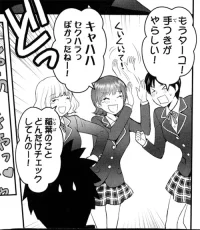
因縁 and 運命 have a similar meaning "fate/destiny", but 因縁 also means "pretext of quarrel/fight" especially in a set phrase 因縁をつける "to pick a quarrel with~". This phrase often represents yakuza's threats. 落とし前をつける means "to solve those kind of problem". If a yakuza says 落とし前をつけろ to people in general, it means "Pay money", and when used among yakuzas, it's "Chop off your finger". The girls are talking about these issues.
Ah, What is 人類の心は複雑ので, 私はそれらをさらに勉強します supposed to be actually written as? Kind of wondering.
Where did you read that sentence? (I mean, that's grammatically wrong.)
Ah, What is 人類の心は複雑ので, 私はそれらをさらに勉強します supposed to be actually written as? Kind of wondering.
You could say "Thanks" and answer the question he asked you.
It looks like the sentence was not written by a native speaker. It is missing な after 複雑 and the ら of それら is unnecessary (and odd).
Oh sorry. Thanks to the both of you.
You're welcome.
Where did you read that sentence?
Sorry, I should have written "the subject of 行く and 暗くなってる is the person the speaker is talking to, and the subject of 思えば is the speaker".男の子 to 男:全く、格好つけてどこ行くのかと思えば、こんな所で暗くなってるんだもんな。
男 replied :そんなこと言ってもな。
Then can it mean like this:
You showed off [wherever we went]/[all the day time] but now I can see your gloomy face???
男 : I have said that (perhaps this-) [I will be strong but...]. ?
Hey there folks,
I'd like to confirm that I'm reading this right: 日本には小人が鬼を倒す話もあったはずだ!
Does that mean: "There should've been some Japanese stories in which a kid defeats a demon!" ?
For context, the speaker is a foreign teenager, who's been in Japan for a few days.
As always, thanks for the insight.
In this case, はず carries a meaning of "I'm pretty sure that xxxxx" (even when there is really no doubt at all in the speaker's mind).
Sorry, I should have written "the subject of 行く and 暗くなってる is the person the speaker is talking to, and the subject of 思えば is the speaker".
Your initial translation is rather better. The last half of the man's reply is omitted.
小人 means dwarf/pygmy/midget, not kid/child.Hey there folks,
I'd like to confirm that I'm reading this right: 日本には小人が鬼を倒す話もあったはずだ!
Does that mean: "There should've been some Japanese stories in which a kid defeats a demon!" ?
For context, the speaker is a foreign teenager, who's been in Japan for a few days.
As always, thanks for the insight.
でも is a particle で + も as "too/also", not "even" here. This で indicates the reason/cause.Hi,
I wanted to make sure I'm understanding this sentence right.
彼はレンの出方をうかがい、その人となりを知る意味でも、あくまでも大上段に構えた。
My interpretation is: "He observed Ren's behavior, even hoping to find more about his character, doing his best to overbear him."
小人 means dwarf/pygmy/midget, not kid/child.

でも is a particle で + も as "too/also", not "even" here. This で indicates the reason/cause.
The main verb of the sentence is 大上段に構えた.


くいくい is an onomatopoeia to express "pulling something repeatedly in small motions".
どんだけチェックしてんの=どれだけ(細かく)チェックしてるの