Need a word or phrase translated?

It's not an idiom. 乗っかる is a colloquial way of saying 乗る.

のる【乗る】
7 〔加わる〕

このもうけ話に一口乗らないか
Don't you want to be in on this profitable scheme?

気を引こうとしたが全然乗ってこなかった
I tried to arouse his interest, but he paid no attention.

彼は話に乗ってきた
He showed (an) interest in it
乗るの英語・英訳 - goo辞書 英和和英
 
Good afternoon, folks.

I'd like a little clarification on the meaning of the phrase "そんなのを聞いてる余裕あんのか?"; this question is asked right after someone asks "Answer me: who are you, what is this place?".

Is it meant as a criticism to the blunt/rude way the person asked the other?

Could it be translated as "Is that how you ask questions to someone else?" or would something else be better?

Thanks.
 
I believe it translates as

Don't you think that's asking too much (i.e, he is being way to terse and straightforward about asking who he is and what the place is)
 
I believe it translates as

Don't you think that's asking too much (i.e, he is being way to terse and straightforward about asking who he is and what the place is)

Ah, so 余裕 refers to him being excessive, then? I saw that it meant both "composure" and "margin/surplus", so I couldn't quite see which one applied to this situation.
 
Good afternoon, folks.

I'd like a little clarification on the meaning of the phrase "そんなのを聞いてる余裕あんのか?"; this question is asked right after someone asks "Answer me: who are you, what is this place?".

Is it meant as a criticism to the blunt/rude way the person asked the other?

Could it be translated as "Is that how you ask questions to someone else?" or would something else be better?

Thanks.
The words means that the situation is urgent now. He said that it's not the time to ask such things.
 
I think it might be more along the lines of "can you afford (the time) to be asking those sorts of questions"? (in a rhetorical way - the speaker is suggesting that he does not). Often 余裕 refers to having time/money to spare in order to do something - a bit of flexibility in schedule or budget.

(ETA: oops, didn't see the above two posts)
 
Hrm, I'm afraid I'm gonna have to ask for some input again; there's this one line that is said when a character starts playing some music on the background for a group that's going surfing at night.

悪くないな、ナイトサーフィングってのもよ!

I reckon the first bit is the character saying "Not bad" to the music selection but what does the ってのもよ part mean?

Thanks.
 
Contracted/alternate form of というのも and よ. I'm pretty sure this is an inverted sentence.
 
Can you please translate this short sentence, my dad gave this to me in a christmas present.

DNeAicG.webp


Thanks :emoji_grinning:
 
It's translated too directly into Japanese, but probably your dad wanted to say "This voucher can provide you a sushi dinner in a restaurant you like".
 
Last edited:
Someone help me straighten my trans attempt please. I'd like the romaji as well since i suck at it.

2hhoqoz.webp


A jutsu?
Yea, madara has taken my senjutsu, this is a tech to bind in in reminiecent to that

vfwg3q.webp


There's a reason why you brothers cant bring out your strength. Call it coincidence, call it fate but there's no a gap between us.
Futhermore, I'm breeding a new sight
 
That's a Chinese translation of the manga, not the original.
 
I know its Chinese but my apologies though. Your command of the Japanese language led me to think you speak Chinese as well. i've been learning it for sometime since manga source materials were rampant on chinese sites back in the day.
 
Last edited:
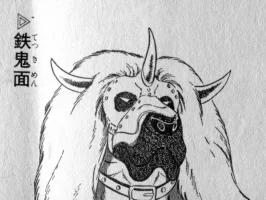
2im9oiq.webp
Is this character's name "tetsu-kamen" or "Tekkimen"? I can't figure out if the tsu is a syllable of its own or does it create a double consonant. I'm assuming its tetsu-kamen, because it is written as てつかめん or am i wrong?
 
てつきめん[Tetsu-kimen] is correct, as it is written in the furigana.

In a compound word, つ at the end of the first kanji changes to っ when the first consonant of the second kanji is k, s, p or t/ch, since it's easy to pronounce. (When the first consonant of the second kanji is h/f, it changes to p, so つ preceding h/f also changese to っ as a result, as in the last two exapmles below.)

骨格: こつかく(kotsu kaku) --> こっかく
喝采: かつさい(katsu sai) --> かっさい
沸騰: ふつとう(futsu tō) --> ふっとう
血中: けつちゅう(ketsu chū) --> けっちゅう
発表: はつひょう(hatsu hyō) --> はつぴょう(hatsu pyō) --> はっぴょう
熱風: ねつふう(netsu fū) --> ねつぷう(netsu pū) --> ねっぷう

However, when the word is considered to be made of two words, つ is pronounced with no change. For instance, 熱放射 is ねつほうしゃ, not ねっぽうしゃ since it's 熱 + 放射. This is the reason why that's てつきめん. (As for 鉄仮面, it's read てっかめん because it's treated as one word. てっきめん would be probably acceptable when it's actualy pronounced.)
 
Last edited:
A quick clarification regarding this line - 戦争をなくすために、ぼくは空の一族をぶっ潰す.

I recon it's something along the lines of: "In order to get rid of war, I will smash the _____" - I can't seem to get what the part in the blank is supposed to be. I understand the kanji themselves, but I don't have the slightest idea what it could mean in the context of the sentence.
 
A quick clarification regarding this line - 戦争をなくすために、ぼくは空の一族をぶっ潰す.

I recon it's something along the lines of: "In order to get rid of war, I will smash the _____" - I can't seem to get what the part in the blank is supposed to be. I understand the kanji themselves, but I don't have the slightest idea what it could mean in the context of the sentence.
That's a proper noun used in the Hikūshi series. According to wikipedia, it's translated as "the air tribe" (and this is the literal translation of "空の一族 / 空族"). You don't know much about the story you are reading / watching, maybe? It would be hard to interpret correctly what it refers to without knowing the context of the story, not the context of the sentence.
 
I could use some quick help! In an online game I play, our guild would like to use the kanji for "sun", as a title in front of the usernames to represent the guild.

I asked google for help and got Taiyō: 太陽

My question is, would this be correct/appropriate for a title username? Or is there another translation that is more appropriate for this use?
 
Back
Top Bottom