Need a word or phrase translated?

2. What does this small sentence say in English?
そうだ
コレ

The context is that the mom is giving her daughters a bag when she says this. I think it says "Oh, here's this." Or "Oh, here's these." The bag contains two teacups.
そうだ shows that she has remembered something (in this case, she has to hand the bag to her daughter). "Oh" is a good translation.
コレ refers to the bag, so it's singular, I think.


Hello, this sentence comes from a manga by Berserk's author. I understand the gist of it, but I'm having trouble coming up with a proper translation, especially concerning the オチ part.

甘いな。さんざんもて遊ばれたあげく殺されるのがオチだ。

This is said by a guy who just saved a woman offering herself in exchange for something she was obviously not going to get.


Thank you in advance.
オチ means the result / effect / outcome / consequence here. Does this make sense?
 
ワァァ in that context is probably like the crowd going 'Ooooh' as if they were impressed.

Without conversational context, 2 is uncertain, but most likely means, "That's right. This is it."
(Or more in keeping with the curt tone, "Yeah. This.") そうだ is in any case verbal confirmation in response to something said.

1.Ah, ok. Could it also possibly mean 'boooo,' like from an angry crowd. I had only been looking at previous context, but on the next page it talks about people wanting to get rid of the heroes since they think they're a nuisance.

2. Here's the conversation:

Daughter - Mom, are you leaving? It's the weekend, so why don't you stay?
Mom - I am. Tomorrow I'm climbing Mt. Izugatake with my company's hiking club.
Mom - ????? (The unknown sentence)
Daughter - Soba dipping cups?
Mom - They're tea cups! I made them myself!
 
オチ means the result / effect / outcome / consequence here. Does this make sense?

甘いな。さんざんもて遊ばれたあげく殺されるのがオチだ。
How naive. You'd just be toyed around with and in the end killed.

I think I get it now, but would this be an appropriate translation? I can't seem to find a good way to put さんざん in there though.
 
Yes, that's correct. さんざん modifies もてあそばれる; meaning "thoroughly".
 
1.Ah, ok. Could it also possibly mean 'boooo,' like from an angry crowd.
No, I don't think it could be a 'boo' as such, but it could be a disapproving sound. The only thing that is certain about ワァァ is that it expresses some degree of surprise. When you hear it, it's much clearer from the exact tone whether it's like an 'Ooooh' of amazement or a flabbergasted 'Huh?' or an 'Ah!' from being startled, but in manga you only have the kana and context to go on. There is a わぁぁ that is like a horrified gasp, maybe that fits.

2. Here's the conversation:

In context it's obvious to me that Toritoribe先生 was, of course, right again. I don't know how he knew without the conversation, but this is a そうだ that is like 'That's right (I just remembered)' or 'That's right (I almost forgot)'. It's not affirming something said to her but affirming out loud her own internal thought.

コレ is just 'This (is for you)'. You could consider it short for 'これをあげる' if you wanted.
 
そう(だ) doesn't mean "affirmation" here. It's an interjection for "I've just remembered" as same as そうそう.

3 過去の出来事を思い出すときなどに用いる語。「―、あれは去年の夏のことだ」
然う(そう)の意味 - goo国語辞書

1 忘れていたことをふと思い出したときに用いる語。「―、君に言うことがあった」
然う然う(そうそう)の意味 - goo国語辞書


1. What does the SFX in the following link mean?

The context is some heroes are talking to the press. I think it means either 'cheering' or 'chatter,' but I'm not sure.
Just for confirmation, that SFX is put behind the heros in the scene they are talking to the press, right? Is there only a single ワアア there?
 
Thanks for the help, Chris!

Just for confirmation, that SFX is put behind the heros in the scene they are talking to the press, right? Is there only a single ニ陳照但ニ但 there?

Well, there are a couple more ニ但s, but that would only enlongate the sound. And yes, it is shown in the same panel as the heroes, behind them.
 
Are there people in the same place where the heros are talking to the press? Are they talking in front of a crowd?
 
Are there people in the same place where the heros are talking to the press? Are they talking in front of a crowd?

I had at first thought that they were talking to the press since no audience could seen, but when I saw the next page I realized they're talking to a crowd. Huh, I never thought I'd have to look forward to understand what I'm currently reading.
 
In that panel, they have just appeared in front of the crowd, or have just started to talk, didn't they? If so, I think your initial interpretation "cheer / people's shout of joy" is correct.
 
Hi I heard this in an anime

この星は、人類がまだ二本足で立ち上がる前、手付かずの大自然を、望んでいるのかもしれんなあ

can I get a translation for this, I cant understand the meaning
 
The humankind walked on all fours (arms and legs) before walking on two legs.
 
Last edited:
二本足 means "two legs / two-legged". 本 is a counter. (二本の足で makes more sense in that context, maybe?)


Long, thin objects: rivers, roads, train tracks, ties, pencils, bottles, guitars; also, metaphorically, telephone calls, train or bus routes, movies (see also: tsūwa), points or bounds in sports events.
Japanese counter word - Wikipedia
 
不死身とも言うべき modifies 再生能力; "the ability to regenarate, which can be called immortal".

It's not saying "he is immortal and he also has the ability to regenarate". In the first place, she is not talking about his ability. That's an explanation about a characteristic of 光の子.
 
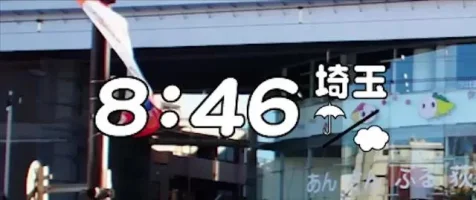
What does ツ催ゥ窶ーツ、 mean? none of the 'translators' online could get it (even though Google correctly suggested it from my miss type)
It appears during a news report, with an umbrella and cloud weather.webp
 
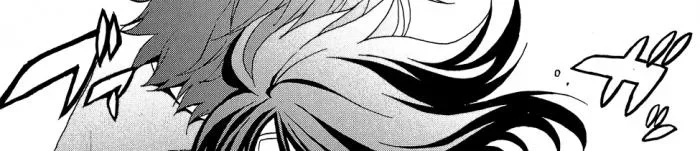
Hey, I need help with another SFX. Here's the image:

8xjt.webp

What's confusing to me is that I'm not sure if it's two separate SFX or one SFX split in to two parts. The context is that a girl tumbles out of her bed and a boy catches her. I'm thinking that it might be two SFX meaning 'gasp' and 'catch' respectively, but I'm not entirely sure.
 
Is the boy moving to her quickly, not staying there and catch her?
The right one ガッ is for "holding tight" or "receiving a heavy thing".
 
Hmm, ブァ usually has a nunace of "movement", such like "wind" or ""moving quickly" as I wrote. It would refer to her "falling down" anyway, I think.
 
Back
Top Bottom