Need a word or phrase translated?

I need the following sentences translated from English to Japanese. They're a part of a song and I'm intend on writing the phrases on my door, so I would greatly appreciate the translation.

Oh, where have they gone, those happy, carefree days?


Do we still share the same sky?


Are you still here?
貴方はここもにですか? <- Is this one correct? I'm still new with the japanese language


I want to look out over the horizon and see you shining on the wind
in peace and harmony in the arms of mother Nature.
 
I recently bought a piece of Japanese technology. The simple reason being, its better than the European or American equivalent. Consequently, I've accepted the fact that I will now need to learn some Japanese :-) All I need now is some assistance on the translation of the symbols found in the attached images to get me started on my language crash course.
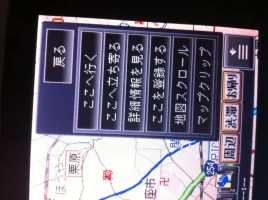
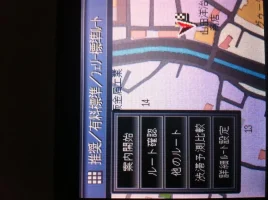
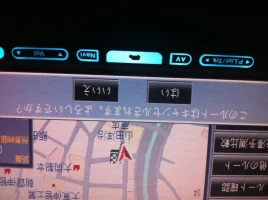
A huge thank you to anyone who can assist me.

Photo 29-03-2013 18 51 56.webpPhoto 29-03-2013 18 52 32.webpPhoto 29-03-2013 18 53 11.webpPhoto 29-03-2013 18 53 45.webpPhoto 29-03-2013 18 54 11.webp
 
I recently bought a piece of Japanese technology. The simple reason being, its better than the European or American equivalent. Consequently, I've accepted the fact that I will now need to learn some Japanese 🙂: All I need now is some assistance on the translation of the symbols found in the attached images to get me started on my language crash course.
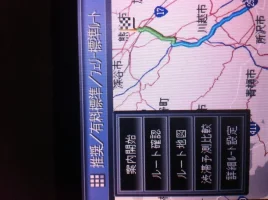
A huge thank you to anyone who can assist me.
Those are screen captures from Pioneer's car navigation system, right? If so, I don't think the system can work properly outside of Japan in the first place...


Did the girl with the doll say おばさま and not おばあさま? Thanks in advance.
Yes, she said おばさま.
 
Hello there,

町の人達は道場に近づこうとすらしない

This one comes from the manga Rurouni Kenshin. I'm a bit puzzled on the すらしない part. Any help would be greatly appreciated. ^^;
 
Thank you very much for replying. You're absolutely right. The SatNav system will not work outside of Japan but the rest of the system features do 👍 So would love to learn how to navigate this system properly (even with the limitation of SatNav).
 
Those are screen captures from Pioneer's car navigation system, right? If so, I don't think the system can work properly outside of Japan in the first place...

Thank you very much for replying. You're absolutely right. The SatNav system will not work outside of Japan but the rest of the system features do So would love to learn how to navigate this system properly (even with the limitation of SatNav).
 
Thank you very much for replying. You're absolutely right. The SatNav system will not work outside of Japan but the rest of the system features do So would love to learn how to navigate this system properly (even with the limitation of SatNav).

So essentially what you're asking us to do is translate the entire set of menus in the device? That is outside the scope of this thread and, quite frankly, this "Learning Japanese" section of the forum. Hire somebody.
 
Can anyone please explain to me what exactly 女優M means?
It's mentioned in the heading of a newspaper (女優M 入病). Google wasn't much of a help.
I'm guessing it means something like "a-list actress", but I'm not sure at all. It seems to also exist in combination with other letters.
 
Can anyone please explain to me what exactly 女優M means?
It's mentioned in the heading of a newspaper (女優M 入病). Google wasn't much of a help.
I'm guessing it means something like "a-list actress", but I'm not sure at all. It seems to also exist in combination with other letters.

Probably the initial of the actress' name.
 
Hello there,

町の人達は道場に近づこうとすらしない

This one comes from the manga Rurouni Kenshin. I'm a bit puzzled on the すらしない part. Any help would be greatly appreciated. ^^;
volitional + とすら(= さえ)しない
not even (try to) do

道場に近づこうとすらしない
(People) don't even come close to the 道場.
 
Ah, yes, you're probably right. Thanks.
But this seemed rather impractical to me, because it might be very ambiguous. Is this a common practice, reducing the names of celebrities to one letter?

I think it is pretty common with gossip articles.
 
「次回も楽しみに」. I know it must mean, 'Look forward to next time', but I'm a little confused, why 「も」instead of「を」? Or does it mean, 'Look forward to next time as well'?
 
「次回も楽しみに」. I know it must mean, 'Look forward to next time', but I'm a little confused, why 「も」instead of「を」? Or does it mean, 'Look forward to next time as well'?

You got it.
 
I'm looking for some opinions on a few Japanese sentences. I'm having trouble finishing up on proof-reading my essay. Which ones do you think are better? Or can you offer something else that's better? Thank you for any help!

Sentence 1:
A: 母は海外の仕事を見つけたと僕に言って
B: 僕に母は海外の仕事を見つけたと言って

Sentence 2:
A: 母の新しい同僚に出迎えられました
B: 母の新しい同僚に出迎えてもらいました
C: 母の新しい同僚が私たちを出迎えてくれました

And is this sentence correct?
文化の違いのために、そこで新しい友達を作るのが難しいことです。

And lastly, I'm having trouble with this one sentence. A native told me it sounded weird, but they didn't know how to word it in Japanese. I think it sounds too "English".
ドバイの国際空港に着いたとき、熱の壁と会って、酷暑が太陽に焦がされるのを感じていました。
The rough translation is: When we arrived at Dubai Int. Airport, we met a wall of heat. The intense heat felt like we were being burnt by the sun.

Does anyone have any recommendations? Again, thank you for any help.
 
Sentence 1:
A: 母は海外の仕事を見つけたと僕に言って
B: 僕に母は海外の仕事を見つけたと言って
A

Sentence 2:
A: 母の新しい同僚に出迎えられました
B: 母の新しい同僚に出迎えてもらいました
C: 母の新しい同僚が私たちを出迎えてくれました
C

And is this sentence correct?
文化の違いのために、そこで新しい友達を作るのが難しいことです。
Is there a clause preceding it, something like 気がかりなのは or 心配なのは?

And lastly, I'm having trouble with this one sentence. A native told me it sounded weird, but they didn't know how to word it in Japanese. I think it sounds too "English".
ドバイの国際空港に着いたとき、熱の壁と会って、酷暑が太陽に焦がされるのを感じていました。
The rough translation is: When we arrived at Dubai Int. Airport, we met a wall of heat. The intense heat felt like we were being burnt by the sun.
ドバイの国際空港 refers to "an international airport in Dubai", whereas the name of a specific airport "Dubai International Airport" is ドバイ国際空港.

酷暑が太陽に焦がされる means "the intense heat is burnt by the sun".

The literal translation 熱の壁と会って doesn't make sense.

my attempt
ドバイ国際空港に着くと、外は酷い暑さで、太陽に焼かれているようでした。
 
A
Is there a clause preceding it, something like 気がかりなのは or 心配なのは?
The full sentence is 新しい生活に適応するだけでなく、オーストラリア人の友達と離れて、ドバイで新しい友達を作らなければなりませんでした。でも、文化の違いのために、そこで新しい友達を作るのが難しいことです。

ドバイ国際空港に着くと、外は酷い暑さで、太陽に焼かれているようでした。
Thank you so much for all your corrections and this! It's actually taught me a lot.
 
I'm having trouble understanding these lines (which were lyrics in an anime's opening song)

止まらないドキドキは始まりの合図
さり気なく見つめたら 耳が熱くなるのよ

These lines come straight after each other. So, my understanding is:

I can't stop this excitement which signals a new beginning [[this isn't the line I don't understand]]

Then the second line...?

After casually staring, my ears burn up(?!)

Is there some idiom here that I just don't know about. Is it referring to the English idiom when someone talks behind your back?

So, "(I feel like they're) talking behind my back after they casually stare at me"

Or are they two completely separate sentences? Thanks in advance.
 
止まらない is intransitive, hint hint hint.
 
The full sentence is 新しい生活に適応するだけでなく、オーストラリア人の友達と離れて、ドバイで新しい友達を作らなければなりませんでした。でも、文化の違いのために、そこで新しい友達を作るのが難しいことです。
Just two corrections.

作るの難しいことでした/難しかったです。

It's your past experience, so the past form is used. If it's for "generally speaking", 難しいことです works fine.


I'm having trouble understanding these lines (which were lyrics in an anime's opening song)

止まらないドキドキは始まりの合図
さり気なく見つめたら 耳が熱くなるのよ

These lines come straight after each other. So, my understanding is:

I can't stop this excitement which signals a new beginning [[this isn't the line I don't understand]]

Then the second line...?

After casually staring, my ears burn up(?!)

Is there some idiom here that I just don't know about. Is it referring to the English idiom when someone talks behind your back?

So, "(I feel like they're) talking behind my back after they casually stare at me"

Or are they two completely separate sentences? Thanks in advance.
Here are other hints.

for the first line
止まらない modifies ドキドキ.
ドキドキ performs as a noun. It's the subject of the sentence.
合図 is a noun, not a verb.
That's a noun predicate sentence. The core of the sentence is "ドキドキは合図(だ)".

for the second line
The subject of 見つめる is "I".
耳が熱くなる/赤くなる means "to blush in (my) ears".
 
So the first line is:

(This) excitement doesn't stop the beginning's cue

Hopefully I understood the clues T_T

I'll work on the second line soon.
 
Back
Top Bottom