Need a word or phrase translated?

Do you have any clue how insulting that is? Or how self-centered you are and how large your sense of entitlement is?
This is the "Learning Japanese" section....something you're not doing. And this is a thread helping with translating a "word or phrase". You want someone to sit down and do absolute drudge work translating a map just to humor a total stranger in his hobby for a few idle moments in return for him thinking him a really swell guy.
And when we don't fall all over ourselves in a mad rush to accommodate your ridiculous and outlandish request you attribute it to A CHARACTER FLAW on our part?!?!
Are you out of your ****** mind?
Sorry, I didn't want to insult anybody at all and I apologize if I did. But it is a matter of the pot calling the kettle black, really. You are telling me I'm being self-centered and wanting to let somebody else do all the work, just for a little whim of mine.

This is not the case. I'm just asking for help on this, knowing that this forum isn't the exact right place to go. But to lift a corner of the veil: for the past 7 years I've been working on a reconstruction of how the world looked like during the time of the Hundred Years War. The ultimate aim of the project I keep to myself. I've already done a great part of Europe and Africa (the parts of Africa from that time we have documentation of). I scoured the internet and libraries in search for documentation and asked the help of some historiographers to get insight in the historical demo- and topographics of the western world in this tumultuous period in human history.

Now I wanted to make a start with the east, Asia, but faced a big language barrier and didn't know how to start. I really put a lot of time and energy in this project. It has become more than a hobby over the years and it really isn't ment to make me feel a swell guy, I assure you.

You're either vastly underestimating the time it would take (to translate/transliterate and also format into some semblance of order so that you could locate the translated words on the map - or do you expect someone to edit the image to add the romaji in?) or vastly overestimating the level of motivation (not patience) any random person on the internet is likely to have to expend time on assisting you for no return other than maybe warm fuzzies. Probably both.
Suggestion: Google Maps has both romaji and kanji on it for Japan (sometimes you need to zoom in a bit). A number of the places on the map still exist, so some of them you could find that way. Then try googling for old province names, or something similar - you might be find something with both kanji and romaji on some obscure website... List of provinces of Japan - Wikipedia, the free encyclopedia for example. You don't need to know Japanese to do that, just a little patience. ;)
If you put a little effort in, you could probably figure out most of the place names on that map and learn quite a bit about Japanese geography/history at the same time.
I admit the way I asked for help may have seen a little thoughtless. Thank you for the suggestion. I did want to take a look at existing topography of Japan and try to compare the characters, but I fear I only can translate half the map that way...

In the second part of this Christmas holidays I have got the time to try and translate the map with this method and will be overlaying the translated words and phrases over the map. Can I come back to this forum with the map and try to find help in translating the rest of the map?

Hmm, and maybe someone is willing to translate the phrases at the bottom and left edge of the map (the white edge I mean, so outside the actual map). I feel these give me a hint on what the map exactly is about.
 
If you come back showing that you've made some effort to figure out what you can (even if it's only half) and need some assistance with some particular bits, you will find a much warmer reception.

I'll give you a freebie that might help:
The legend towards the bottom says 守護分国の氏族区別 and the different colours refer to different clans. The names in red in boxes on the map appear to refer to specific people from those clans/families.
You will find these links helpful:
Shugo - Wikipedia, the free encyclopedia
Japanese clans - Wikipedia, the free encyclopedia
 
Many thanks, I will come back again for assistence, probably in a couple of months ;)

What about hiring a rofessional translator? If it is important for you?

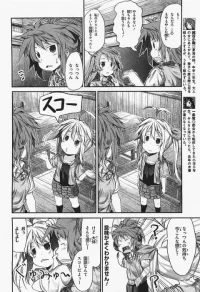
Hi everybody, two questions here.

I am becoming crazy with the mix-up between katana and hiragana.
Here is the situation. A student has failed her exam and one of her colleague says to her:

スコー !

Is it sort of "you're no good at all"?

The second point : the same student has another test and ask help.
She returns happily to her seat, with a pair of glasses in her hand and says :

イラっとしたからメガネを奪ってきた.

I've searched on all my dictionnaries for イラっとしたから but didn't find it. But it appears many times in blogs, so I assume it is some kind of expression.

Thank you for your help!
 
What about hiring a rofessional translator? If it is important for you?
I was thinking about that, but I don't know where to find one and I don't have a big budget, being a student. For now I will give it a shot and will come back here later :)
 
Hi everybody, two questions here.

I am becoming crazy with the mix-up between katana and hiragana.
Here is the situation. A student has failed her exam and one of her colleague says to her:

スコー !

Is it sort of "you're no good at all"?

The second point : the same student has another test and ask help.
She returns happily to her seat, with a pair of glasses in her hand and says :

イラっとしたからメガネを奪ってきた.

I've searched on all my dictionnaries for イラっとしたから but didn't find it. But it appears many times in blogs, so I assume it is some kind of expression.

Thank you for your help!

Hmm, スコー doesn't make sense to me in that context. Aren't there any typos?

イラっとする is from イライラする "to get irritated".
 
Hmm, ニ湛ニ坦ツー doesn't make sense to me in that context. Aren't there any typos?
ニ辰ニ停?ー窶堙≫?堙??堋キ窶堙ゥ is from ニ辰ニ停?ーニ辰ニ停?ー窶堋キ窶堙ゥ "to get irritated".

This is the page of the manga. No typos ^^'

Nonnon_3_008.webp
 
I've never seen it, and I can't get what it means even after reading the whole page. It seems like a kind of mimetic word to me.
 
I've never seen it, and I can't get what it means even after reading the whole page. It seems like a kind of mimetic word to me.

As a friend says 「意味がよくわかりません!」in the next panel, the word「スコー」is coined by the author. It's onomatopoeia expressing "boring" or "dull", I think.
 
I've checked のんのんびより. Wiki says about 宮内れんげ, the girl who said the word, that 独特な感性を持っており、言動を周囲の人間から理解されないことも多い。・・・「にゃんぱすー」と独特の挨拶をする。, so yeah...
 
I've checked のんのんびより. Wiki says about 宮内れんげ, the girl who said the word, that 独特な感性を持っており、言動を周囲の人間から理解されないことも多い。・・・「にゃんぱすー」と独特の挨拶をする。, so yeah...


I thought of it too (Oh my, this "nyan nyan pasuu". I remember my " she.... what ???".

But, as it is used as a verb by the other girl after, I wasn't sure of it anymore.
 
I first thought I understood this but after reading it several times I'm not so sure. I honestly don't understand what 今日このごろ does here when following "I think".

Also the 今日このごろ, should it be like "today and these days?"

Here's the sentence:

性善説も日本の文化なのだろうなあと思う今日このごろ。
 
I first thought I understood this but after reading it several times I'm not so sure. I honestly don't understand what 今日このごろ does here when following "I think".

Also the 今日このごろ, should it be like "today and these days?"

Here's the sentence:

性善説も日本の文化なのだろうなあと思う今日このごろ。

「~と思う今日このごろ」is a kind of conventional expression and very popular in writing not in verbal.
The meaning is like "These days, I think ~".
 
This one has bit of a smutty context. Some guy knocks on the door of his friend's apartment. The guys has to wait a while until the friend finally opens the door. So the guy teases him and says:

新作エロゲ
待ちきれなくて
シコッてたんじゃねーの?

I think I know what it means, but I have trouble translating it.
"You couldn't wait for the new H-game and (so) you were f*pping, weren't you?"

Is this what it means?
If you know how to put it in a better way, please let me know.
 
Hello, I am new here but I am hoping you might be able to help me. I am trying to figure out what this says.

I know the quality isn't the best but it's all I have.

Thanks!
 
Hello, I am new here but I am hoping you might be able to help me. I am trying to figure out what this says.
Photo by lolyeahright noway

I know the quality isn't the best but it's all I have.

Thanks!
Left of upper center, right of lower center, right end are the correct ones.

right end
南無妙法蓮華経
Namu Myōhō Renge Kyō
Nam(u) Myōhō Renge Kyō - Wikipedia, the free encyclopedia

right of lower center

fukuro
bag

The one in the left of upper center is just a radical; a part of a kanji.
 
Here's a text I think is giving advice on how to make kids learn to write (essays etc). About the bold marked part, is it saying that one should "switch thinking" from (the idea that) "it's okay if the child just writes what the mother dictates" etc... Basically, it's better if the child learns to write in their own words?

第一は、文章を書くためには、文章を読むことに慣れておく必要があります。読む力をつけるために、これから気長に毎日本を読む習慣をつけることです。
第二は、何を書いても、書き方が違っていても、とりあえずはすべて褒めて認めてあげることです。そして、自分の力でやることに自信をつけることです。
第三は、お母さんが書くことをどんどん教えてあげて、そのとおりに書いてもいいのだと考えを切り替えてしまうことです。


I would also like to know, what's a スイトン?

元気のいい子の場合は、カッパと長靴を用意して寒い雨の中、野山をジャブジャブ歩き回ること。
その後に食べるあったかいスイトンがうまい。(いつの話だい)
 
No. It's the opposite. It says "change the thought to 'it's okay just to write what the mother teaches how to write.'" If it's そのとおりに書いてもいいのだという考え, it means "the idea that it's okay ~", as you interpreted.
Since I don't know the full context, it seems to me that the two interpretations, "change the mother's thought" and "change the child's thought", are both possible. The former might be more possible, though.

すいとん
水団(すいとん)の意味 - goo国語辞書

Because of a lack of rice, すいとん was a staple food in the postwar days in Japan. いつの話だい means that.
 
Hi, I need help with the translation of a phrase:

Looking for friends to join a book circle.

So far I've got;

ブッククラブの友達を探しています。

Is this correct? I'm a first year student of Japanese and still a bit unsure when it comes to particles.
 
Thanks Toritoribe. I guess maybe the point of the text is to not completely exclude help from the mother while at the same time not making the child completely dependent on help writing word by word. Finding a balance or so. There's another part supporting this idea which says "そういうときは、全部自分でやらせるのでも、全部他人がやってあげるのでもなく、途中までやり方の見本を見せてあげることです。"

So basically, maybe the "change the thought" part refers to not being so rigid in the idea that the child at all cost must write everything themselves. Helping along the way might help them write more independently.
 
Hi, I need help with the translation of a phrase:

Looking for friends to join a book circle.

So far I've got;

ブッククラブの友達を探しています。

Is this correct? I'm a first year student of Japanese and still a bit unsure when it comes to particles.
読書クラブに入ってくれる友達を探しています。

読書クラブの友達 refers to a specific friend who already joined a book circle in your sentence.
 
Can anyone please help me find out what this means?

今日もまたひとり…
住人の方が増えますね

A witch says this, after turning a villager into a small animal without anyone noticing.

I think I get the first part, but I'm not sure what is meant by the second part. Does she think that there are too many people in the village? Or does "住人" refer to the number of people she has already turned into animals?
I'm also confused by the meaning of の方 here.
 
Please, help me to translate to Japanese
How to tell "The World of Anime" in Japanese. Somebody help me please!
Thank you a lot in advance!
 
Back
Top Bottom