

Navigation
Install the app
How to install the app on iOS
Follow along with the video below to see how to install our site as a web app on your home screen.
Note: This feature may not be available in some browsers.
More options
Style variation
System
Light
Dark

You are using an out of date browser. It may not display this or other websites correctly.
You should upgrade or use an alternative browser.
You should upgrade or use an alternative browser.
Need a word or phrase translated?
- Thread starter Buntaro
- Start date

undrentide
Japa'n vagyok
- 18 Jan 2006
- 3,652
- 310
It must be a typo - it should read お求め易く (which is also pronounced おもとめやすく).
易し is rather an old word, in modern form 易い meaning 'easy'.
It is hardly used on its own but you see a lot of words combined with other verb, (お)求め易い is one of them.
~しやすい(し易い) means easy to do ~.
Your interpretation of the word おしゃれ is correct.
And I found another error - 新しい自社ブランドの子袋シリーズ - 子袋 should be 小袋, the former means 'womb', the latter means small bag/packet. (Both pronounced こぶくろ)
I guess the person who wrote these sentences were not careful enough and made kana-kanji convert errors. ;-)
I assume a sales rep. of a tea manufacturer or tea blender company is talking about the trade show they attended.
Your interpretation of the whole text is OK, there were many people who bought the new series of their brand in small packages/bags finding them easy to buy (as they are cheaper in small quantity) and the packages look fashionable/stylish.
易し is rather an old word, in modern form 易い meaning 'easy'.
It is hardly used on its own but you see a lot of words combined with other verb, (お)求め易い is one of them.
~しやすい(し易い) means easy to do ~.
Your interpretation of the word おしゃれ is correct.
And I found another error - 新しい自社ブランドの子袋シリーズ - 子袋 should be 小袋, the former means 'womb', the latter means small bag/packet. (Both pronounced こぶくろ)
I guess the person who wrote these sentences were not careful enough and made kana-kanji convert errors. ;-)
I assume a sales rep. of a tea manufacturer or tea blender company is talking about the trade show they attended.
Your interpretation of the whole text is OK, there were many people who bought the new series of their brand in small packages/bags finding them easy to buy (as they are cheaper in small quantity) and the packages look fashionable/stylish.
Macrobiotic
Sempai
- 12 Oct 2012
- 230
- 6
You're misinterpreting the 安くpart. It is the "easy" meaning. Interestingly, 求めやすく does refer to it being affordably priced.
Thanks for this explanation.
undrentide said:It must be a typo - it should read お求め易く (which is also pronounced おもとめやすく).
易し is rather an old word, in modern form 易い meaning 'easy'.
It is hardly used on its own but you see a lot of words combined with other verb, (お)求め易い is one of them.
~しやすい(し易い) means easy to do ~.
Your interpretation of the word おしゃれ is correct.
And I found another error - 新しい自社ブランドの子袋シリーズ - 子袋 should be 小袋, the former means 'womb', the latter means small bag/packet. (Both pronounced こぶくろ)
I guess the person who wrote these sentences were not careful enough and made kana-kanji convert errors. ;-)
I assume a sales rep. of a tea manufacturer or tea blender company is talking about the trade show they attended.
Your interpretation of the whole text is OK, there were many people who bought the new series of their brand in small packages/bags finding them easy to buy (as they are cheaper in small quantity) and the packages look fashionable/stylish.
This also helped clear up things. It makes sense now that I know these expressions were actually misspelled to begin with. It isn't the first time either I had to come on here to get help translating a typo. These things are, for the non-fluent, like when a small miscalculation makes the entire building collapse. Hahaha.

- 22 Feb 2008
- 18,266
- 4,926
I think お求め安く is just a typo of お求め易く. "Easy to buy" means reasonable, so your interpretation is correct.
自社 would refer to the writer's company here.
子袋 means little/small/baby pack. Small amount of tea bags are in each package(e.g., for tasting).
EDIT:
Ooops! My reply seems to be too late while I'm writing.
自社 would refer to the writer's company here.
子袋 means little/small/baby pack. Small amount of tea bags are in each package(e.g., for tasting).
EDIT:
Ooops! My reply seems to be too late while I'm writing.
undrentide
Japa'n vagyok
- 18 Jan 2006
- 3,652
- 310
@Toritoribe
Thank you for your follow-up about 子袋, I should have checked before posting and giving disinformation!
Thank you for your follow-up about 子袋, I should have checked before posting and giving disinformation!
Macrobiotic
Sempai
- 12 Oct 2012
- 230
- 6
Thanks to Toritoribe also. I changed 安く to 易く in the text but kept the 子袋 as it is based on this explanation.

- 3 Jan 2012
- 842
- 9
息子はライバルに負けたのが悔しくてたまらないようだ。
It seems he feel unbearably regret that his son was defeated by a rival.
I'm confused with the subject here. Is it ''he'' or ''I''. If it is ''I'' then it doesn't make sense with ようだ because the translation turns arkwards. But then the book told that the expression てたまらない only use by first person. Please help.
It seems he feel unbearably regret that his son was defeated by a rival.
I'm confused with the subject here. Is it ''he'' or ''I''. If it is ''I'' then it doesn't make sense with ようだ because the translation turns arkwards. But then the book told that the expression てたまらない only use by first person. Please help.
Last edited:

nekojita
先輩
- 14 Jan 2009
- 1,660
- 444
@Akira:
Those attachment links don't work for me.
@Andromedashun:
The sentence is about the son. Like a lot of forms that describe emotional state, it wouldn't be correct without the ~ようだ (or some other form making it about your observation/guess as to his feelings). You can't say 'He feels...', but with ようだ you can think of it as 'It seems/appears to me that he (my son) feels...'.
Those attachment links don't work for me.
@Andromedashun:
The sentence is about the son. Like a lot of forms that describe emotional state, it wouldn't be correct without the ~ようだ (or some other form making it about your observation/guess as to his feelings). You can't say 'He feels...', but with ようだ you can think of it as 'It seems/appears to me that he (my son) feels...'.

rrsslvy
後輩
- 11 Nov 2012
- 1
- 0
Hi everyone, first post here... sorry to launch right in with a question but this has been bugging me! Can anyone help with the meaning of "しときな"? In (maybe not very helpful) context the phrase I'm trying to understand is "曖昧にしときな".
I've been googling trying to work it out via context to no avail... any help would be very much appreciated!
I've been googling trying to work it out via context to no avail... any help would be very much appreciated!

PunkyDuchess
後輩
- 12 Nov 2012
- 7
- 0
Hello everyone!
I'm having trouble with understanding what this particular kanji means, because the hiragana beside it is completely different from how the kanji is usually spoken. This: 近所 has hiragana そぼ(ば?) beside it...but everywhere I look, those two kanji are read as "kinjo". The context is: 「家の近所で...」. Why is the pronunciation hiragana not きんじょ? Is it slang?
I'm having trouble with understanding what this particular kanji means, because the hiragana beside it is completely different from how the kanji is usually spoken. This: 近所 has hiragana そぼ(ば?) beside it...but everywhere I look, those two kanji are read as "kinjo". The context is: 「家の近所で...」. Why is the pronunciation hiragana not きんじょ? Is it slang?
PunkyDuchess
後輩
- 12 Nov 2012
- 7
- 0
I don't get it...does that mean that it retains the same meaning as きんじょ? What does it mean then?
- 22 Feb 2008
- 18,266
- 4,926
KanjiI don't get it...does that mean that it retains the same meaning as きんじょ? What does it mean then?
1Hi,can someone kindly help me translate these 3 phrases from Japanese to English?
1:
View attachment 11954
2:
View attachment 11955
3:
View attachment 11956
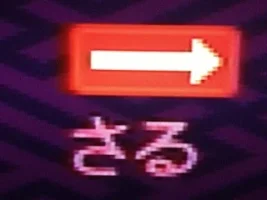
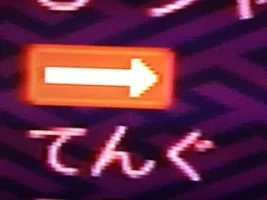
Monkey/Ape
2
Human
3
Tengu (a Japanese long-nosed goblin)

- 3 Jan 2012
- 842
- 9
松井さんは、自分は何もしない。そのくせ人のすることには文句を言う。
Can anyone translate for me the underline?
I guess it means: nonetheless, he (松井) complains the things others do.
Is 人のすること = the things others do?
Can anyone translate for me the underline?
I guess it means: nonetheless, he (松井) complains the things others do.
Is 人のすること = the things others do?
- 22 Feb 2008
- 18,266
- 4,926
Yes, that's right.
- 3 Jan 2012
- 842
- 9
子どもが不安そうだったので、母親は「大丈夫よ」と言うように、うなずいてみせた。
I can't grasp the meaning of this so I will translate word by word:
Because the child feel anxiety, for his mother to say ''It's alright'', he nodded.
Is this mean he is scorned or in other difficult situations?
I can't grasp the meaning of this so I will translate word by word:
Because the child feel anxiety, for his mother to say ''It's alright'', he nodded.
Is this mean he is scorned or in other difficult situations?

- 15 Mar 2002
- 16,758
- 2,298
子どもが不安そうだったので、母親は「大丈夫よ」と言うように、うなずいてみせた。
I can't grasp the meaning of this so I will translate word by word:
Because the child feel anxiety, for his mother to say ''It's alright'', he nodded.
Is this mean he is scorned or in other difficult situations?
Try it again without ignoring the parts I marked in bold. I have noticed that very often your errors come from ignoring small but very important parts of sentences.

naark
先輩
- 22 Oct 2011
- 33
- 0
I'm now studying causative verb conjugation...
but I got confused on this sentence..
The teacher allowed john to give the book to you
So when I tried to translate it (by myself not using online translator)
Sensei wa john ni anata ni hon o agesaseta
Was that right? And about the "ni" marker, won't it confuse whether "john" or "anata" was the recipient of action??
Thanks in advance!
but I got confused on this sentence..
The teacher allowed john to give the book to you
So when I tried to translate it (by myself not using online translator)
Sensei wa john ni anata ni hon o agesaseta
Was that right? And about the "ni" marker, won't it confuse whether "john" or "anata" was the recipient of action??
Thanks in advance!
Last edited:
- 22 Feb 2008
- 18,266
- 4,926
I would use "~te mo ii" or "~no wo yurusu" instead of the causative form for your example. The causative form "agesaseta" has a nunace "made/forced me give" rather than "allowed".
naark
先輩
- 22 Oct 2011
- 33
- 0
@Toritoribe
Thanks for the reply and suggestion...
I have a question regarding that example...
So in this sentence "sensei wa john ni anata ni hon o agesaseta"
looking on the sentence construction alone and not looking at the meaning...
Won't there be a confusion between "john" and "anata" of whom will be the recipient of action "ageru"
I mean on the part "john ni anata ni"?
Is it always the one closest to the verb which in this case is "anata" will always be the recipient of action???
Thanks for the reply and suggestion...
I have a question regarding that example...
So in this sentence "sensei wa john ni anata ni hon o agesaseta"
looking on the sentence construction alone and not looking at the meaning...
Won't there be a confusion between "john" and "anata" of whom will be the recipient of action "ageru"
I mean on the part "john ni anata ni"?
Is it always the one closest to the verb which in this case is "anata" will always be the recipient of action???
- 22 Feb 2008
- 18,266
- 4,926
Yes, that's right. In your example, John is the causee and the giver, whereas anata is the recipient.
Your example sentence is barely understandable but sounds rather awkward. I would use another expression, something like "Sensei wa Jon ni, anata ni hon wo ageru you ni itta." As for "allow" with using the causative form, the form you wanted to use maybe be "sasete ageru"?
Your example sentence is barely understandable but sounds rather awkward. I would use another expression, something like "Sensei wa Jon ni, anata ni hon wo ageru you ni itta." As for "allow" with using the causative form, the form you wanted to use maybe be "sasete ageru"?
Similar threads


- Replies
- 11
- Views
- 115K