Need a word or phrase translated?

Thanks for the help thus far.

I have an original Pokémon character whose given name translates to Lavender. The only translation I get for that is the phonetic Renbendaa. Is this the only acceptable translation? If so, would Ren be an acceptable way to shorten the name?
 
I need some quick translations :)

"It's fine that you can't speak English well. You learn slowly but surely. I know English is not an easy language."

thank you guys.
 
英語(えいご)をそんなに上手(じょうず)に話せなくて(はなせなくて)も大丈夫(だいじょうぶ)ですよ。徐々(じょじょ)に覚えて(おぼえて)いくものです。
英語(えいご)は簡単(かんたん)な言語(げんご)ではないことを知っています(しっています)。
Eigo o sonna ni jouzu ni hanasenakute mo daijoubu desu yo. Jojo ni oblate iku mono desu. Eigo wa kantan na gengo de wa nai koto o shitteimasu.
 
A couple of doubts in a sentences

Hi! I have trouble understanding the meaning of 'nandakedo' and 'koto nara arimasu' in the following sentence. I think it's a girl who works as a cashier in a supermarket (as a part-time job) and suddenly this Miyamoto guy approached the cash register?

私スーパーのレジバイトなんだけど、宮本くんがレジに来たことならあります。
 
Hi! I have trouble understanding the meaning of 'nandakedo' and 'koto nara arimasu' in the following sentence. I think it's a girl who works as a cashier in a supermarket (as a part-time job) and suddenly this Miyamoto guy approached the cash register?
私スーパーのレジバイトなんだけど、宮本くんがレジに来たことならあります。
Yes, that's the meaning, she's saying she works in a supermarket in a cash register, and that Miyamoto-kun came to the cash register.

The nan dakedo here is like "FYI, I work at the cash register in the supermarket, (and) Miyamoto-kun has come to the cash register."

My guess is that the girl is saying this in another place that's not her baito, and someone could be saying that this guy is stealing stuff from the supermarket, so this girl is saying that he's been going to the cash register (and has not been stealing). I might be wrong, though...
 
A little difficult to grasp the context but I think it's a conversation about Miyamoto and the girl chimes in with "Well, I work at the supermarket and if you're wondering whether Miyamoto has been to the register, he has."
 
Hi! I have trouble understanding the meaning of 'nandakedo' and 'koto nara arimasu' in the following sentence. I think it's a girl who works as a cashier in a supermarket (as a part-time job) and suddenly this Miyamoto guy approached the cash register?
私スーパーのレジバイトなんだけど、宮本くんがレジに来たことならあります。
なん is the n-euphonic change of なの. な can be considered as the adjectibal/adnominal form of the copula だ, and の/ん is sometimes called "explanatory の".

なら means that the speaker ONLY knows Miyamoto came to the checkout counter, and 来た shows that she(=the speaker) was there at that time.
 
Thanks alee, Adam J and Toritoribe for your replies. Sadly there's not much context because this is from a tweet. Would it help any to clarify possible connotations that this Miyamoto-kun is actually a famous person? She mentioned it in her Twitter because of that.
 
Yes, it's possible if the tweet was a reply to the question "Have you ever met a celebrity?" or like that. If so, the last half means "Miyamoto came to the checkout counter I was at (and it's my only experience meeting a celebrity)".
The first person that pops into my head from 宮本くん is a singer 宮本浩次, a band member of エレファントカシマシ. Although I would use エレカシの宮本くん/さん for the case instead.
 
Is there a Japanese equivalent for English idiom: [ sticks and stones may break my bones,but words will never hurt me. ] ? .... TIA
棒や石なら骨が折れるが、口でなんと言われても痛くもかゆくもない。

が好きですね。:cool:
 
How would you say or express "just" in the following situations?:

"I just want to go home."
"I just have a headache."
"If you just eat this, you'll get better."

I think you would use ただ, but I'm not exactly positive if that's the right word. Also, I don't know where you would place it in the sentence. I'll take a guess and please correct me if I'm wrong! :)

ただうちへ帰りたいです。
ただ頭痛がします。
ただこれを食べれば(食べたら?)大丈夫になるでしょう。

よろしくお願いします!
 
how would you say or express "just" in the following situations?:

"i just want to go home."
"i just have a headache."
"if you just eat this, you'll get better."

i think you would use ただ, but i'm not exactly positive if that's the right word. Also, i don't know where you would place it in the sentence. I'll take a guess and please correct me if i'm wrong! :)

ただうちへ帰りたいです。
ただ頭痛がします。
ただこれを食べれば(食べたら?)大丈夫になるでしょう。

よろしくお願いします!
1. (ただ)家に帰りたいだけです, 家に帰りたいだけなんだ。。。

2. ただの頭痛だ

3. 食べさえすればすぐに元気になるでしょうね/気分が良くなるでしょう。。/大丈夫になるでしょう ...

Just some alternatives. But I don't think your were wrong either. :p
 
Need help

I'm an English speaking student who frequently comes across Japanese text that I either don't know or can't translate with online translators. If you are like me and need help or can help it would be appreciated. This is what I'm one right now I've been told it is Japanese but the only translation I get says its either jibberish or probably an untranslatable name. please help if you can.
 

Attachments

  • Captureed.webp
    Captureed.webp
    1.9 KB · Views: 145
It says "Alice of the land of mirrors". Or maybe "Alice in the land of mirrors". It seems to be a play on the Japanese title of Alice in Wonderland (不思議の国のアリス).
 
ただ頭痛がします。
2. ただの頭痛だ
ただ in ただ頭痛がします could be a conjunction.
e.g.
胃は痛くないんです。ただ、頭痛がします。
I don't have a stomach pain, but I have a headache.

ただの頭痛だ would be more likely "It's just a headache." I would use 頭が痛いだけです/頭痛がするだけです.:)


I'm an English speaking student who frequently comes across Japanese text that I either don't know or cant translate with online translators. If you are like me and need help or can help it would be appreciated. this is what I'm one right now I've been told it is Japanese but the only translation I get says its either jibberish or probably an untranslatable name. Please help if you can.
鏡の国のアリス is the Japanese title of Lewis Carroll's novel Through the Looking-Glass, the sequel to Alice in Wonderland.
 
How about this one

Thanks for the help with the last one this is another one I couldn't get.
 

Attachments

  • ch01.webp
    ch01.webp
    9 KB · Views: 155
Is it funny in any way to hear a wife say about her husband "Asobi ni itte imasu." From a friend I called this morning and this was the response to his whereabouts. I assume it was a cute way of saying he was playing tennis (:?). There is no restriction on the subject that I am aware, but it sounded like I had to presuppose something, that is all.

Any other implications not even up for consideration (by me, anyway)...:eek:
 
Is it funny in any way to hear a wife say about her husband "Asobi ni itte imasu."...

It isn't. It just means that her hubby is out having fun. He could be playing tennis/golf/cricket, at the movies, at the racing track, or just hanging with his buddies drinking.

"Asobi ni iku" can be used by anyone (any age/gender).


☆Examples☆

主婦 (age 64) : 先週、巣鴨まで遊びに行ってきたのよ~ 楽しかったわ~!

高校生男子 (age 16) : 今度の夏休みに栃木の叔父さんの所へ遊びに行ってもいい?

父親 (age 35) : ママは友達と歌舞伎町へ遊びに行ってるから、今夜 は パパが晩ご飯作るぞ!

What exactly they are doing in Sugamo/Tochigi /Kabukichou is anyone's guess. What we DO know is that it's for fun.
 
It isn't. It just means that her hubby is out having fun. He could be playing tennis/golf/cricket, at the movies, at the racing track, or just hanging with his buddies drinking.
"Asobi ni iku" can be used by anyone (any age/gender).
☆Examples☆
主婦 (age 64) : 先週、巣鴨まで遊びに行ってきたのよ~ 楽しかったわ~!
高校生男子 (age 16) : 今度の夏休みに栃木の叔父さんの所へ遊びに行ってもいい?
父親 (age 35) : ママは友達と歌舞伎町へ遊びに行ってるから、今夜 は パパが晩ご飯作るぞ!
What exactly they are doing in Sugamo/Tochigi/Kabukichou is anyone's guess. What we DO know is that it's for fun.
OK, so there is no translation that works in English but that's great help. :note: Lucky guy. Tennis just happens to be the only 'fun' I am aware of -- besides baseball, watching TV and drinking alone :evil:
 
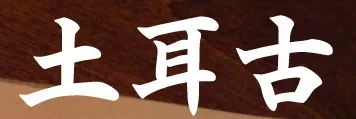
土国 is the abbreviation of 土耳古, as same as 米国 for 亜利加(US), 英国 for 吉利(UK).
 
Back
Top Bottom