

Navigation
Install the app
How to install the app on iOS
Follow along with the video below to see how to install our site as a web app on your home screen.
Note: This feature may not be available in some browsers.
More options
Style variation
System
Light
Dark

You are using an out of date browser. It may not display this or other websites correctly.
You should upgrade or use an alternative browser.
You should upgrade or use an alternative browser.
Need a word or phrase translated?
- Thread starter Buntaro
- Start date


- 26 Jul 2007
- 43
- 0
How can I say "I hope they like me"?

Charles Barkley
TNT Basketball Analyst
- 14 Jun 2007
- 560
- 12
Tokapi: Perhaps its just me, but maybe you did not word your 'question' explicitly enough? What exactly are you asking? Do you want to know what the first batch mean and are stating that you already know what the second batch mean?
まあ、ま-- these kind of sounds are something like 'yeah I guess,' 'pffh'--I believe they can range from dismissal of something, to a small show of discontent, to slight scoffing at someone/expressing some kind of opinion.'
まあ、ま-- these kind of sounds are something like 'yeah I guess,' 'pffh'--I believe they can range from dismissal of something, to a small show of discontent, to slight scoffing at someone/expressing some kind of opinion.'
Last edited:
Charles Barkley
TNT Basketball Analyst
- 14 Jun 2007
- 560
- 12
What do どんだけ and ばっちり (ばちり?) mean?


- 17 Sep 2005
- 6,017
- 1,970
Yes, you're right. It can also mean the blossoming of a flower.hello,
i hope you can help me.
what is the meaning of the word "emi"?
is it - a smile?
i read a few possibilities for meaning for this word and i need to know for sure, because i am looking for a name for my new born daughter.
Thank you in advance!
- 17 Sep 2005
- 6,017
- 1,970
どんだけ is written in hiragana.Don´t really know of this is the good thread to ask this,
But can someone tell my how I spell my name in どんだけ things?
Sorry, but really don't know how to say it, isn't the name Kanji or something? :?
Japanese has three different scripts: katakana (currently used mostly for foreign words and sounds), hiragana, and kanji.
What exactly would you like to write in hiragana or katakana, which is more likely than not the script that would correctly be used for your name?

xFanGirl
I'm just normal okay?
- 12 Aug 2007
- 513
- 6
どんだけ is written in hiragana.
Japanese has three different scripts: katakana (currently used mostly for foreign words and sounds), hiragana, and kanji.
What exactly would you like to write in hiragana or katakana, which is more likely than not the script that would correctly be used for your name?
I really don't know,
My name is Thirsa so,,,
I would like to know how they write it in Japans scripts,,,,
:
- 17 Sep 2005
- 6,017
- 1,970
Well, there's basically two ways you could go.I really don't know,
My name is Thirsa so,,,
I would like to know how they write it in Japans scripts
サーサ
or
サルサ
Personally, I would go with the first one, because the second one sounds more like "salsa". (Just for your knowledge, there is no "th" sound in Japanese, so they usually hear it as an "s" sound.)
- 17 Sep 2005
- 6,017
- 1,970
Yes, that is katakana.Ol read,
Thanks for explain it!
And whith script is this?
Katakana?
Hope I've been of some help!
xFanGirl
I'm just normal okay?
- 12 Aug 2007
- 513
- 6
Yeah!Sure you have been some help!Yes, that is katakana.
Hope I've been of some help!
I always wondering what my name was in Japans script and now i know it^^


epigene
相変わらず不束者です
- 10 Nov 2004
- 4,354
- 179
What do どんだけ and ばっちり (ばちり?) mean?
FYI どんだけ~ (with extended "ke") has fashionable usage originating from certain TV variety shows. It's supposed not to have any meaning in particular but is used in certain timing and situation which I cannot explain precisely here. In fact, I've heard it being used but do not fully comprehend its usage today. (Actually, I don't really care for it! :emoji_blush: )
https://ja.wikipedia.org/wiki/どんだけ〜
can someone translate the following ~
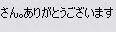
:emoji_nerd:
It means "thank you, [your name]."

undrentide
Japa'n vagyok
- 18 Jan 2006
- 3,652
- 310
okey did anyone saw The Last Samurai, the character Ujio (Sanada Hiroyuki) saids to Algren (Cruise Tom) a word what is in english, filthy pig, but it isn't buta, it started with an P and it ended on mono,teru or something else..... Can someone help me?
I don't think the word is likely to begin with "p".
Except modern words or "imported" words, basically Japanese word do not start with "p".
I haven't seen the film and don't know in what situation the word was uttered so this is my wild guess - could it be "kono uragiri-mono me!" (you traitor!) or something like that? "Kitanaiyatsu me!" is another possibility I can think of. ("me" here is to emphasize its preceeding word.)

namichidori
先輩
- 1 Oct 2007
- 22
- 1
I'm not sure, but...
To tokapi
Are you referring to some colloquial short phrases/expressions?
If so, I think they would be as follows:
-----------------------------------------------
ホント、ほんと (=really/indeed/I mean it)
It's more casual than 本当に、ほんとに.
(ex) ホント、びっくりしたよ。(I was really surprised!)
-----------------------------------------------
で、で~ (=and/so/then/and so/and then/well)
In many cases, it's a shorter and more casual version of それで、だから.
(ex-1) 明日テストがあるんだよ。で、今夜は行けないと思う。
I have a test tomorrow, and so I think I can't go there tonight.
(ex-2) まずお湯を沸かしてね。で、少し塩を入れるの。
Boil some water first, and then put some salt in it.
(ex-3) で?
And so? (What's your point?)
-----------------------------------------------
って (=は、とは)
Probably, you mean like the examples below.
Again, it's a very casual expression.
It can focus on the previous word.
(ex-1) 天ぷらっておいしいよね~。
Tempura is delicious, isn't it?
(ex-2) 四方山話って何ですか?
What is "yomoyamabanashi"?
-----------------------------------------------
ま (=well?)
If you mean a word used at the beginning of the sentence,
it would be a shorter version of まあ、まぁ、まー.
But we don't use ま to express some surprise like まあ、まぁ.
まあ、きれい。(Oh, it's beautiful.)
まぁ、ひどい。(Oh dear, it's terrible.)
We say it on a light note, like ま、いいか。
It has a nuance of acceptance/understanding(of the so-so situation, etc).
Also, it's slightly lukewarm, and apts to change the previous feeling.
(ex-1) ま、いいか。(=ま、いっか。)
Well, I think it's OK.
(ex-2)
母: 太郎がまだ帰ってこないのよ。
Mother: Taro has not back yet.
父: ま、そのうち帰るだろう。もう大人だし大丈夫だよ。
Father: Well, he will come back before long. It's OK. He's not a child anymore.
To tokapi
Are you referring to some colloquial short phrases/expressions?
If so, I think they would be as follows:
-----------------------------------------------
ホント、ほんと (=really/indeed/I mean it)
It's more casual than 本当に、ほんとに.
(ex) ホント、びっくりしたよ。(I was really surprised!)
-----------------------------------------------
で、で~ (=and/so/then/and so/and then/well)
In many cases, it's a shorter and more casual version of それで、だから.
(ex-1) 明日テストがあるんだよ。で、今夜は行けないと思う。
I have a test tomorrow, and so I think I can't go there tonight.
(ex-2) まずお湯を沸かしてね。で、少し塩を入れるの。
Boil some water first, and then put some salt in it.
(ex-3) で?
And so? (What's your point?)
-----------------------------------------------
って (=は、とは)
Probably, you mean like the examples below.
Again, it's a very casual expression.
It can focus on the previous word.
(ex-1) 天ぷらっておいしいよね~。
Tempura is delicious, isn't it?
(ex-2) 四方山話って何ですか?
What is "yomoyamabanashi"?
-----------------------------------------------
ま (=well?)
If you mean a word used at the beginning of the sentence,
it would be a shorter version of まあ、まぁ、まー.
But we don't use ま to express some surprise like まあ、まぁ.
まあ、きれい。(Oh, it's beautiful.)
まぁ、ひどい。(Oh dear, it's terrible.)
We say it on a light note, like ま、いいか。
It has a nuance of acceptance/understanding(of the so-so situation, etc).
Also, it's slightly lukewarm, and apts to change the previous feeling.
(ex-1) ま、いいか。(=ま、いっか。)
Well, I think it's OK.
(ex-2)
母: 太郎がまだ帰ってこないのよ。
Mother: Taro has not back yet.
父: ま、そのうち帰るだろう。もう大人だし大丈夫だよ。
Father: Well, he will come back before long. It's OK. He's not a child anymore.
namichidori
先輩
- 1 Oct 2007
- 22
- 1
In which part of the movie?okey did anyone saw The Last Samurai, the character Ujio (Sanada Hiroyuki) saids to Algren (Cruise Tom) a word what is in english, filthy pig, but it isn't buta, it started with an P and it ended on mono,teru or something else..... Can someone help me?
I've seen it a few times, but can't remember the details...
Could it be "Bureimono!" or something?
:samurai:
Not, exactly. But I think it's not so bad.Ok how would i say, in a kind of flirtatious sense: "If i were in Japan during the time of autumn, i would enjoy the time spent with you during the autumn color(紅葉)"
i would have said it like this, would you agree?
もし日本にいれば、紅葉の時にあなたと過ごして楽しめると思う。
(original) もし日本にいれば、紅葉の時にあなたと過ごして楽しめると思う。
This Japanese sentence sounds like:
"If I am in Japan <next month/sometime in the future>, I will enjoy the time spent with you during the autumn color." So...
(revised) もし日本にいれば、紅葉の時[or季節]をあなたと(過ごして)楽しめるのに。
This one might be better. "のに" implies (in this sentence) that you want to do so, but it's impossible because you're not in Japan now.
So it would be closer to what you want to say, I think.
However, the person who heard the original one probably can guess what you want to say, with the context.

Charles Barkley
TNT Basketball Analyst
- 14 Jun 2007
- 560
- 12
同罪 --> is this word used in any way besides sentences like 'おまえも同罪だ'?
Similar threads


- Replies
- 11
- Views
- 115K