

Ah, I see now. Thanks, Epigene.However, ってか is already an established colloquialism among young people, so you can use it as it is--especially if you belong to the under-40 crowd...
Navigation
Install the app
How to install the app on iOS
Follow along with the video below to see how to install our site as a web app on your home screen.
Note: This feature may not be available in some browsers.
More options
Style variation
System
Light
Dark

You are using an out of date browser. It may not display this or other websites correctly.
You should upgrade or use an alternative browser.
You should upgrade or use an alternative browser.
Need a word or phrase translated?
- Thread starter Buntaro
- Start date

Elizabeth
先輩
- 22 Apr 2003
- 9,839
- 135
It makes sense to me, in Japanese at least, that for reporting the contents of your thoughts you would retain the present tense as it was experienced at the time of its occurance. Only the having of the thought is past, what was actually perceived is left as it was initially felt. Although with a verb present tense + 思った could be translated I thought that it would be (something)....undrentide: I saw in your post where you rewrote my example about tasting basashi, that you changed 「本当においしかったと思った」 into 「本当においしいと思った」
As I was writing it, I remember waffling back and forth between the past and present tense for おいしい. Why did you use it in this case? Are there rules for when to use past and when to use present?
If you change it to おいしかったと思います。 would that imply a contast between what was felt at the time (not delicious) and the present (now was thought to be delicious) ?
There have been other threads on this. I just can't find them right now. The damn search function gets worse and worse every day...

Last edited:

undrentide
Japa'n vagyok
- 18 Jan 2006
- 3,652
- 310
undrentide: I saw in your post where you rewrote my example about tasting basashi, that you changed 「本当においしかったと思った」 into 「本当においしいと思った」
As I was writing it, I remember waffling back and forth between the past and present tense for おいしい. Why did you use it in this case? Are there rules for when to use past and when to use present?
と here is used to quote the words, thought, etc.
So there's no difference between these two sentences;
おいしいと思った。
「おいしい」と思った。
Unlike English, the tense of the verb (思った) does not affect the tense of what quoted.
I thought it was delicious.
I thought "it is delicious".
Now the difference between those two sentences:
おいしいと思った。
I thought "it is delicious"
(you thought "delicious" while you are still eating/tasting the food)
おいしかったと思った。
I thought "it was delicious"
(you thought "delicious" when you've already eaten it, so the fact you felt "delicious" was already the past when you thought about it.)


Fuumei
眼鏡が要る
- 18 Sep 2005
- 242
- 1
I'll try to get away with asking two questions in one post. Let's hope they are both easy to answer. The first is, as you see below:
あるところに、 4ひきの小さな兎がいました。名前は、
プロプシーに
モプシーに
カトンテールに
ビーターといいました。
Each name of the rabbits have the "に" after them. Does that have the meaning of "あるところに" as "(in) a certain time.."? That's as close as I can guess.
Finally.. "どさりとよこになると" from the text below. Unfortunately I have no Kanji to provide as I retyped the entire short story as it was so I could print it out to study (with notes). However this is one of the phrases I can't make heads or tails of. Any ideas?
そして、くだくだに 草臥れていたので、兎穴の中の柔らかい砂の上に、
どさりとよこになると、目をつぶりました
あるところに、 4ひきの小さな兎がいました。名前は、
プロプシーに
モプシーに
カトンテールに
ビーターといいました。
Each name of the rabbits have the "に" after them. Does that have the meaning of "あるところに" as "(in) a certain time.."? That's as close as I can guess.
Finally.. "どさりとよこになると" from the text below. Unfortunately I have no Kanji to provide as I retyped the entire short story as it was so I could print it out to study (with notes). However this is one of the phrases I can't make heads or tails of. Any ideas?
そして、くだくだに 草臥れていたので、兎穴の中の柔らかい砂の上に、
どさりとよこになると、目をつぶりました
undrentide
Japa'n vagyok
- 18 Jan 2006
- 3,652
- 310
どさり is onopatopoeia for the sound that something with weight is dropped on the ground. (Something not hard or rigid - something like human body, animal, bag of flours, sometimes heap of papers, books, etc.)Finally.. "どさりとよこになると" from the text below. Unfortunately I have no Kanji to provide as I retyped the entire short story as it was so I could print it out to study (with notes). However this is one of the phrases I can't make heads or tails of. Any ideas?
そして、くだくだに 草臥れていたので、兎穴の中の柔らかい砂の上に、
どさりとよこになると、目をつぶりました
You can translate it as "thud" in English, I guess.
どさりとよこになる(どさりと横になる)=どさり(という音を立てて)横になる
横になる means to lay oneself down. To lie down.
So the rabbit was very tired, it lied down, as if fallen onto the floor.
undrentide
Japa'n vagyok
- 18 Jan 2006
- 3,652
- 310
日本人学生に、「月曜日働きますか?」というのは未来形じゃなくて、現在形の文だと教えられた。
なぜそれを言ったかと思います....
何の時を表す言葉を追加しなくても、未来形にもなってしまうことができると思いますけど。
この文を読んだだけで、未来形と現在形の区別がつかないでしょう。
今も月曜日働いているかもしれないし、未来も月曜日働くかもしれません。
状況やによって使い分けるものですね。。。
日本語の文法に未来形とか現在形というものが本当にあるかは、ちょっと疑問ですね。
そうですね、少なくとも英語のような時制という概念は文法としてはないような気がします。
どちらかというと、すでに完了しているかいないか、のふたつのような気がします。
「気がする」だけで正確なところはわかりませんけど・・・
Elizabeth
先輩
- 22 Apr 2003
- 9,839
- 135
はい。返事をしてくれてありがとうございます!そうですね、少なくとも英語のような時制という概念は文法としてはないような気がします。
どちらかというと、すでに完了しているかいないか、のふたつのような気がします。
「気がする」だけで正確なところはわかりませんけど・・・
確かに、どういう風に言うかどういう動詞かによって違いますが、「働く」の場合には、Am working というなら、「どこかで働いている」を使われなければならないですね・・「どこかで働く」は、Will work という意味になりますね。
少なくとも、今回の場合は、文法は厳密さを求めると思うですけど。。
Fuumei
眼鏡が要る
- 18 Sep 2005
- 242
- 1
どさり is onopatopoeia for the sound that something with weight is dropped on the ground. (Something not hard or rigid - something like human body, animal, bag of flours, sometimes heap of papers, books, etc.)
You can translate it as "thud" in English, I guess.
どさりとよこになる(どさりと横になる)=どさり(という音を立てて)横になる
横になる means to lay oneself down. To lie down.
So the rabbit was very tired, it lied down, as if fallen onto the floor.
Oh wow, fantastic! Thanks very much for explaining in such detail. I guess my second question took more effort to explain than I thought.

Fuumei
眼鏡が要る
- 18 Sep 2005
- 242
- 1
Bの最初の発話はAの後半の繰り返しにした。
[Aの後半の繰り返しにした。]
I realize "ni shita" can mean "made into" but obviously that doesn't fit here. Is it something like "taisetsu ni shita"? Though, I still to this day don't know how to explain that meaning, even though I "feel" the general idea of what it means. If anyone can give a simple explanation, I would be truly grateful.
[Aの後半の繰り返しにした。]
I realize "ni shita" can mean "made into" but obviously that doesn't fit here. Is it something like "taisetsu ni shita"? Though, I still to this day don't know how to explain that meaning, even though I "feel" the general idea of what it means. If anyone can give a simple explanation, I would be truly grateful.
undrentide
Japa'n vagyok
- 18 Jan 2006
- 3,652
- 310
に can be used to list up things.あるところに、 4ひきの小さな兎がいました。名前は、
プロプシーに
モプシーに
カトンテールに
ビーターといいました。
Each name of the rabbits have the "に" after them. Does that have the meaning of "あるところに" as "(in) a certain time.."? That's as close as I can guess.
e.g.
このサラダには何が入っているの?
ジャガイモに、にんじんに、ピーマンに、とうもろこしに、それからグリーンピースも入っていますよ。
あるところに is not time but place.
むかしむかし、あるところに… is a very common phrase used to start a story, folk tales, etc.
undrentide
Japa'n vagyok
- 18 Jan 2006
- 3,652
- 310
The sample sentence sounds very strange to me, as if a sentence translated from English word by word...Bの最初の発話はAの後半の繰り返しにした。
[Aの後半の繰り返しにした。]
I realize "ni shita" can mean "made into" but obviously that doesn't fit here. Is it something like "taisetsu ni shita"?
I guess that
Bの最初の発話はAの後半の繰り返しにした。
can be rephrased as
Bは話し始めはAの話の後半を繰り返すことにした。
(Without the context I'm not sure how accurate my interpretation is. To me it sounds like people have to make some kind of speech in turn, and B is to speak after A. Maybe B is lazy or just did not have a clue how to start, so he decided to repeat what A mentioned in the latter part of his speech.)

StandAlone2323
~tanoshii
- 7 Jun 2007
- 53
- 1
i have one. what does "恋じゃない" mean. i think thats the right "koi". if not, im sorry for wasting your time.


Charles Barkley
TNT Basketball Analyst
- 14 Jun 2007
- 560
- 12
Perhaps 三時間しか寝られないほど would be more natural? だけ seems to be used for more objective/unemotional cases, whereas shika is used to emphasis a negative small amount.
Fuumei
眼鏡が要る
- 18 Sep 2005
- 242
- 1
The sample sentence sounds very strange to me, as if a sentence translated from English word by word...
:emoji_blush:
I guess that
Bの最初の発話はAの後半の繰り返しにした。
can be rephrased as
Bは話し始めはAの話の後半を繰り返すことにした。
(Without the context I'm not sure how accurate my interpretation is. To me it sounds like people have to make some kind of speech in turn, and B is to speak after A. Maybe B is lazy or just did not have a clue how to start, so he decided to repeat what A mentioned in the latter part of his speech.)
I considered at one point it might mean "decided" but it sounded so strange that I thought for sure that wasn't it. But it seems the more I provide examples to translate from this book the more I realize I might be studying from something I shouldn't be. It's a bit hard to find a good intermediate book I suppose. After completing Japanese for Busy People 1, 2 & 3, where I should go from there has always bothered me. Anyway, Sorry for going off track there. Thanks again Undrentide-san. :emoji_heart_eyes:
Charles Barkley
TNT Basketball Analyst
- 14 Jun 2007
- 560
- 12
Couple of small questions:
なお--what exactly does this mean? Is it always the same as mada? Is it a more formal word? It always throws me since it starts a sentence and sounds like 'Now...'
勇気のある__ In class I frequently say, 'Volunteers? Volunteers? Brave volunteers?" and want to be able to quickly repeat the word for brave afterwards so they know what I am talking about. In english, this would be a semi-joking, semi-serious way of making a further plea for volunteers. But I fear either the translation of 勇気のある, or just the whole situation itself, isn't working, because I'm usually greeted by blankish stares. If you heard the following, would it make any sense:
'Volunteers? Volunteers? Brave volunteers? 勇気のある volunteers? Brave volunteers?'
Also, how did you high level speakers internalize causative/passive? I am struggling to get them down. For passive, right now I am making a list of verb that are typically used in passive situations (ie 行われる) and that's helping a bit, but while speaking...that's another story. Any advice?
なお--what exactly does this mean? Is it always the same as mada? Is it a more formal word? It always throws me since it starts a sentence and sounds like 'Now...'
勇気のある__ In class I frequently say, 'Volunteers? Volunteers? Brave volunteers?" and want to be able to quickly repeat the word for brave afterwards so they know what I am talking about. In english, this would be a semi-joking, semi-serious way of making a further plea for volunteers. But I fear either the translation of 勇気のある, or just the whole situation itself, isn't working, because I'm usually greeted by blankish stares. If you heard the following, would it make any sense:
'Volunteers? Volunteers? Brave volunteers? 勇気のある volunteers? Brave volunteers?'
Also, how did you high level speakers internalize causative/passive? I am struggling to get them down. For passive, right now I am making a list of verb that are typically used in passive situations (ie 行われる) and that's helping a bit, but while speaking...that's another story. Any advice?

Glenn
一切皆苦
- 8 Jan 2004
- 7,842
- 200
From the Progressive 和英辞典:
なお(尚)
〔まだ〕
出発の時が来てもなお彼は迷っていた。
He was still wavering even when it was time to leave.
春なお浅い山々
mountains not yet touched by spring
〔さらに〕
この方がなおよい。
This is even better (better still).
なおいっそう悪いことに
to make matters worse
憎んでもなおあまりある敵
an enemy one cannot hate too much
ワープロも使えないしコンピュータはなおのこと全然だめです。
I can't even use a word processor, much less a computer.
なお申し添えますが私は彼とは何の関係もございません。
Let me tell you further that I have nothing to do with him.
なお議論の余地がある。
There is room for further discussion.
As for the passive/causative thing, I would suggest looking at lots and lots of sentences that use them and really understanding what they're saying. They should become internalized in the process naturally.
なお(尚)
〔まだ〕
出発の時が来てもなお彼は迷っていた。
He was still wavering even when it was time to leave.
春なお浅い山々
mountains not yet touched by spring
〔さらに〕
この方がなおよい。
This is even better (better still).
なおいっそう悪いことに
to make matters worse
憎んでもなおあまりある敵
an enemy one cannot hate too much
ワープロも使えないしコンピュータはなおのこと全然だめです。
I can't even use a word processor, much less a computer.
なお申し添えますが私は彼とは何の関係もございません。
Let me tell you further that I have nothing to do with him.
なお議論の余地がある。
There is room for further discussion.
As for the passive/causative thing, I would suggest looking at lots and lots of sentences that use them and really understanding what they're saying. They should become internalized in the process naturally.
Elizabeth
先輩
- 22 Apr 2003
- 9,839
- 135
It means literally "It isn't love." I'm assuming that's what you intended. But this word for love is like to be in love (have a romantic attachment), fall in love or having a passionate affair with (someone).I have one. what does "恋じゃない" mean. I think that's the right "koi". If not, I'm sorry for wasting your time.
So it isn't a waste of our time, without more explanation I'm not sure if it's natural or not for what you want to say as "koi desu." :emoji_heart_eyes:
Fuumei
眼鏡が要る
- 18 Sep 2005
- 242
- 1
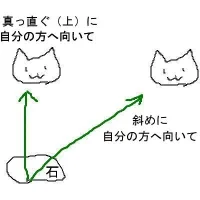
すると石の下から斜に自分の方へ向いて青い茎が伸びて来た。
This sentence is separated into two phrases, by the word "向いて", however, I'm not sure if the nuance below exists in Japanese or not, so I'm a bit wondering how to properly see this sentence.
My gut tells me that this -te form is signifying
"(BY) facing toward me slantwise from underneath the stone, [a green stalk came growing]"
But, another part of me thinks it could also be read as:
"Facing toward my direction slantwise FROM beneath the stone, a green stalk came growing."
Once again I find myself thinking too hard, but sometimes it helps. Does anyone have a clear idea on how to see this?
This sentence is separated into two phrases, by the word "向いて", however, I'm not sure if the nuance below exists in Japanese or not, so I'm a bit wondering how to properly see this sentence.
My gut tells me that this -te form is signifying
"(BY) facing toward me slantwise from underneath the stone, [a green stalk came growing]"
But, another part of me thinks it could also be read as:
"Facing toward my direction slantwise FROM beneath the stone, a green stalk came growing."
Once again I find myself thinking too hard, but sometimes it helps. Does anyone have a clear idea on how to see this?
undrentide
Japa'n vagyok
- 18 Jan 2006
- 3,652
- 310
すると石の下から斜に自分の方へ向いて青い茎が伸びて来た。すると石の下から斜に自分の方へ向いて青い茎が伸びて来た。
This sentence is separated into two phrases, by the word "向いて", however, I'm not sure if the nuance below exists in Japanese or not, so I'm a bit wondering how to properly see this sentence.
My gut tells me that this -te form is signifying
"(BY) facing toward me slantwise from underneath the stone, [a green stalk came growing]"
But, another part of me thinks it could also be read as:
"Facing toward my direction slantwise FROM beneath the stone, a green stalk came growing."
Once again I find myself thinking too hard, but sometimes it helps. Does anyone have a clear idea on how to see this?
すると then
石の下から from beneath the stone
(so the root of this plant is under the stone)
斜に slanting
(there's some distance between "I" and the stone, so my face is not just above the stone, then when the plant extend itself towards me, that means the stalk cannot go straight upwards but slanting: see the attached image)
自分の方へ向いて in my direction, towards me,
青い茎が a green stalk
伸びて来た。 was stretching/extending/growing (来る here means it is coming towards the speaker, "come" is related to the point of the speaker's view.)
Attachments
StandAlone2323
~tanoshii
- 7 Jun 2007
- 53
- 1
It means literally "It isn't love." ... I'm not sure if it's natural or not for what you want to say as "koi desu."
oh, actually, 倖田來未 said it to Fergie when they did a photo shoot together (for some reason) and i was just wondering what it meant.
anyway, than you much
Fuumei
眼鏡が要る
- 18 Sep 2005
- 242
- 1
すると石の下から斜に自分の方へ向いて青い茎が伸びて来た。
すると then
石の下から from beneath the stone
(so the root of this plant is under the stone)
斜に slanting
(there's some distance between "I" and the stone, so my face is not just above the stone, then when the plant extend itself towards me, that means the stalk cannot go straight upwards but slanting: see the attached image)
自分の方へ向いて in my direction, towards me,
青い茎が a green stalk
伸びて来た。 was stretching/extending/growing (来る here means it is coming towards the speaker, "come" is related to the point of the speaker's view.)
Ah I see! So just to clarify, "向いて" in this sense isn't stating that the stalk came out growing BY coming from under the stone. I often get confused with the -te form in this area. One (maybe much like this) that was difficult for me to understand at first was "Nani o shite asobou?" 'BY(suru -te form) doing what, shall we play?" I suppose I just haven't had enough of those sentences to sharpen up this area yet. As always, your bunny drawings and explanations are one of a kind. Thanks so much undrentide-san. :emoji_bow:
undrentide
Japa'n vagyok
- 18 Jan 2006
- 3,652
- 310
どういたしまして。  :
:
One of the many usage, ~て can be used to describing "while (at the same time) doing ~".
向く means "to face".
So the stalk is facing (the direction of) the speaker and growing.
自分の方 my direction
向いて is facing
I used the word "towards" because of the above plus there's movement, i.e. growing/extending, thus towards.
If the verb does not mean the movement from one place to another, I'd translate it as "facing" instead.
e.g.
自分の方へ向いて伸びて来た growing/extending towards me.
自分の方へ向いて笑った smiled facing me/in my direction
:It has nothing to do with "where it is coming from".So just to clarify, "向いて" in this sense isn't stating that the stalk came out growing BY coming from under the stone.
One of the many usage, ~て can be used to describing "while (at the same time) doing ~".
向く means "to face".
So the stalk is facing (the direction of) the speaker and growing.
自分の方 my direction
向いて is facing
I used the word "towards" because of the above plus there's movement, i.e. growing/extending, thus towards.
If the verb does not mean the movement from one place to another, I'd translate it as "facing" instead.
e.g.
自分の方へ向いて伸びて来た growing/extending towards me.
自分の方へ向いて笑った smiled facing me/in my direction
Elizabeth
先輩
- 22 Apr 2003
- 9,839
- 135
私もそう思います。とても難しそうな本ですね。I considered at one point it might mean "decided" but it sounded so strange that I thought for sure that wasn't it. But it seems the more I provide examples to translate from this book the more I realize I might be studying from something I shouldn't be. It's a bit hard to find a good intermediate book I suppose. After completing Japanese for Busy People 1, 2 & 3, where I should go from there has always bothered me. Anyway, Sorry for going off track there. Thanks again Undrentide-san.

それはあまり役に立たないものかもしれませんね。。。
自分の勉強不足をちょっと感じると思いますが。。。私にとって、ここの質問に答えたり、日本語で書き込んだり、しているのは、勉強方法のなかで最も役に立ちます。Fuumeiさんの役に立つような方法を使ってくださいね。
すぐ見つけたらいい!!!
勉強方法のすごい名案を(が?)思いつけば、私におしえてください。
フォーラムを参加するのは、言葉を覚えるのにとても便利ですね
Last edited:
Similar threads


- Replies
- 11
- Views
- 115K