Need a word or phrase translated?

I see. But what kind of bullet へなちょこ玉 is?
へなちょこ means powerless, unskilled or something along the line in that case. It's used to emphasize his skill/power as well.


I am getting a tattoo soon and would like the phrase "Continuation is power". Google translate gave me 継続が力です. I wanted to know if that was the correct translation.
It's not incorrect, but the classical version 継続は力なり is the most common translation.
 
Thanks so much!! I was trying to translate another part of a sentence, but the last part is really confusing me for some reason: 夫として父として御身達に之れから段々幸福を与え得るだろうと思った矢先き此の大戦争で、
 
思った矢先に此の大戦争が起きて makes sense?
 
I'm a bit confused with こういう側面に関してはね part. What does the speaker means by こういう側面? One side of 理紗's character? Or it shows what speaker was thinking about?

すごく健康的に明るく爽やかにニコニコとしている。僕はふと思う。 いや、なんとなく思ってたのだけれど、理紗はものすごいアホなんじゃないだろうか。状況というものを把握していないのではないのだろうか。いや、こういう側面に関してはね。 だから、ここは彼女が気がつくくらい、もっと大きく吊り橋を揺らさなければならないのだきっと。
 
It refers to a side of the situation they are in or the speaker is trying to occur. The speaker is swinging a suspension bridge for some reason(to scare her and make her cling to him?), no?
 
The speaker in a sort of a pinch, he is hiding from police. And he simply wants 理紗 to understand it.
If こういう側面 show a side of the situation, then he means that she is lacking when it comes to situation like this, in this kind of situation?
 
Hello everyone . I`m new here and i have a little question . Could you provide me the japanese translation(kanji) for the lonely dragon or the lone dragon?
 
The speaker in a sort of a pinch, he is hiding from police. And he simply wants 理紗 to understand it.
If こういう側面 show a side of the situation, then he means that she is lacking when it comes to situation like this, in this kind of situation?
So 吊り橋を揺らす is just a metaphor?
It seems to me the writer wanted to say 局面, this kind of (critical) situation.

Hello everyone . I`m new here and i have a little question . Could you provide me the japanese translation(kanji) for the lonely dragon or the lone dragon?
孤龍 or 独龍
 
Oh, I see what you mean now. Seems I missed a bit 「吊り橋を揺らす」. Thanks for help.
 
what is the meaning of むかふる物。
and the meaning of 栖とす。

from the phrase 馬の口とらえて老をむかふる物は日々旅にして旅を栖よす。
 
むかふる and 栖とす are the classical forms of むかえる(=迎える) and 栖とする, respectively.

The full version has a typo, by the way.
 
I can't grasp the meaning of the part in bold. Does the speaker talks about the profit of bringing him harm? Context: the speaker suddenly was putted to sleep. Mostly likely with some drug. And now that he has woken, he's trying to figure out what happened.

僕を眠らせた誰かがいるとして、何もしてないというのはどういうことだ?
いや、それ以前にーー僕に危害を加えたところで、得をする人間がどこにるというのだろうか。
この僕に。
父親からも見放され、生まれ落ちた地さえも遥か、踏むことすら叶わないという、この僕に。
・・・・・・もっとも、何も無いなら無いで、それが一番ではある。
「あるんだけど、ね」

いまいち、どうにも、不可解で気味が悪い。
 
Hello i need this translated to English
明日死ぬかのように生きよ。永遠に生きるかのように学べ。

I very much appreciate your help

A little background i am going to get a tattoo in Japanese but i want to make sure the grammar is correct first.
I wanted to say Live as if you were to die tomorrow. Learn as if you were to live forever
 
Last edited:
That's correct. Wikiquote has another translation version of the Mahatma Gandhi's maxim.

明日死ぬかのように生きろ。永劫永らえるかのように学べ。
マハトマ・ガンジー - Wikiquote

I personally prefer a more classical version; 明日死ぬが如く生きよ。永遠に生きるが如く学べ。
 
Hi,
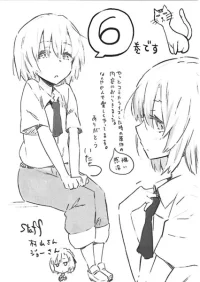
I have a problem understanding one sentence in a manga. It's at the end, a message from the author of Haganai the manga (based on a light novel of the same title).
I can't figure out the sentence: やっとコミカライズした時の原作の内容に追いつきました。
I attached the whole of the page for context. In what sense does the author mean he caught up with the original?

I would be very grateful for any help.
 

Attachments

  • haganai6.webp
    haganai6.webp
    37.7 KB · Views: 129
The comic has reached to the point in the original story at the time when they started making it into the comic. The original story continued (or still continues) as a serial story, right?
(The original novel started in August, 2009. The comic started in July, 2010, and the volume 4 of the original novel was already published at that time. The author of the manga says that now the comic has reached to the episodes written in the volume 4 of the original novel.)
 
Yes, in the past 両替屋 were money lenders, and shops that exchanged rice for cash, and later they exchanged cash issued by individual states in Japan into the national currency issued around the time of the Meiji era . So they were the banks of the Edo era and into the Meiji era. Once Japan modernized, ryōgaeya were replaced by (or evolved into) modern banks.
Nowadays, unless you are talking about past history or a period drama, ryōgaeya refers basically to foreign currency exchange shops (bureau de change).
 
I should say, the ryōgaeya took in rice from samurai , and gave them cash in return. This way, the ryōgaeya came to manipulate the rice markets as they had near monopoly control of rice. Since they also controlled the rate of exchange between the various local states and the national treasury, they grew very rich. I think this is how Mitsubishi got started.
Actually, I think the morning drama on NHK right now is set during this time...maybe this is the one you are referring to?
 
Last edited:
Back
Top Bottom