

Navigation
Install the app
How to install the app on iOS
Follow along with the video below to see how to install our site as a web app on your home screen.
Note: This feature may not be available in some browsers.
More options
Style variation
System
Light
Dark

You are using an out of date browser. It may not display this or other websites correctly.
You should upgrade or use an alternative browser.
You should upgrade or use an alternative browser.
Need a word or phrase translated?
- Thread starter Buntaro
- Start date

Macrobiotic
Sempai
- 12 Oct 2012
- 230
- 6
Thanks for the answers.
What is the exact meaning of the expression 数年にも及ぶ? I read it as maybe "amounting to as much as several years"
Also, how does the word 認識 translate when used in contexts such as these?
もしそういうものがあったというなら、韓国の皆さんにも出してもらいたい」と述べ、旧日本軍や官憲による「強制連行」はなかったとの認識を示した。
聴取は非公開で行われ、細野氏によると、細野氏は事故直後、東電が政府に対して福島第一原発からの「全面撤退」を申し出ていたとの認識を説明した。
What is the exact meaning of the expression 数年にも及ぶ? I read it as maybe "amounting to as much as several years"
Also, how does the word 認識 translate when used in contexts such as these?
もしそういうものがあったというなら、韓国の皆さんにも出してもらいたい」と述べ、旧日本軍や官憲による「強制連行」はなかったとの認識を示した。
聴取は非公開で行われ、細野氏によると、細野氏は事故直後、東電が政府に対して福島第一原発からの「全面撤退」を申し出ていたとの認識を説明した。


- 22 Feb 2008
- 18,266
- 4,926
Roughly, yes. も implies that the span is relatively/too long.What is the exact meaning of the expression 数年にも及ぶ? I read it as maybe "amounting to as much as several years"
understanding/perceptionAlso, how does the word 認識 translate when used in contexts such as these?
もしそういうものがあったというなら、韓国の皆さんにも出してもらいたい」と述べ、旧日本軍や官憲による「強制連行」はなかったとの認識を示した。
聴取は非公開で行われ、細野氏によると、細野氏は事故直後、東電が政府に対して福島第一原発からの「全面撤退」を申し出ていたとの認識を説明した。
It can be said both "so/yes" and "not so/no". or something along the lineCould someone translate this for me?
"そう" だとも "そうでない" とも言える。
Macrobiotic
Sempai
- 12 Oct 2012
- 230
- 6
Thanks again for good answers.
Here are some expressions I don't understand when used like this.
夜ともなれば彼は好奇心を抱いて星空を見上げたこともあろうと思う。
The translation from the example database reads as follows: "There were times, at falling night, when he looked up with curiosity to the stars.".
Here. instead of ともなれば, there's ともなれ. Do they mean the same thing?
敗戦ともなれが戦勝国によりなにかと規制がかかるが旭日旗はなんら規制対照には
なっていない。
Here are some expressions I don't understand when used like this.
夜ともなれば彼は好奇心を抱いて星空を見上げたこともあろうと思う。
The translation from the example database reads as follows: "There were times, at falling night, when he looked up with curiosity to the stars.".
Here. instead of ともなれば, there's ともなれ. Do they mean the same thing?
敗戦ともなれが戦勝国によりなにかと規制がかかるが旭日旗はなんら規制対照には
なっていない。
- 22 Feb 2008
- 18,266
- 4,926
あろう is a bit classical way of saying the presumptive form あるだろう.
敗戦ともなれが is a typo of 敗戦ともなれば. Those are the same.
敗戦ともなれが is a typo of 敗戦ともなれば. Those are the same.
Macrobiotic
Sempai
- 12 Oct 2012
- 230
- 6
Thanks Toritoribe. About ともなれば more specifically. In 夜ともなれば it's used with a kind of "at night" meaning, from what I understand? In 敗戦ともなれば I read it more like "if/when losing a war/if it comes to that" etc. What is the literal meaning and why is it used like this? なれば should mean "if it becomes". In the case with 夜ともなれば is this just a way of expression which doesn't really have a true equivalent in english, because in english the literal meaning doesn't make sense, and the english translation therefore becomes "at night" to make the text readable?
- 22 Feb 2008
- 18,266
- 4,926
Your interpretation is correct. とも is an emphasized form of と, and ~となれば is almost the same as ~になれば, ~になったら. Thus, 夜ともなれば literally means "when night comes".
夢中になる
muchuu ni naru
Thank you.
Macrobiotic
Sempai
- 12 Oct 2012
- 230
- 6
Thanks for a good explanation and translation.
Here's something I'm unsure about. The two んで in this sentence, would they be ので in less casual speech, with the second maybe being というので? The more logical thing though would be that the first んで is just a て-form of だ without a "because" meaning, otherwise it's like two "because" which makes no sense to me really.
二体の、美しい女神像が置かれていた。
あんまり神々しいんで
鉱山の守り神に違いねぇってんで
わしら鉱員は、毎日祈りを
欠かさなかったもんじゃが・・・・・・
I understand it roughly as someone explaining there were two beautiful goddess statues which seemed very solemn and (by the miners) where interpreted as the guardian deities of the mine and that the miners for this reason would do their prayers without fail every day.
What I am unsure of here is the exact grammar and how the sentences with the んで parts fit together. For this reason I can't make an accurate translation made like a quote, even though I understand the general picture here.
Here's something I'm unsure about. The two んで in this sentence, would they be ので in less casual speech, with the second maybe being というので? The more logical thing though would be that the first んで is just a て-form of だ without a "because" meaning, otherwise it's like two "because" which makes no sense to me really.
二体の、美しい女神像が置かれていた。
あんまり神々しいんで
鉱山の守り神に違いねぇってんで
わしら鉱員は、毎日祈りを
欠かさなかったもんじゃが・・・・・・
I understand it roughly as someone explaining there were two beautiful goddess statues which seemed very solemn and (by the miners) where interpreted as the guardian deities of the mine and that the miners for this reason would do their prayers without fail every day.
What I am unsure of here is the exact grammar and how the sentences with the んで parts fit together. For this reason I can't make an accurate translation made like a quote, even though I understand the general picture here.
- 22 Feb 2008
- 18,266
- 4,926
Those are both the explanatory の/ん, i.e., "because", and you are correct about ってんで is というので.
Because the two goddess statues were very solemn, the miners thought they(= two goddess statues) must be the guardians of the mine.
Because they (= two goddess statues) must be the guardians of the mine, the miners prayed to them everyday.
Because the two goddess statues were very solemn, the miners thought they(= two goddess statues) must be the guardians of the mine.
Because they (= two goddess statues) must be the guardians of the mine, the miners prayed to them everyday.
Macrobiotic
Sempai
- 12 Oct 2012
- 230
- 6
Thanks.
This is a comment which was made to a newspaper article. There are several expressions I'm unsure about.
自衛隊の戦力をもってすれば、シナのレベルの低い海軍は容易に撃退できます。なのでもしシナが戦争でも始めてくれればきっちり白黒つけられます。私自身が喜んで尖閣に乗り込んで上陸しようとするゴキブリ退治をしましょう。
Only translation I found for なのでもし was through a translating software, needless to say a generally unreliable source, and it translated this expression as "if that's the case".
As for きっちり白黒つけられます, does the black and white refer to "making something appear black and white" as in "justifying ones retaliation" or something. This is what I interpret it as based on the context. Like "if China fires first and starts a war, we can go all out on them without looking like the bad guys".
The つけられます in this case, is it "to be able to do" of つける rather than a passive つける?
This is a comment which was made to a newspaper article. There are several expressions I'm unsure about.
自衛隊の戦力をもってすれば、シナのレベルの低い海軍は容易に撃退できます。なのでもしシナが戦争でも始めてくれればきっちり白黒つけられます。私自身が喜んで尖閣に乗り込んで上陸しようとするゴキブリ退治をしましょう。
Only translation I found for なのでもし was through a translating software, needless to say a generally unreliable source, and it translated this expression as "if that's the case".
As for きっちり白黒つけられます, does the black and white refer to "making something appear black and white" as in "justifying ones retaliation" or something. This is what I interpret it as based on the context. Like "if China fires first and starts a war, we can go all out on them without looking like the bad guys".
The つけられます in this case, is it "to be able to do" of つける rather than a passive つける?
Macrobiotic
Sempai
- 12 Oct 2012
- 230
- 6
Thank you Mike Cash for clarifying.
- 22 Feb 2008
- 18,266
- 4,926
白黒(を)つける is an idiom, meaning "to judge/settle which is right/correct".
And yes, the つけられる is the potential.
And yes, the つけられる is the potential.
Macrobiotic
Sempai
- 12 Oct 2012
- 230
- 6
Thank you for yet another helpful reply Toritoribe.
- 22 Feb 2008
- 18,266
- 4,926
The writer is definitely a right-winger.I find it very interesting the writer chose to use シナinstead of 中国.
Could that be a not-so-subtle reminder of the days when Japan was militarily whipping China's butt?

Elizabeth
先輩
- 22 Apr 2003
- 9,839
- 135
「~ともなると」is similar as well. It looks like an expression that should mainly be used in written language but is somehow often found mixed in with informal final verbs, which is inconsistent with the rest of the sentence. Perhaps this is the casual language used in impersonal written documents, such as newspapers and theses. :?Your interpretation is correct. とも is an emphasized form of と, and ~となれば is almost the same as ~になれば, ~になったら. Thus, 夜ともなれば literally means "when night comes".
- 31 Oct 2012
- 5
- 0
Hi,
just for my curiosity, are there translations for
be nice, go away...
be kind, piss off...
be nice, leave me alone...
have the kindness to get off my nuts...
(in a non-agressive form of it, by the way)
or some expressions like that ?
Thanks.
just for my curiosity, are there translations for
be nice, go away...
be kind, piss off...
be nice, leave me alone...
have the kindness to get off my nuts...
(in a non-agressive form of it, by the way)
or some expressions like that ?
Thanks.
Elizabeth
先輩
- 22 Apr 2003
- 9,839
- 135
The writer is saying that they thought about going out on a long overdue vacation day even though there is nothing to do. But I have really nothing to do, so I'm lonely.Could someone translate this phrases for me please?
"今日はひさしぶりのやすみ!!" and "今日はひさしぶりのやすみなのでやることがなくても出てみようかなとおもったけど本当にやることがなくて寂しい"
please!

LloydVincent
後輩
- 1 Nov 2012
- 21
- 4
I think the nicest way to communicate "leave me alone" in Japanese is probably ほっといてください (long/more grammatical form: 放っておいてください), which I would say is non-aggressive but might still ruffle some feathers (nobody likes to be told this sort of thing, so there's no way around it). Aggressiveness in Japanese is typically more a matter of tone of voice and whether or not you use "rude" grammar forms.
Also consider: 今は一人にしてほしいんだ。 (I'd like you to leave me alone right now)
A less direct expression is also possible: ごめん、今は忙しいんだ。 (Sorry, I'm busy right now)
---------- Post added at 10:06 ---------- Previous post was at 10:03 ----------
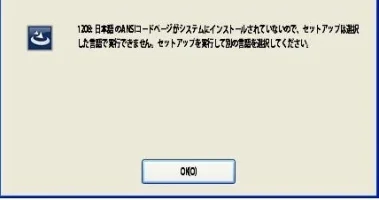
Japanese ANSI code is not installed on the system, so setup cannot execute with the selected language. Please run setup (again) and select another language.
Also consider: 今は一人にしてほしいんだ。 (I'd like you to leave me alone right now)
A less direct expression is also possible: ごめん、今は忙しいんだ。 (Sorry, I'm busy right now)
hi,
just for my curiosity, are there translations for
be nice, go away...
be kind, piss off...
be nice, leave me alone...
have the kindness to get off my nuts...
(in a non-agressive form of it, by the way)
or some expressions like that ?
thx
---------- Post added at 10:06 ---------- Previous post was at 10:03 ----------
Japanese ANSI code is not installed on the system, so setup cannot execute with the selected language. Please run setup (again) and select another language.
Could someone translate this?
View attachment 11902
Similar threads


- Replies
- 11
- Views
- 115K