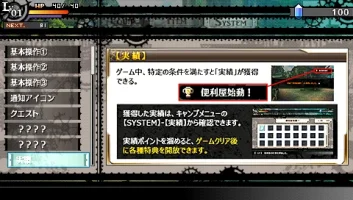
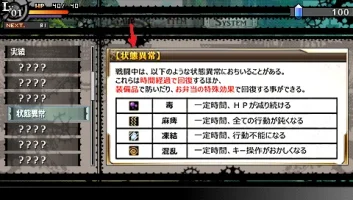
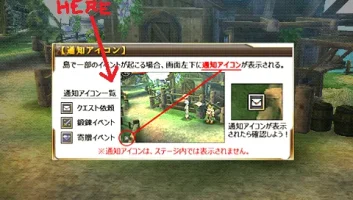
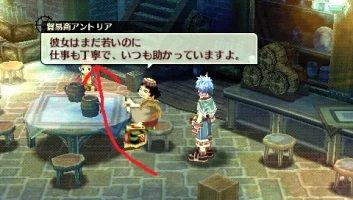
Hi guys, do you mind telling me what kanji is on the last line of the infographic thingy on the right? The line with the yellow text (The ? in here: 実績ポイントを?めると...)
The image itself is of really low quality, so here's a zoomed-in version of the kanji (it probably doesn't help though...)
Alright last kanji for the day. Thanks so much guys, I've been so annoyed these days over not knowing these tiny kanji's in games, and yall saved me from that
EDIT: Ignore the one in the Attached Thumbnails, that was a misclick
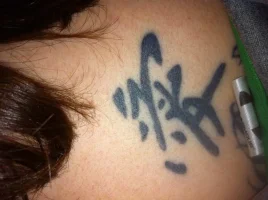
Hi! I've tried to figure this out on my own but don't understand what I'm doing with radicals and whatnot. Can someone translate this for me please? I'd appreciate it!
Hi! I've tried to figure this out on my own but don't understand what I'm doing with radicals and whatnot. Can someone translate this for me please? I'd appreciate it!
It is an adornment born of personal vanity and a desire to be admired, stylish, and however briefly the center of attention as others have to ask you what it says....while if it were in English they could just read it for themselves and keep going. The same information is conveyed in each case, so putting it in a language neither you nor anybody around you can read is all about you and nothing about him.
A tribute would be taking the dough you'd spend on getting a crappy mockery of a kanji tattoo at some Texas strip mall and instead donating it to his favorite charity in his name.
Hello, everyone. Hope someone can help me with the phrases below. They are from the sword fighting game series Samurai Showdown/Samurai Spirits and, considering that theme, taking place on 18th century, it's hard to translate those sentences... I've made some research, but still it is difficult to come to a decent meaning... I've compared the Japanese version of the game with the English one but I still have my doubts...
* いざ尋常に (いざじんじょうに)
On the first games, they translate as "En Garde" and posterior games as "Fair and Square". Apparently, that expression is well used on Jidai Geki movies, but it's not clear what context it is really used. I saw this in some NicoNico Douga videos too.
* 一本目, 二本目, 三本目 (いっぽめ, にほんめ, さんぼんめ)
Translated as "Duel 1", "Duel 2" and so forth. They seem to be some Kendo terms, like a "kata" or something, but I'm not sure...
* 勝負あり (しょうぶあり)
Translated as "Victory". I see 勝負 can be "game" or "fight duel". The problem is あり.
* 挑戦者あり (ちょうせんしゃあり)
Translated as "Here comes a challenger"
* お見事 (おみごと)
Translated as "Well done"
Except for the last one, which all the resources match with the game translation, the rest appear to be idiomatic expressions, and I'd like to count with your help to clarify them, if possible. Thanks in advance.
Hello, everyone. Hope someone can help me with the phrases below. They are from the sword fighting game series Samurai Shodown/Samurai Spirits and, considering that theme, taking place on 18th century, it's hard to translate those sentences... I've made some research, but still it is difficult to come to a decent meaning... I've compared the Japanese version of the game with the English one but I still have my doubts...
* いざ尋常に (いざじんじょうに)
On the first games, they translate as "En Garde" and posterior games as "Fair and Square". Apparently, that expression is well used on Jidai Geki movies, but it's not clear what context it is really used. I saw this in some NicoNico Douga videos too.
* 一本目, 二本目, 三本目 (いっぽめ, にほんめ, さんぼんめ)
Translated as "Duel 1", "Duel 2" and so forth. They seem to be some Kendo terms, like a "kata" or something, but I'm not sure...
* 勝負あり (しょうぶあり)
Translated as "Victory". I see 勝負 can be "game" or "fight duel". The problem is あり.
* 挑戦者あり (ちょうせんしゃあり)
Translated as "Here comes a challenger"
* お見事 (おみごと)
Translated as "Well done"
Except for the last one, which all the resources match with the game translation, the rest appear to be idiomatic expressions, and I'd like to count with your help to clarify them, if possible. Thanks in advance.
1)
The former one is a free translation, and the latter one is a literal translation. いざ尋常に(勝負いたせ) is often used as a calling when a duel starts among samurais, so "En Garde" would be used.
2)
本 is a counter for win (of a fight).
目 is similar to "th" in "fourth", "fifth",,, in English.
3)
あり is a classical form of ある. It's used as a present perfect tense "A duel has been over" here, so it can mean "You've lost the duel".
4)
It's the same as #3, but means "A challenger has arrived" in this case.
Just great, Toritoribe-san! 有難う御座います for your help. It means I was indeed close to real meanings... I'm improving. Slooooowly, but improving, hehehe...
Well, are those forms of language still used nowadays in Japan, I don't know, in some event or cerimony? Or are they specific to classical context only?
This site uses cookies to help personalise content, tailor your experience and to keep you logged in if you register.
By continuing to use this site, you are consenting to our use of cookies.