

Navigation
Install the app
How to install the app on iOS
Follow along with the video below to see how to install our site as a web app on your home screen.
Note: This feature may not be available in some browsers.
More options
Style variation
System
Light
Dark

You are using an out of date browser. It may not display this or other websites correctly.
You should upgrade or use an alternative browser.
You should upgrade or use an alternative browser.
Need a Kanji Translated? Just ask!
- Thread starter Mikawa Ossan
- Start date
-
- Tags
- kanji translation

- 22 Feb 2008
- 18,266
- 4,926
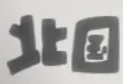
"Hokkoku" is possible, but "kitaguni" is more common.

Glenn
一切皆苦
- 8 Jan 2004
- 7,842
- 200
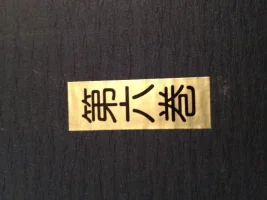
The second one is 第六巻, which means the sixth "scroll". 巻 gets used to mean a part of a story that ends up being its own book a lot. So it could be the sixth book in a series.
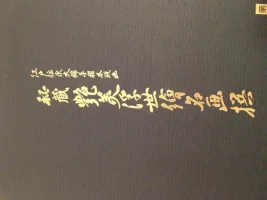
The first one is a bit difficult for me to make out, because I'm not that great at reading handwriting, and I'm guessing this is 行書, or "running strokes", a type of semi-cursive writing. I've got 江戸伝承, which would be folklore of Edo, which is the old name for Tokyo, and probably has to do with the period from 1603-1868 (The Edo Period). After that it looks like 大錦手摺木版画. From what I gather, 大錦 is a family name. 手摺 is a handrail, so I may be wrong about that, and then 木版画 is a woodcut (type of picture). After that the only thing I can make out with confidence is 浮世, which is Ukiyo, or the pleasure-seeking lifestyle of Edo Period Japan.
I'm sure one of our resident native Japanese speakers will be able to help you out further.
The first one is a bit difficult for me to make out, because I'm not that great at reading handwriting, and I'm guessing this is 行書, or "running strokes", a type of semi-cursive writing. I've got 江戸伝承, which would be folklore of Edo, which is the old name for Tokyo, and probably has to do with the period from 1603-1868 (The Edo Period). After that it looks like 大錦手摺木版画. From what I gather, 大錦 is a family name. 手摺 is a handrail, so I may be wrong about that, and then 木版画 is a woodcut (type of picture). After that the only thing I can make out with confidence is 浮世, which is Ukiyo, or the pleasure-seeking lifestyle of Edo Period Japan.
I'm sure one of our resident native Japanese speakers will be able to help you out further.
- 22 Feb 2008
- 18,266
- 4,926
大錦 refers to a size of ukiyoe (24~28cm x 36~40cm), meaning "big size polychrome printing", and 手摺 means "handprinting/handprinted" in this case.
江戸伝承大錦手摺木版画
Edo denshou oonishiki tezuri mokuhanga
Big Size Handprinted Polychrome Woodblock Prints Handed down from Edo Period
秘蔵 艶美浮世繪名画撰
Hizou Enbi ukiyoe meiga sen
Treasured book The Collection of Famous Amorously Beautiful Ukiyoe
江戸伝承大錦手摺木版画
Edo denshou oonishiki tezuri mokuhanga
Big Size Handprinted Polychrome Woodblock Prints Handed down from Edo Period
秘蔵 艶美浮世繪名画撰
Hizou Enbi ukiyoe meiga sen
Treasured book The Collection of Famous Amorously Beautiful Ukiyoe
Glenn
一切皆苦
- 8 Jan 2004
- 7,842
- 200
Well, I feel better that I correctly identified the characters I did, at least. And I had gotten 秘蔵 and 艶美 with a guess at 繪 the first time, but for some reason when I came back they didn't occur to me, and I couldn't remember. Maybe it has to do with the champagne. :O
Anyway, see? I told you someone would come along who could help you out more.
Anyway, see? I told you someone would come along who could help you out more.

- 22 Feb 2008
- 18,266
- 4,926
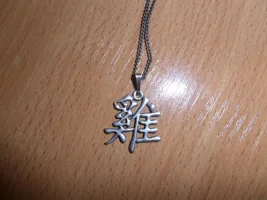
That's 雞 which is a variant character of 鶏, meaning "chickin(as a bird)".I was doing some cleaning today and I found this necklace which my friend gave me as a gift from Japan. It was three years ago and I forgot the meaning of it. I would be grateful for translating. :emoji_stuck_out_tongue_winking_eye:
雞 - Wiktionary
MrKanister
先輩
- 3 Aug 2012
- 56
- 0
@Tind
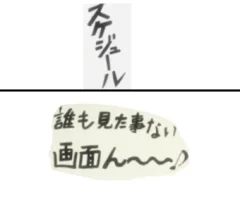
"Skejuuru" (Schedule)
and
"Dare mo mita koto nai
Gamenn~~!"
ありがとう!

undrentide
Japa'n vagyok
- 18 Jan 2006
- 3,652
- 310
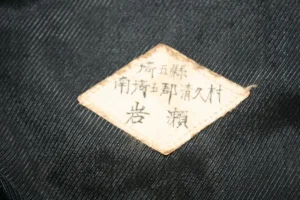
埼玉縣 Saitama-ken
南埼玉郡清久村 Minami-Saitama-gun Kiyoku-mura
岩瀬 Iwase
---
Saitama prefecture
Minami-Saimtama county*
Kiyoku village*
*Name of Kiyoku village were merged with other two villages and became 久喜町 Kuki machi in 1954,
now it's a part of 久喜市 Kuki-shi (Kuki-city.)
Iwase is a Japanese family name.
I guess the cap is a very old one.
南埼玉郡清久村 Minami-Saitama-gun Kiyoku-mura
岩瀬 Iwase
---
Saitama prefecture
Minami-Saimtama county*
Kiyoku village*
*Name of Kiyoku village were merged with other two villages and became 久喜町 Kuki machi in 1954,
now it's a part of 久喜市 Kuki-shi (Kuki-city.)
Iwase is a Japanese family name.
I guess the cap is a very old one.
Hi folks!
I recently came across this copper ashtray and thought it was neat. It has some kanji on it so I have been trying to figure out what it says. I was able to find the kanji on the top pretty easily. It is:
観 view
光 light
記 account/narrative
念 desire/wish, feeling
What am I supposed to get out of that? I am very new to kanji. Do those four have a new meaning when put together?
Then there are the three kanji on the building. The only one that I can figure out is the last one. 大 large
Anyone able to help me out? The one image is just a photo of the ashtray. The other one has three parts. The first is gray scale so that it is easier to see, the second is inverted, and the third is what it looks like to me when I look at the ashtray itself.
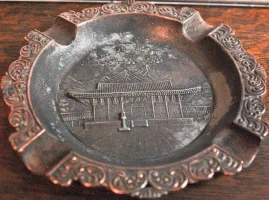
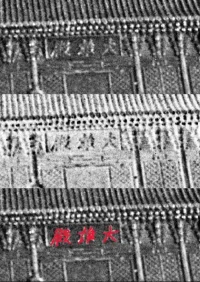
I recently came across this copper ashtray and thought it was neat. It has some kanji on it so I have been trying to figure out what it says. I was able to find the kanji on the top pretty easily. It is:
観 view
光 light
記 account/narrative
念 desire/wish, feeling
What am I supposed to get out of that? I am very new to kanji. Do those four have a new meaning when put together?
Then there are the three kanji on the building. The only one that I can figure out is the last one. 大 large
Anyone able to help me out? The one image is just a photo of the ashtray. The other one has three parts. The first is gray scale so that it is easier to see, the second is inverted, and the third is what it looks like to me when I look at the ashtray itself.
undrentide
Japa'n vagyok
- 18 Jan 2006
- 3,652
- 310
Translating kanji one by one does not always work. :emoji_wink:
観光 means sight-seeing.
記念 commemoration (but here it simply means 'souvenir'.)
The kanji on the second photo are not clear enough.
It looks like 大華殿 (old writing often goes from right to left) but I'm not sure about the 2nd kanji.
There seems to be a temple called 大華殿寺 in Nara and I found a photo of the gate way of this temple but the sign on the gate says 大華殿寺 not 大華殿.
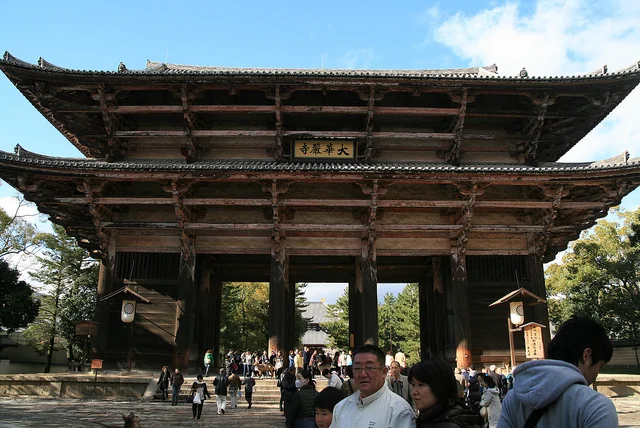
And the gate looks different from the one on the ashtray. (Not sure whether because it is somewhere totally different or the ashtray does not reflect the actual image of the gate.)
Anyway, I believe the ashtray was sold as a souvenir.
観光 means sight-seeing.
記念 commemoration (but here it simply means 'souvenir'.)
The kanji on the second photo are not clear enough.
It looks like 大華殿 (old writing often goes from right to left) but I'm not sure about the 2nd kanji.
There seems to be a temple called 大華殿寺 in Nara and I found a photo of the gate way of this temple but the sign on the gate says 大華殿寺 not 大華殿.
And the gate looks different from the one on the ashtray. (Not sure whether because it is somewhere totally different or the ashtray does not reflect the actual image of the gate.)
Anyway, I believe the ashtray was sold as a souvenir.

undrentide
Japa'n vagyok
- 18 Jan 2006
- 3,652
- 310
日本語 上手いね (Nihongo umai ne) Your Japanese is great.
Polite version is
日本語が上手ですね。 (Nihongo ga jouzu desu ne.)
Much politer:
日本語がお上手ですね。 (Nihongo ga o-jouzu desu ne.)
Polite version is
日本語が上手ですね。 (Nihongo ga jouzu desu ne.)
Much politer:
日本語がお上手ですね。 (Nihongo ga o-jouzu desu ne.)
- 22 Feb 2008
- 18,266
- 4,926
undrentide-san, the OP asked a polite version of her ANSWER.;-)
I would say like this.
ありがとうございます。
Arigatou gozaimasu.
Thank you.
or
いえ、まだまだです。
Ie, madamada desu.
No, it's still not enough.
I would say like this.
ありがとうございます。
Arigatou gozaimasu.
Thank you.
or
いえ、まだまだです。
Ie, madamada desu.
No, it's still not enough.
undrentide
Japa'n vagyok
- 18 Jan 2006
- 3,652
- 310
Oh my... :sorry:
Summer heat killed my brain!
Thank you Toritoribe san for your nice follow-up.
Summer heat killed my brain!
Thank you Toritoribe san for your nice follow-up.

- 19 May 2007
- 1,716
- 113
Toritoribe/undrentide , I beg to differ,undrentide-san, the OP asked a polite version of her ANSWER.;-)
I would say like this.
ありがとうございます。
Arigatou gozaimasu.
Thank you.
or
いえ、まだまだです。
Ie, madamada desu.
No, it's still not enough.
I think this would be more appropriate.
は~、何ぬかしとるんじゃ。。。。です
undrentide
Japa'n vagyok
- 18 Jan 2006
- 3,652
- 310
Toritoribe/undrentide , I beg to differ,
I think this would be more appropriate.
は~、何ぬかしとるんじゃ。。。。です
:emoji_laughing: I should love to talk with you in Japanese some day!
Osaka ben can be quite 'colourful'!


