Need a Kanji Translated? Just ask!

Neat! So Kajiwara Hiromitsu, of Fukuoka prefecture, made in 1943?

Born in 1900, son of a swordsmith, and known for making gunto. You folks rock!
The site I linked above says that he made the sword in the page in 1943 at the age of 52. Another site also says that he was born on January 1, 1892, so 52 years old would be kazoedosi. His real name is 梶原六助 Kajiwara Rokusuke, and his father is 初代梶原廣光 Kajiwara Hiromitsu the First (i.e. he is Kajiwara Hiromitsu the Second ). He studied under his father and 桜井正次 Sakurai Masatsugu.
 
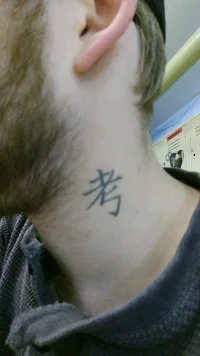
Hi, I have had this tattoo for many years now and have heard so many different translations that I don't know what to believe. Before I got it done, every source I found said it means "think" or "to think" like a verb. Admittedly I didn't search much further into it, and now ever since I have not heard the same translation twice. I am thinking this is because Kanji has meaning in many different Asian languages and Mandarin is much more common than Japanese where I live, but I want to know the truth from a Japanese perspective. So what does this mean to you?
 

Attachments

  • Snapchat-1798065441_1.webp
    Snapchat-1798065441_1.webp
    127.8 KB · Views: 205
Before I got it done, every source I found said it means "think" or "to think" like a verb.

That is the general idea of it. However, in isolation it is impossible from a Japanese language perspective to ascribe a tense to it or whether it is a noun or verb, as those aspects are carried by okurigana, which are absent in your neck tattoo which in Japan would be interpreted as "That's okay, I didn't really want the job anyway".

Okurigana - Wikipedia

Done with a stencil, was it?
 
Hello !

I need some help to find a correct translation in kanji.
My boyfriend and I are creating a martial art club, and we would like to name it "Evolution Spirit" and to translate it in kanji in the logo.
We found different kanji meaning "evolution" and "spirit" but we need your help to know if these are correct and if there is no misinterpretation.
So, to translate "Evolution" we chose : (CHOKU), which could also mean "improving" or "progress".
To translate "Spirit" we chose : 気 (KI), which is often use in martial arts.

What do you think of these translations ? I just started to learn japanese, I don't want to make mistakes in our logo…

Thank you very much for any help =)
Have a nice day !
 
The most common reading of 捗 is はかどる, meaning "a work progresses/advances smoothly/steadily". How about 展気道, 展魂道 or 進気道?
 
Hey guys, I wanna know what the correct Kanji translation is for my band's name. We're called "Superior". I've found a lot of different translations by just lazily browsing the internet but I honestly have no knowledge of Kanji or the Japanese language. I don't really trust translation websites as it sometimes struggles with words that have multiple meanings (such as this one). I want it to mean superior in a kind of heroic sense? Like a superhero, if that makes sense. I'm afraid that if I just use a random internet translation I'll end up getting it completely wrong or it won't make any sense or I'll end up with a negative meaning of the phrase or the wrong meaning. If anyone can help me with this it would be extremely helpful, thank you!
 
The most commonly used word that comes to my mind first is not kanji but a loan word スーパー, i.e., the transliteration of "super"...
 
Are you going to be speaking the word, or only writing it?
Many Japanese words are difficult for foreigners to pronounce correctly. In the case of "superior", there are a couple of Japanese words with this meaning that are easy to pronounce and also happen to sound cool to a western ear:
tobikiri (toe-bee-kee-ree), and
hitokado (hee-toe-kah-doh). I would recommend one of those two if you will be speaking the name.
In the Japanese writing system (kanji plus other characters)
there are several ways to write each of these. One example for each:
tobikiri: 飛び切り
hitokado: 一廉

Although it is non-standard, you could also write the first one more simply as 飛切. If you are doing this more for decoration than for communication, this short version is fine.

If you are only going to be writing the word, and you don't care at all how it sounds when spoken, there are more options available.
 
Hello Everyone! I'm new to the forum, Please take it easy on me!

I have some kanji that needs translation which are on the picture below.

Thank you in advance!
 

Attachments

  • IMG_4595.webp
    IMG_4595.webp
    27.5 KB · Views: 198
  • IMG_4596.webp
    IMG_4596.webp
    17.9 KB · Views: 156
Hey guys, I wanna know what the correct Kanji translation is for my band's name. We're called "Superior".
This is a follow-up to what I wrote previously. Sorry for the late reply.
To convey "superhero" in Japanese, usually the English word is borrowed. However, this same general concept can also be conveyed using kanji as 超英雄 or 超人. These words have the 超 character in common.
By itself, the character 超 can represent the concept/notion "exceed"; "go beyond"; "pass over", etc. It can also be used as a prefix for other words, in that case conveying the meanings "super-"; "ultra-"; "hyper-".
Given what you are trying to do, as I understand it, I think that the single character 超 might be a suitable choice.
 
can someone translate this please?

They may be only parts of words. At any rate, they aren't kanji and you've posted in the wrong thread. Where did you see them and why do you want to know what they mean? We will need to see the surrounding context to reliably answer your question.
 
They may be only parts of words. At any rate, they aren't kanji and you've posted in the wrong thread. Where did you see them and why do you want to know what they mean? We will need to see the surrounding context to reliably answer your question.
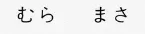
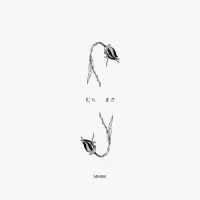
Thought it was kanji, this is written on an album that im planning to get tattooed. I would like to know the meaning of it before i got it inked on me. The album is named "soundtrack to a death", maybe it's just a translation but i just want to be sure.
 

Attachments

  • a1781819387_10-1024x1024.webp
    a1781819387_10-1024x1024.webp
    16.5 KB · Views: 168
It's hiragana. It says Mura Masa. Guessing it's the stage name of the artist. I found Mura Masa - Wikipedia with just a quick google search. Guessing the album is one from that artist. Also might be based off Muramasa Sengo a famous Japanese sword smith that lived somewhere between the 14th and 16th centuries.
 
There you go. It means "Alexander Crossen, from Guernsey". Why not get that as a tattoo?
 
20170312_111103.webp
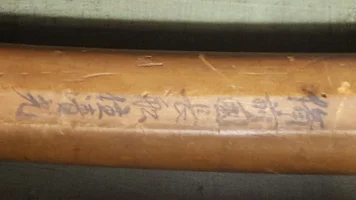
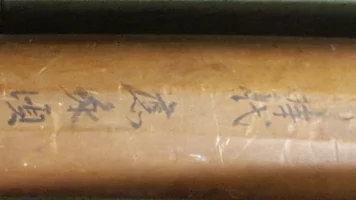
Greetings!!! I inherited a sword brought back from WW2 by my grandfather. I have been able to verify the mei on the nakago as Bizen (no) Kuni Kiyomitsu and made in August of the second year of Tenmon (1533). I am now trying to figure out the Kanji on the shirasaya, and that is another beast altogether. I am hoping to find any info as to the family it came from, as I wish to return it to them. Any help would be much appreciated...
20170312_111103.webp
20170312_110904.webp
 

Attachments

  • 20170312_110724.webp
    20170312_110724.webp
    566.8 KB · Views: 182
  • 20170312_110619.webp
    20170312_110619.webp
    437.8 KB · Views: 191
That just gives the length of the sword in old units.
 
In the attached files it shows the part with the mei (presumably) and the general date.
備前国長船住清光
Bizen-no-kuni Osafune-jū Kiyomitsu
時代応永頃
Jidai Ōei koro
 
Back
Top Bottom