


- 14 Mar 2002
- 21,051
- 18,903
The coral reef terraces of Kikaijima Island have been designated as one of the 100 IUGS Geological Heritage Sites by the International Union of Geological Sciences. Over the past 100,000 years, Kikaijima Island has been formed and uplifted by coral reefs, preserving a record of environmental changes like climate shifts. This geological history makes the island a valuable research site. The next goal is to have the island recognized as a Japanese Geopark. IUGS Geological Heritage Sites are significant globally for studying Earth's formation and geological history. Every two years, a committee of geologists and experts selects 100 sites worldwide for recognition.
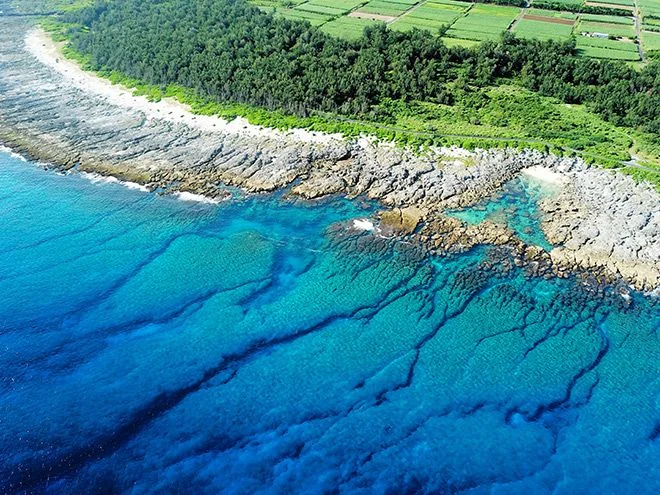
Photo credit: KIKAI Institute for Coral Reef Sciences
Kikaijima Island is located off the coast of Kyushu , about 25 kilometres east of Amami-Oshima Island. Over 10,000 people lived on the island in the 1980s, but that number has declined to about 6,000. "I hope this opportunity will help more people learn about the island," Kumasaki said. "I want to take every measure to stop the decreasing population and welcome more people, even if they live here temporarily." The town has also started working toward being designated as a Japanese Geopark, highlighting the island's uniqueness formed by coral reefs that have been rising for 100,000 years.
Photo credit: KIKAI Institute for Coral Reef Sciences
IUGS's first selection of sites occurred in 2022 and included Genbudo Cave and the Nojima Fault, both in Hyogo Prefecture. Kikaijima island's coral reef terraces and the Heisei Shinzan dacite lava dome in Nagasaki Prefecture were recognized this year in IUGS's second selection out of 174 nominated sites across 64 countries. After the coral reef terraces were designated, Etsuo Kumasaki, the mayor of Kikai town, and Tsuyoshi Watanabe, the president of the KIKAI Institute for Coral Reef Sciences, a nonprofit organization, presented the island's features and characteristics at an international conference in Busan, South Korea, in late August.
Kikaijima Island is located off the coast of Kyushu , about 25 kilometres east of Amami-Oshima Island. Over 10,000 people lived on the island in the 1980s, but that number has declined to about 6,000. "I hope this opportunity will help more people learn about the island," Kumasaki said. "I want to take every measure to stop the decreasing population and welcome more people, even if they live here temporarily." The town has also started working toward being designated as a Japanese Geopark, highlighting the island's uniqueness formed by coral reefs that have been rising for 100,000 years.


