Crime Japanese pupil stabbed in Shenzhen dies

thomas

Unswerving cyclist
Admin
Joined
14 Mar 2002
Messages
21,051
Reaction score
18,903
This is sad and, frankly, quite concerning. This was the second attack on Japanese students in China this year.
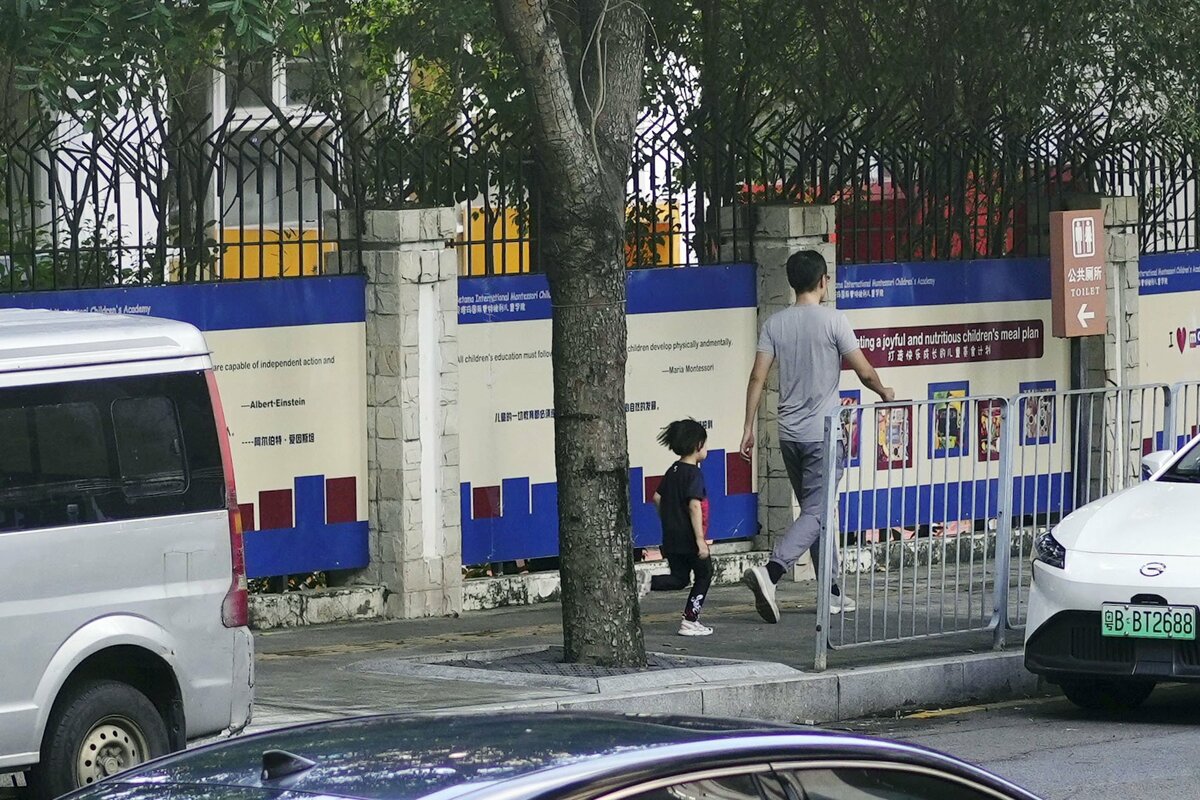

A Japanese boy was stabbed by a man while on his way to school in a southern Chinese city on Wednesday morning and taken to a local hospital, the Japanese and Chinese governments said, adding that the attacker was apprehended at the scene. The 10-year-old student is receiving medical treatment at a hospital and is in "very serious condition," Yoshiko Kijima, Japan's consul general in Guangzhou, the capital of Guangdong Province, told reporters early Thursday. The boy was attacked on a street about 200 meters from the Japanese school he attended in Shenzhen, another city in the province, according to local authorities.


Sadly, this morning, the boy succumbed to his injuries.
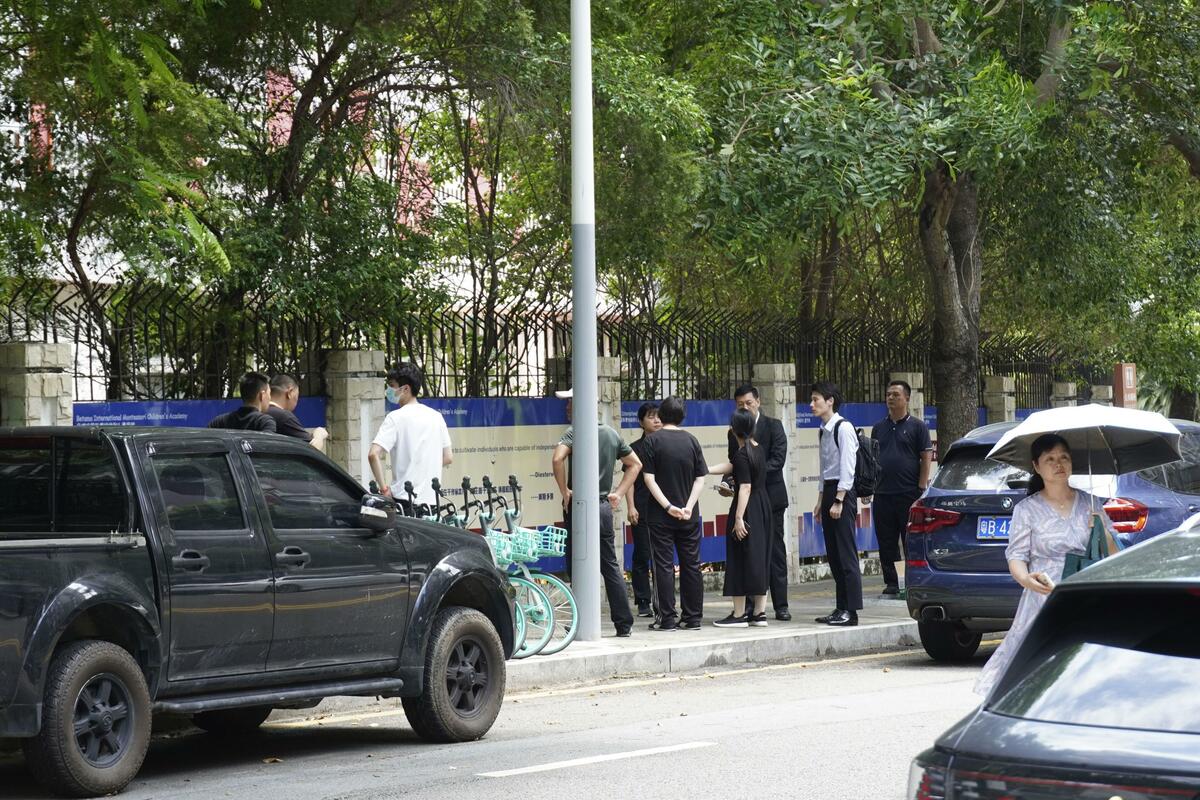


It is unclear if the suspect targeted the boy because he was Japanese, but there is concern that the incident could trigger a further deterioration in ties.


Nikkei Asia sees the reasons for the attacks in anti-Japanese sentiments stirred by the Chinese authorities:


Some Japanese observers argue these are not isolated incidents but rather a result of authorities fanning anti-Japan sentiment for decades. "The incident has happened as it was bound to happen," Tomoko Ako, a professor at the University of Tokyo who specializes in modern China, told Nikkei Asia on Thursday. "It is significant that the Chinese authorities have continued the education to instill hatred against Japan and the Japanese people among its people." Shingo Yamagami, a Japanese former ambassador to Australia, wrote on X, "This is the result of [anti-Japan] school education of long years & belligerent remarks under the Wolf Warrior Diplomacy of recent years." He suggested such attacks were a reason to rethink investment in China.


China's Communist regime has long emphasized Japan's brutality during World War II as a means of stirring patriotism. This was amplified under President Jiang Zemin in the early 1990s, after the crackdown on Chinese student protesters at Tiananmen Square on June 4, 1989. The Communists had based their legitimacy to rule largely on their self-image of being the ones who liberated China from foreign aggressors. Yet, 40 years later, this was called into question by authorities' own violent suppression of mostly unarmed youths seeking democratic reforms. One answer was to double down on "patriotic education" and Japan's wartime wrongdoing. Coincidentally or not, the Shenzhen stabbing happened on the 93rd anniversary of the Mukden Incident, a railway explosion in modern-day Shenyang that was used by the Imperial Japanese military as a pretext to invade and later conquer Manchuria in 1931. A commemoration event was hosted by the 9.18 Historical Museum on Wednesday in Shenyang, where an air-raid siren was sounded for three minutes. Drivers joined in by honking their horns.


Paywall alert:
 
FYI: the off-topic discussion has been moved here.

Yesterday, Chinese authorities commented on the stabbing, stating that the fatal stabbing of a 10-year-old Japanese schoolboy in the southern city of Shenzhen earlier this week was an isolated incident, with the perpetrator acting alone.

Chinese authorities have yet to disclose the suspect's motive following the attack near a Japanese school in Shenzhen on Wednesday morning. The local media report may reflect Beijing's effort to present the incident as unrelated to the victim's nationality, aiming to prevent a potential deterioration in relations with Tokyo. The 44-year-old unemployed man surnamed Zhong, who was apprehended at the scene, has admitted to injuring the boy with a knife, according to Shenzhen media. The boy, whose father is Japanese and mother is Chinese, was stabbed around 200 meters from the school gate. Wounded in his abdomen, he died early Thursday, according to the Japanese government. China's Vice Foreign Minister Sun Weidong also told Japanese Ambassador Kenji Kanasugi on Thursday that the deadly attack was an "isolated incident" committed by an individual with a criminal history, according to the Japanese Embassy in Beijing.

Some speculate that the suspect intentionally targeted a Japanese child, as Japanese students without uniforms are easily distinguishable from local Chinese schoolchildren. However, a Japanese government source stated that the victim's family likely had no personal connection to the suspect and that the attack was unlikely to be motivated by a personal grudge. On Wednesday, China commemorated the 93rd anniversary of a Japanese bombing near Shenyang, which marked the beginning of the Manchurian Incident. This incident led to Japan's invasion and occupation of northeastern China, which lasted until the end of World War II.


Japanese Foreign Minister Yoko Kamikawa announced on Monday that she had called on China to take action to protect Japanese citizens, particularly children, during a meeting with Chinese top diplomat Wang Yi in New York. The meeting followed the tragic fatal stabbing of a Japanese schoolboy in Shenzhen, China, last week. Kamikawa also informed reporters that she had requested Beijing to share detailed information about the incident with Tokyo and to take swift action against anti-Japanese posts circulating on social media.

Japanese Foreign Minister Yoko Kamikawa meeting her Chinese counterpart

Photo credit: Xinhua

According to the Japanese Foreign Ministry, Kamikawa stressed the urgency of addressing these online comments, noting that they are "directly linked to the safety of children" and are "completely unacceptable." She also urged China to do more to remove barriers that hinder better relations between the two countries.


China's foreign minister has called on Japan to "calmly" handle the recent fatal stabbing of a Japanese schoolboy in Shenzhen, urging Tokyo to "avoid politicizing or exaggerating the issue." This response came as Japan's foreign minister pressed Beijing to address "unfounded and malicious anti-Japanese" posts on social media. Beijing has sought to prevent the tragic stabbing of the 10-year-old boy, who was attacked on his way to a Japanese school, from escalating into a broader diplomatic dispute between the two nations. Chinese officials have portrayed the incident as isolated, downplaying its political significance.

Beijing has also rejected claims that China promotes anti-Japanese education.

 
The perpetrator who attacked a Japanese school bus in the Chinese city of Suzhou in June 2024, killing a bus attendant who tried to protect the students and injuring a Japanese mother and her child, was sentenced to death yesterday.


The Suzhou Intermediate People's Court said the Chinese jobless man named Zhou Jiasheng, 52, convicted of stabbing the three at a Japanese school bus stop in Suzhou, Jiangsu Province, on June 24, was "debt-ridden" and did not want to continue living, a government official told reporters in Tokyo. While there had been speculation that the man might have targeted Japanese nationals, the official said the court made no mention of Japan in rendering the ruling. The Japanese Consul General in Shanghai, Masaru Okada, and other consulate staff were at the court to hear the verdict. "The crime, which killed one person and wounded two, including an innocent child, is unacceptable, and we gravely accept the ruling," the official said. Before the court held the case's first hearing on Jan. 9, Chinese authorities had not disclosed details of the incident, such as the motive. The case has attracted considerable attention in Japan, and many Japanese journalists have gathered in front of the court building. The bus attendant, Hu Youping, 54, died of stab wounds days after trying to stop the attack. The man had recently moved to Suzhou.

Paywall alert:
 
I'm confused. Shenzen and Suzhou are different places. What is the connection, other than the victims' nationality? (which could be accidental, or not)
 
Back
Top Bottom