

Maybe an alice in wonderland thing? Or "one pill makes you larger, and one pill makes you small..."Great perspective! Looks like you walked through a forest of giant plants.
Navigation
Install the app
How to install the app on iOS
Follow along with the video below to see how to install our site as a web app on your home screen.
Note: This feature may not be available in some browsers.
More options
Style variation
System
Light
Dark
You are using an out of date browser. It may not display this or other websites correctly.
You should upgrade or use an alternative browser.
You should upgrade or use an alternative browser.
Japan Photos 2026
- Thread starter thomas
- Start date
Kind of interesting:

 japantoday.com
I've copied some slides, but have yet to do the same with a lot of B&W negatives--also some color negs. The hurdle is getting--and getting up to speed on--the software needed to convert neg > positives. I've looked at it, and it's not especially hard/challenging, jsut have never pulled the trigger.
Why film photography is booming in Japan
Film cameras were supposed to disappear. Instead, more than a decade after film was declared all but dead, they're becoming fashionable again. From Gen Z shoppers hunting for vintage cameras in Tokyo to social media feeds filled with grainy, imperfect images, film photography is enjoying an...
japantoday.com
I've copied some slides, but have yet to do the same with a lot of B&W negatives--also some color negs. The hurdle is getting--and getting up to speed on--the software needed to convert neg > positives. I've looked at it, and it's not especially hard/challenging, jsut have never pulled the trigger.

- 3 Aug 2007
- 1,291
- 1,614
I've started getting back into film and surprisingly it stared in Japan a few years ago when I found a nice Canon EOS 650 at a Book Off for 1,000 JPY, or about $7 USD at the time. I bought it and it has been a great body. It helped that I had EF lenses for it as I have shot with Canon for years. I ended up getting a 50mm f/1.4 Ultrasonic off of ebay to use for the daily lens. It takes beautiful pictures. Last year I picked up another body, Canon EOS 750QD, for around the same price but I don't like it nearly as much, and a Tamron 28-70mm for 16,000 JPY / ~$96 USD. Again at a Book Off or maybe it was a Hard Off. I now use that lens on the 650 most of the time. Film is pricey but I feel like the shots matter more to me as you only get so many and you won't know how they turn out immediatly so you need to really think about the picture you want. I'll be bring both my digital, Canon EOS 90D, and the 650 with me this year when we go back to Japan in November. I'm still playing with film types and trying development & print companies out. Kodak Portra 400 is a favorite but it is crazy expensive. I have been testing Kodak Gold 200 and Kodak Ultramax 400 recently. The Gold 200 is a nice film, the Ultramax is pretty good but not as good as the Portra, in my opinion. I also tried Fujifilm Superia 400, purchased in Japan when I got the 650, and it was great but then was discontinued.Kind of interesting:
Why film photography is booming in Japan
Film cameras were supposed to disappear. Instead, more than a decade after film was declared all but dead, they're becoming fashionable again. From Gen Z shoppers hunting for vintage cameras in Tokyo to social media feeds filled with grainy, imperfect images, film photography is enjoying an...
I've copied some slides, but have yet to do the same with a lot of B&W negatives--also some color negs. The hurdle is getting--and getting up to speed on--the software needed to convert neg > positives. I've looked at it, and it's not especially hard/challenging, jsut have never pulled the trigger.

- 6 Mar 2003
- 9,334
- 9,479
I have no desire to go back to film. I have a big pile of negatives and slides to go through and digitize. I don't want any more. It would cut back on the quantity of photos I take though. When I was in Japan in the 1990s a friend of mine always paid extra to get his photos digitized on CD-ROM. In hindsight that was smart. The quality may not be as good as doing it now but still that would have made it a lot easier.
- 3 Aug 2007
- 1,291
- 1,614
I get prints and scans, so I already get a digital copy back.I have no desire to go back to film. I have a big pile of negatives and slides to go through and digitize. I don't want any more. It would cut back on the quantity of photos I take though. When I was in Japan in the 1990s a friend of mine always paid extra to get his photos digitized on CD-ROM. In hindsight that was smart. The quality may not be as good as doing it now but still that would have made it a lot easier.

- 14 Mar 2002
- 21,104
- 18,998
- Thread starter
- #156
Black and white Calbee packaging at our local supermarket:
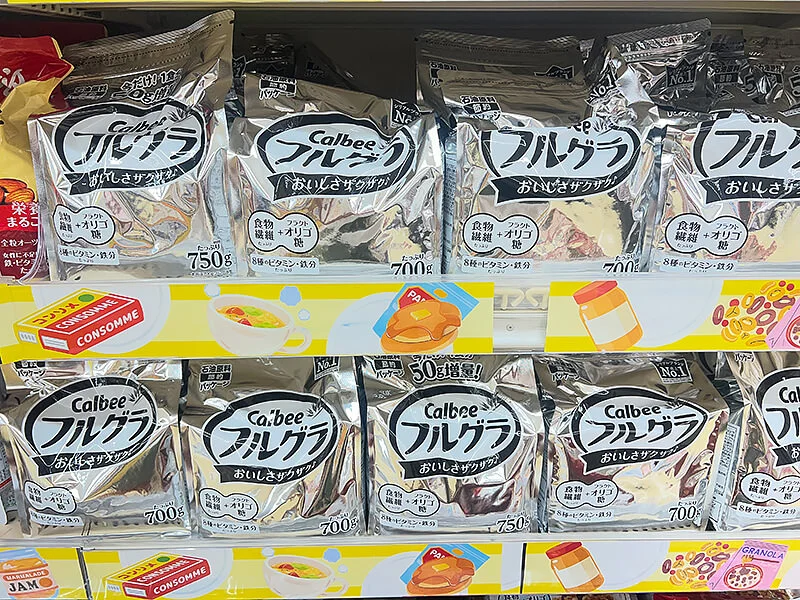
Calbee announced a more colourful, though still rather subdued, new package design.
Calbee announced a more colourful, though still rather subdued, new package design.

I find it quite stylish, to be honest. 
Japanese snack maker Calbee said it would switch some of its flagship products, including its potato chips, to black-and-white packaging as the war involving Iran has tightened supplies of printing ink. The company said the change would apply to 14 products shipped from 25 May onward.

Calbee indicated it had limited the measure to high-volume products to prevent broader disruption across its lineup. The packaging itself will remain mostly unchanged, except for the reduced use of colour. Crude oil prices have climbed sharply...
Japanese snack maker Calbee said it would switch some of its flagship products, including its potato chips, to black-and-white packaging as the war involving Iran has tightened supplies of printing ink. The company said the change would apply to 14 products shipped from 25 May onward.
Calbee indicated it had limited the measure to high-volume products to prevent broader disruption across its lineup. The packaging itself will remain mostly unchanged, except for the reduced use of colour. Crude oil prices have climbed sharply...
- thomas
- Replies: 12
- Forum: Japanese News & Hot Topics

We did this will a lot of family pics then, and tho the CD scans were not very high res, having them still easily accessible is nice.I have no desire to go back to film. I have a big pile of negatives and slides to go through and digitize. I don't want any more. It would cut back on the quantity of photos I take though. When I was in Japan in the 1990s a friend of mine always paid extra to get his photos digitized on CD-ROM. In hindsight that was smart. The quality may not be as good as doing it now but still that would have made it a lot easier.
This place was in the paper this morning, found my way over to it, in an area that is still recovering from the Noto quake--so kind of round and about to get there.
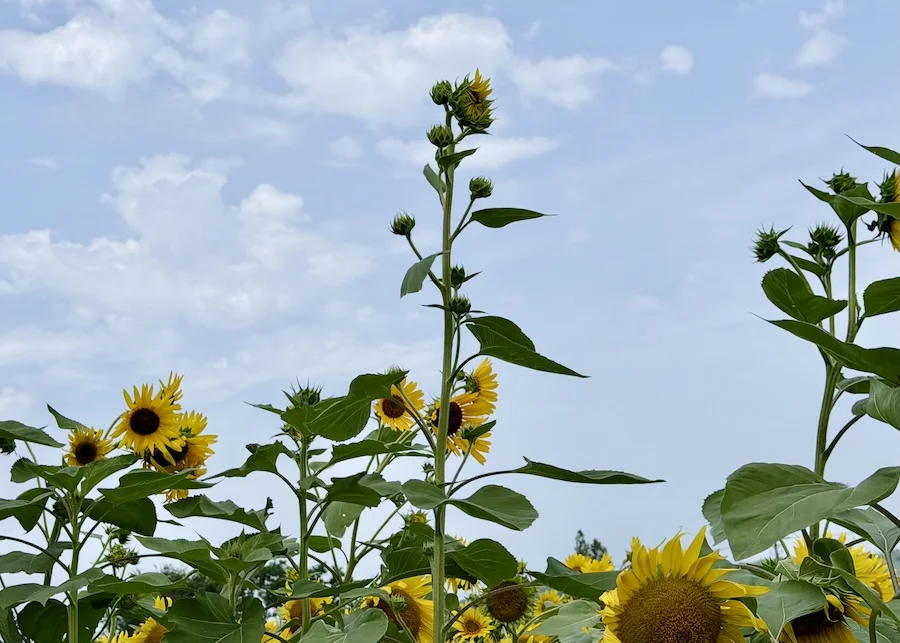
These two are the same, second is zoomed in some.
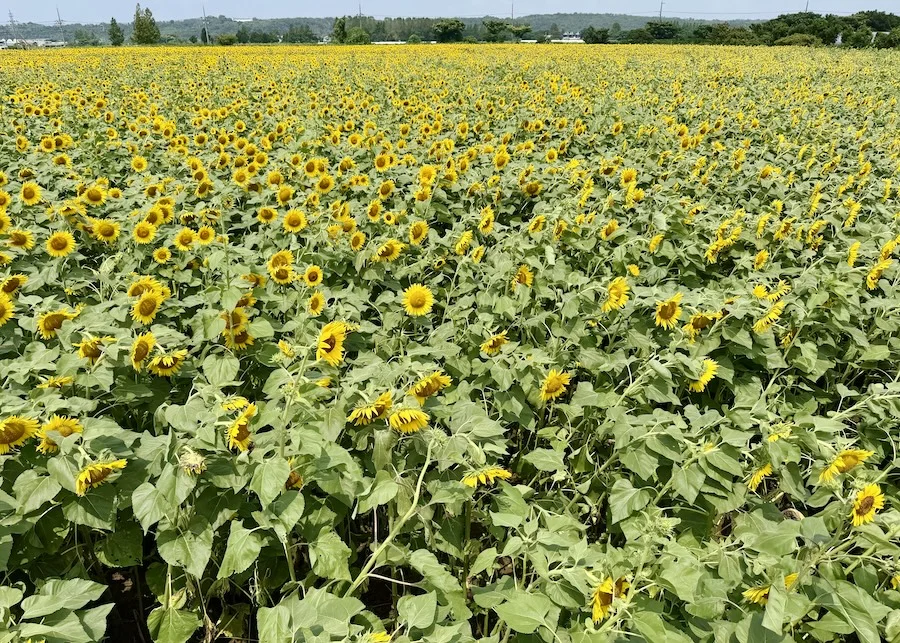
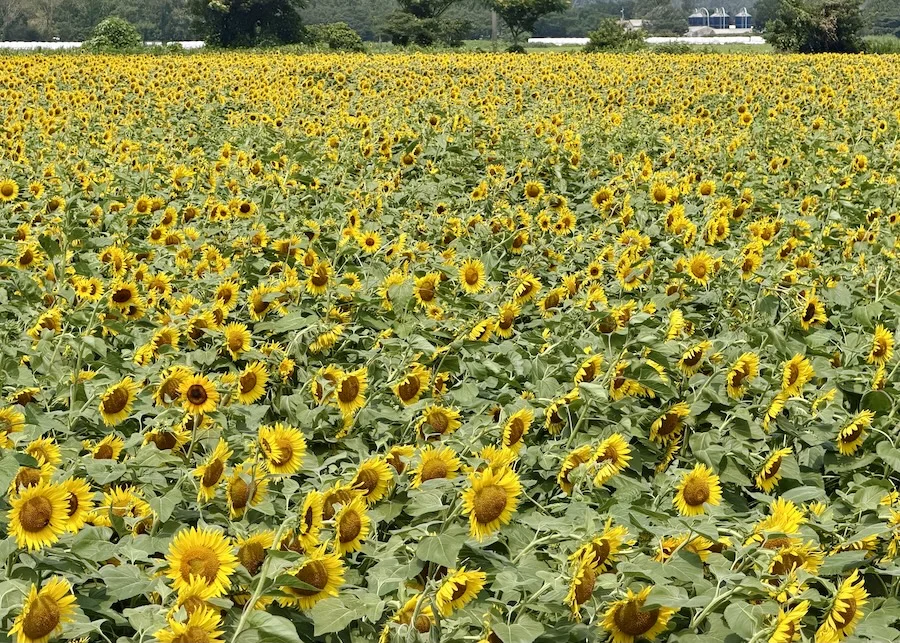
Lots of bees, ignoring the humans for the flowers.
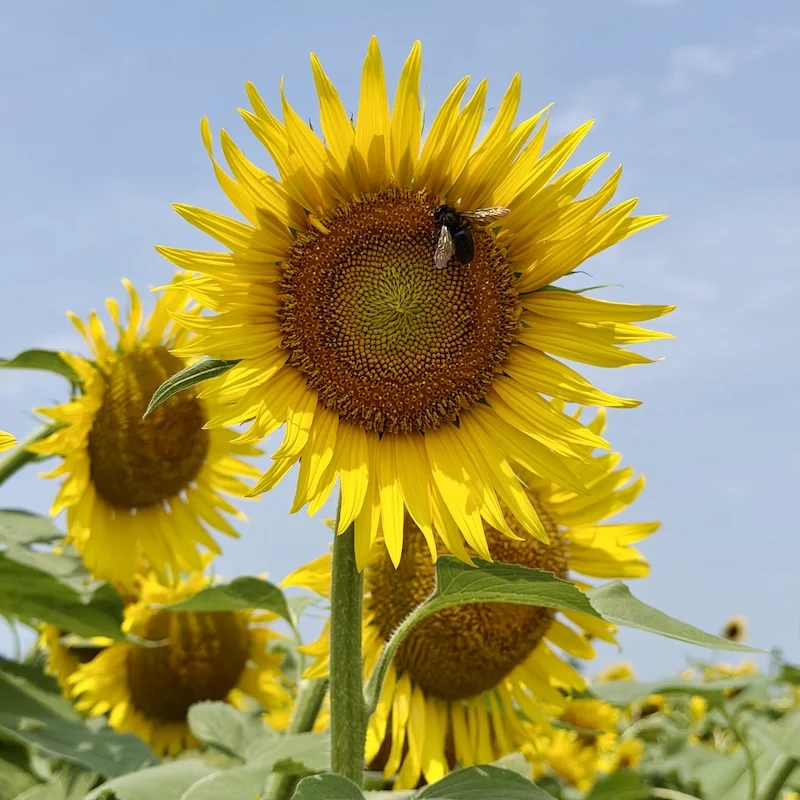
And I like this one.
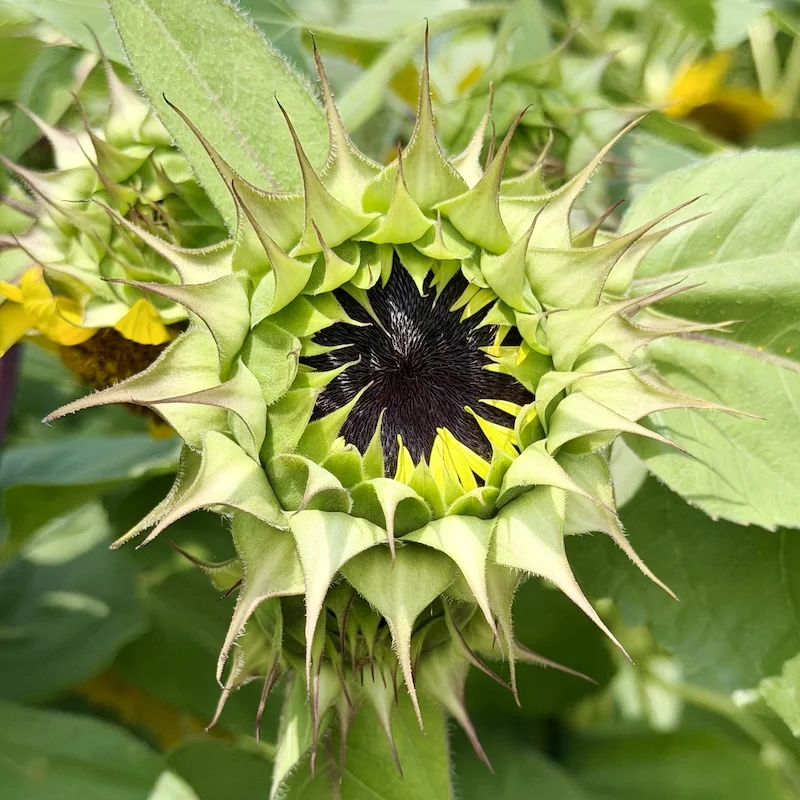
These two are the same, second is zoomed in some.
Lots of bees, ignoring the humans for the flowers.
And I like this one.


- 6 Mar 2003
- 9,334
- 9,479
Does she have some relationship with Nara? Or are they just simply looking for tricks to boost sales?

- 26 Sep 2015
- 2,619
- 3,560
Yes, she was born and raised in Nara.Does she have some relationship with Nara? Or are they just simply looking for tricks to boost sales?

Sanae Takaichi - Wikipedia
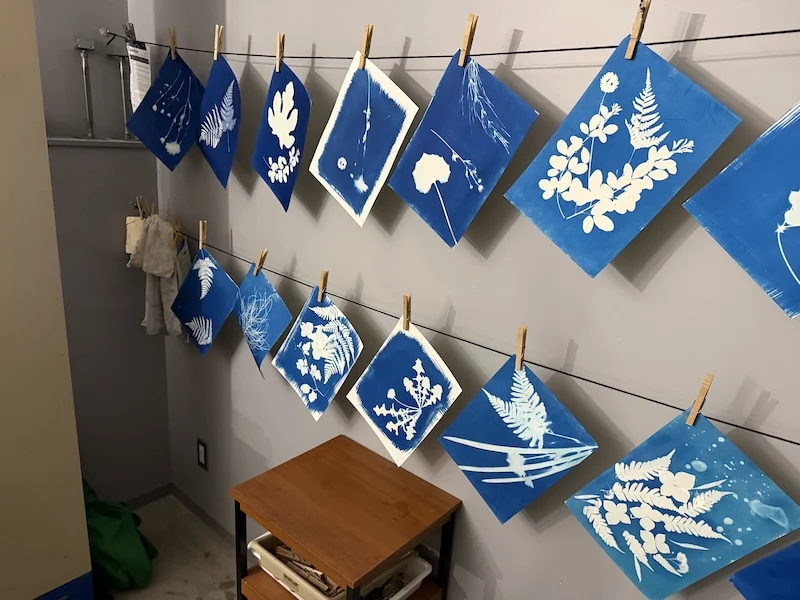
Today's cyanotypes--local arts university had a public-facing workshop that I signed up for last month, which took place yesterday. This is old, maybe 1830s or so at its beginnings, and eventually leads to blueprints, if those are actually still around. Not photos of japan, but prints of japanese foilage. These four are mine.
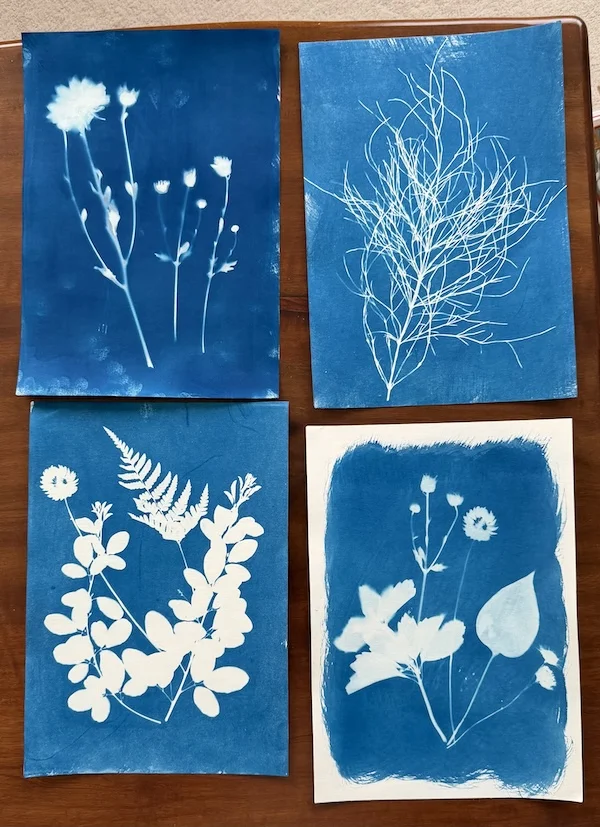
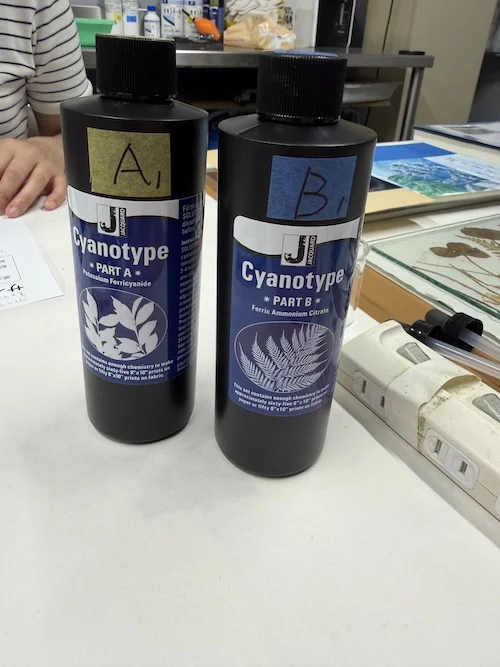
You first prep the media, combining two chemicals (x13 drops of each), and spread that on a thick piece of paper with a sponge/brush. Dry that, then place pressed plants, etc, on it, cover with a glass plate to hold in place, and set it outside in the sun for 5-7 minutes. Bring back in and run that 'print' thru a few baths/washes, and hang to dry.
Initial chemicals.
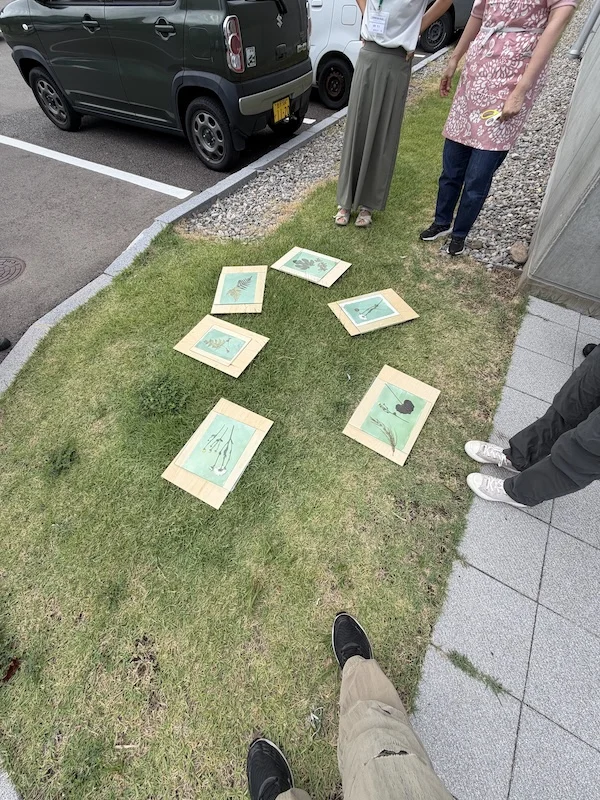
In the sun.
Five of us as 'students', maybe 4-5 prints each, over three hours.
You first prep the media, combining two chemicals (x13 drops of each), and spread that on a thick piece of paper with a sponge/brush. Dry that, then place pressed plants, etc, on it, cover with a glass plate to hold in place, and set it outside in the sun for 5-7 minutes. Bring back in and run that 'print' thru a few baths/washes, and hang to dry.
Initial chemicals.
In the sun.
Five of us as 'students', maybe 4-5 prints each, over three hours.
