This is a list of countries by gross (i.e. total) external debt.
"External debt" is defined as the total public and private debt owed to nonresidents repayable in foreign currency, goods, or services. The list is based on The World Factbook unless otherwise noted. Source accessed on October 2008. For informational purposes several non-sovereign entities are also included in this list.
External debt USD mil. External debt (% of GDP)
1. USA: $13,703,567 ----------------- 99.95%
2. UK: $10,450,000 -------------------
376.82%
3. Germany: $4,489,000 ---------------
159.92%
4. France: $4,396,000 -----------------
211.86%
5. Netherlands: $2,277,000 ------------
352.75%
6. Ireland: $1,841,000 -----------------
960.86%
7. Japan: $1,492,000 ------------------ 34.93%
8. Switzerland: $1,340,000 ------------
441.95%
9. Belgium: $1,313,000 ----------------
348.74%
10.Spain: $1,084,000 ------------------ est. 79.65%
List of countries by external debt - Wikipedia
Japan is known as heavily-national-budget-deficit nation (some 190% of GDP), but J-government's debt is consumed within Japan. In short, creditors of J-bonds are Japanese consumers, financial institutions and corporations.
However, so-called "prosperous" European countries are quite different from Japan. Their creditors are foreigners.

Assuming that I am sacked in the amid of recession but with tons of debts (e.g. home loans), my life must be very painful because banks will not wait for repayment.
External debts of European countries must be similar to .... such a case, I think. Creditors are foreigners (banks) and European countries are the employees sacked in the midst of recession.

Looking at the aboves, It is likely that European countries hold heavily interest-bearing-debts from outsiders. This fact may be one of the reasons why Euro continues to decline against JPY and USD....


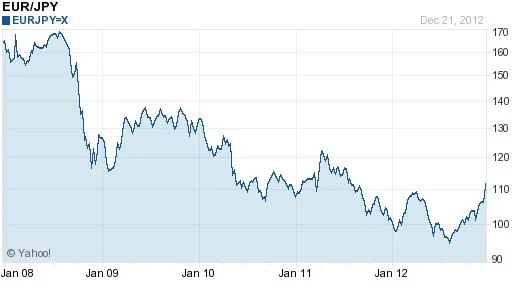
 I wonder how low Euro will go against JPY.


