Volitional & potential forms you wrote for "let's ~" are all correct.

Awesome! I always seem to do well on these...probably because it's the easiest exercise, haha.
山下先生は煙草をやめようと思っている is correct as it is.
As for the last sentence, in the morning is 朝, it does not require the perticle に.
Okay, cool. I was thinking, "quitting tobacco" would be okay, but I was also thinking maybe you need the actual word smoking in there, maybe like tobako o sutte yameyou...
As for the second one, I see, I was thinking there was only one time to wake up so asa may not have been needed.
eat more vegetables is もっと野菜を食べる or 野菜をもっと食べる.
The thing I put is "a lot", isn't it? I remember you or epigene saying that ooi and takusan are closely related, which means "a lot".
make lots of Japanese friends: 日本人の友だちをたくさん作る or たくさんの日本人友だちを作る.
I thought there would have been a special word for make, not the literal tsukuru! I'll remember this.
Either 日本人 or 日本 will do for Japanese in this context, though perhaps 日本人の sounds more natural.
Thanks, I was slightly debating between the two.
Aaah, I forgot that verb. I use it elsewhere!
But I'd like to recommend you to use the polite form to make the style consistent.
Also use 。 not ? unless it is a real question.
You got it, I'll stick to the polite forms unless the grammar calls for casual forms.
("Closing date for the report is coming soon."
"Yes, I'm going write it."
"Oh, I see. That's boring." ???)
Haha, I was running out of things to say so yeah, that's actually what I wanted to say. I know, bit bad.
I wanted to go back to Genki I and say "it's better to not drink". I forgot to put takusan. I wanted to say, "It's better not to drink a lot."
It's not coherent... if you say
そうですか。それはお金がかかりますね。
then it's ok though it still makes you sound a miser...
I see...kakaru is taking time and money, correct? I vaguely remember it from Genki I. Yes, you got it, I wanted to say "It's expensive, huh."
去年中国に行った友達。(Would it also be okay if I put itte imasu?)
No.
Oh? I was thinking it was...because I remember that itte imasu means already went to, like in this picture.
So if I were to put 去年中国に行っている友達, what would it mean? I think it would mean, last year China has gone to friend, literally translated, and reformed to A friend who went to China last year.
No. Actually you musn't use を because "last week" is not the object of the verb "saw".
Thank you! I didn't even notice that. And you wouldn't use the particle ni, either, right?
日本の習慣についてよく知っている外国人を探している。
ついて is about.
~について知っている. to know (to have knowledge) about ~
よく知っている to know well. to have good knowledge of something.
日本の習慣について about Japanese customs
よく well
知っている know / have knowldge
外国人 a foreigner
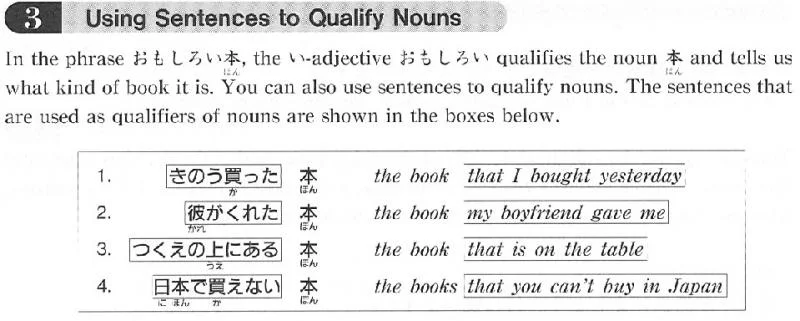
The first three makes a phrase which modifies 外国人.
I think I get it. However, I keep thinking that these -te mean "and" sentences, do you know what I mean? Here is another example: 連れて来る. I always interpret this as "take along AND come". Same with 持って行く(hold and go) So how I translated the above, is Japanese customs and well knowledge person. I mean, is it alright for me to think in this sense? Or am I interpreting it wrong?
And thanks for the other ones, I missed a few particles

One small thing:
What's going on in this sentence? I understand the sentence, it is basically saying "Michiko said Takeshi is also invited". But I don't see the need for te. Is this what happens in quotes?
Thanks a billion; I will rep you as always when I can.